
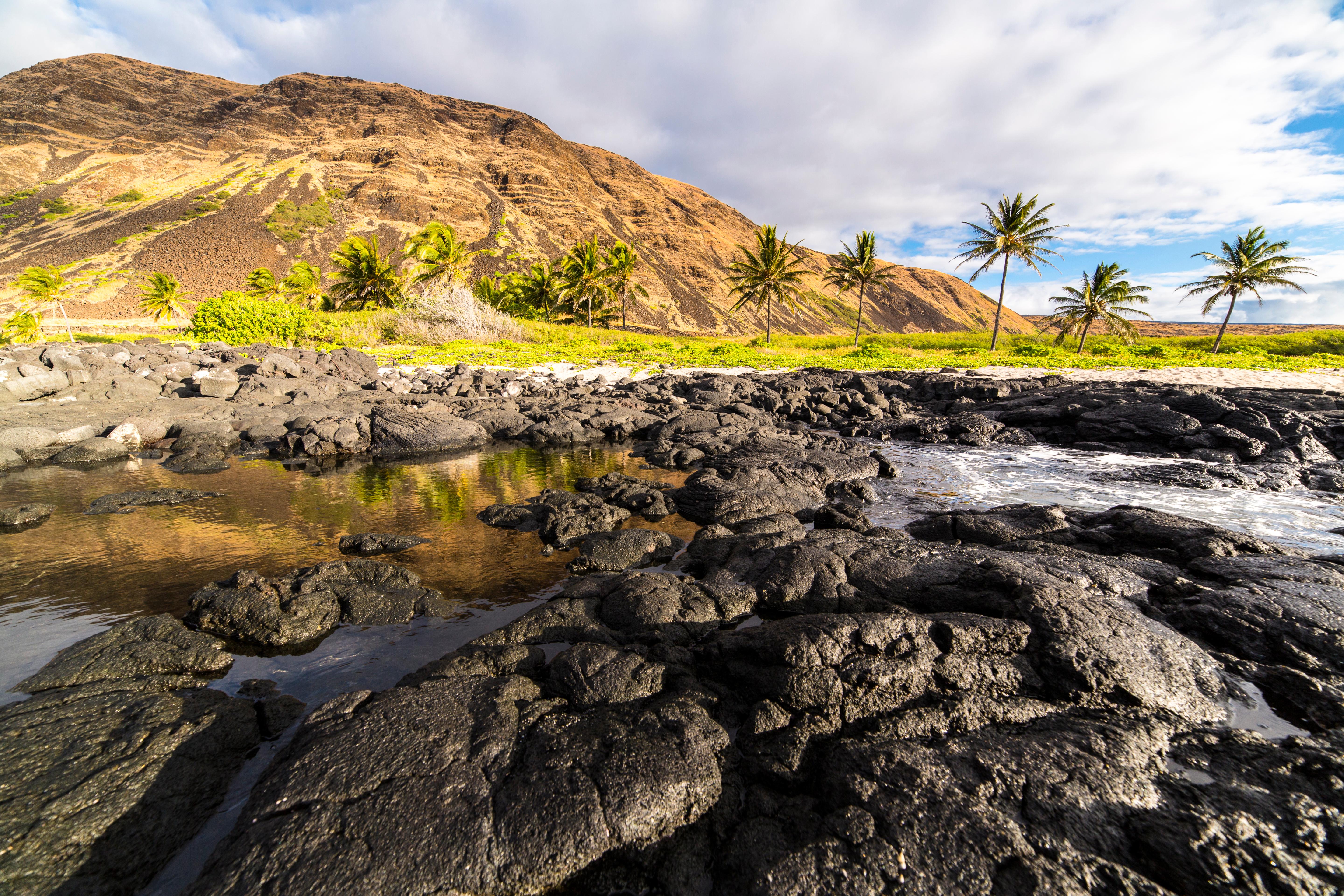
One day in Hawaii Volcanoes National Park lets you walk across a cooled lava lake, peer into a steaming crater, and drive from a cool rainforest rim down to a sea arch on the Pacific coast. The park rewards a simple loop: Kīlauea summit in the morning, Chain of Craters Road in the afternoon, and a crater view after dark if conditions allow.
How should you plan one day in Hawaii Volcanoes?
The two main areas are the Kīlauea summit, reached along Crater Rim Drive, and Chain of Craters Road, which descends toward the coast. Volcanic activity here changes quickly, and trails, roads, and viewpoints can close because of eruptions, gas, or earthquake damage. Before you go, check the current-year rules and the park's official alerts, and look at the volcano observatory's updates for the latest on activity and air quality.
Elevation near the summit is around 4,000 feet, so it is noticeably cooler and often rainier than the beach towns. Pack a light jacket, rain layer, sturdy shoes with good grip on rough lava, water, and sun protection. Stay on marked trails because the ground can be sharp and unstable.
What should you do in the morning?
Start at the Kīlauea Visitor Center for current conditions and ranger advice. From there, make short stops along Crater Rim Drive, including the steam vents and the Sulphur Banks, where volcanic gases rise through the ground. These are quick, easy stops that give you a feel for how alive the landscape is.
The anchor hike for the morning is Kīlauea Iki Trail, a loop of roughly four miles that descends through rainforest and crosses the floor of a crater that held a lava lake in 1959. Allow around two to three hours, bring water, and note that the steam and bare black rock make it feel unlike any other walk in the national park system. If the trail is closed or you want something shorter, the nearby Nāhuku (Thurston Lava Tube) is a brief, atmospheric walk through a lava tube beneath a fern forest, when it is open. For more options, see our guide to the best hikes in Hawaii Volcanoes.
Is Chain of Craters Road worth the afternoon?
Yes. Chain of Craters Road drops thousands of feet toward the ocean, passing old craters, lava fields, and wide views of the coast. Plan to stop at pullouts, walk to the sea arch viewpoint if it is open, and look for petroglyph sites with a ranger's guidance when available. Parts of the road have been cut off by past lava flows, so what is reachable can change.
Gas up before you enter the park and bring food, since services are limited. Driving down and back with stops is a satisfying half day, and the changing light across black lava and blue ocean makes it a favorite for photos.
Where can you see the glow after dark?
When the crater is erupting, the night glow above Halemaʻumaʻu is one of the most memorable things you can see in any national park. Whether there is a visible glow depends entirely on current activity, so do not build your whole day around it. If conditions allow, find a designated overlook near the summit, dress warmly, and bring a flashlight and a tripod if you shoot photos. If there is no glow, the dark skies are still excellent for stargazing.
Where should you stay and what else is nearby?
Many visitors base themselves in the small villages near the park entrance, which saves time on a tight schedule, while others day-trip from Hilo or the Kona side, which adds a long drive each way. If you are visiting more than one island, our guide to national parks in Hawaii compares the options, and the best time to visit guide explains seasonal weather. You can also browse the Hawaiʻi Volcanoes park page, our one-day Haleakalā itinerary on Maui, the Hawaii state guide, and the full park directory.
What if the weather or conditions are bad?
Rain is common near the summit and can move in fast. Keep a flexible plan: visit the visitor center exhibits, take the lava tube walk, and drive the coast road when skies clear. If air quality is poor because of volcanic gas, limit strenuous hiking, especially if you have breathing problems or are traveling with young children.
FAQ
Is one day enough for Hawaii Volcanoes National Park?
One day is enough to see the main highlights at the summit and along Chain of Craters Road, though a second day lets you hike farther and revisit the crater after dark.
What is the best time of day to visit?
Start early for cooler temperatures and fewer crowds, then plan to be near an overlook after dark if there is an active glow.
Do you need a 4WD vehicle?
No, the main paved roads in the park are suitable for regular cars, but check current road status before you drive.
Can you always see lava?
No, activity comes and goes, so check the latest park and volcano observatory updates rather than assuming a glow will be visible.
What should you bring?
Bring layers, rain gear, grippy shoes, water, snacks, sun protection, and a flashlight for the evening.