
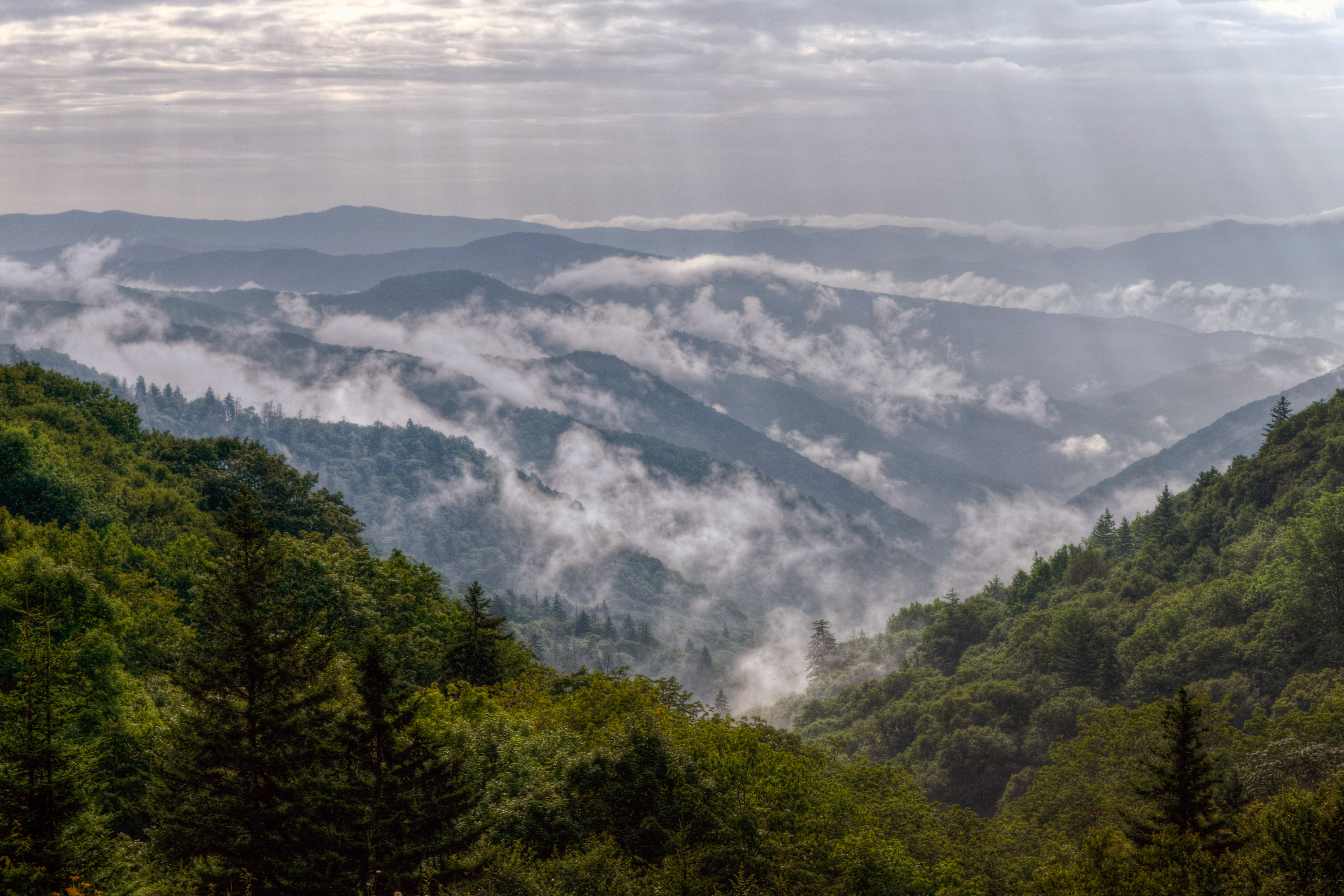
The best national parks near Asheville are anchored by Great Smoky Mountains National Park, whose North Carolina entrance sits about an hour west, complemented by the scenic Blue Ridge Parkway that runs right through town. Asheville is the ideal artsy, food-loving basecamp for exploring the Southern Appalachians, blending mountain adventure with breweries and Biltmore-era grandeur.
How far is the Great Smoky Mountains from Asheville?
The Oconaluftee entrance to Great Smoky Mountains National Park near Cherokee is roughly 50 miles from Asheville, about an hour by car along US-19 or the Blue Ridge Parkway. This North Carolina side of the park is quieter than the busy Tennessee gateways and offers the Mingus Mill, elk-filled fields, and access to Clingmans Dome. If you want the Tennessee perspective too, our guide to the national parks near Knoxville covers the northern approach.
What makes the Blue Ridge Parkway special?
The Blue Ridge Parkway is a 469-mile scenic road managed by the National Park Service, and Asheville sits near its midpoint. From town you can be on the Parkway in minutes, climbing to overlooks like Craggy Gardens and Mount Mitchell, the highest peak east of the Mississippi. The Parkway threads through North Carolina and into Tennessee, delivering endless ridge-and-valley views, especially in autumn when the hardwood forests ignite.
What can you do on a day trip?
A relaxed Asheville day trip might combine a Parkway drive to Graveyard Fields for waterfall pools with an afternoon hike to Devils Courthouse. Wildlife lovers head to the Cataloochee Valley in the Smokies to watch reintroduced elk bugle in fall. Because the Smokies charge no entrance fee, only a parking tag, a day of mountain scenery here is remarkably affordable. Always check the current-year rules for parking tags and Parkway road closures, which are common in winter.
When is the best time to visit?
Fall is the marquee season, with color rippling down from the peaks through October. Spring brings wildflowers and thundering waterfalls, summer offers cool mountain relief from lowland heat, and winter closes sections of the Parkway but rewards visitors with solitude and occasional snow. Weekday mornings are best for dodging leaf-season traffic.
Where should you stay?
Downtown Asheville brims with boutique hotels, and the River Arts District and Biltmore Village offer atmospheric alternatives. For park immersion, the towns of Cherokee, Bryson City, and Waynesville sit closer to the Smokies. Campers can book park campgrounds like Smokemont or Parkway sites, though reservation windows fill quickly in peak color season.
FAQ
Is the Blue Ridge Parkway a national park?
Yes, the Blue Ridge Parkway is a unit of the National Park System, and it has no entrance fee. Portions close seasonally for weather, so check the current-year rules before driving.
How long is the drive to Clingmans Dome from Asheville?
Plan about two hours each way from Asheville to the Clingmans Dome parking area, plus a steep half-mile walk to the observation tower for panoramic Smoky Mountain views.
Can you see elk near Asheville?
Yes, the Cataloochee Valley and the Oconaluftee area on the North Carolina side of the Smokies are famous for elk, especially at dawn and dusk during the fall rut.
Do you need a pass for the Smokies?
There is no entrance fee, but parking longer than 15 minutes requires a paid tag. Confirm the current-year rules for pricing and vendors before your visit.How many days should you spend around Asheville?
Two to three days is ideal. One day covers a Blue Ridge Parkway loop with a short hike, a second reaches deeper into the North Carolina side of the Smokies for elk and waterfalls, and a third leaves room for Asheville itself, from the Biltmore Estate to the downtown brewery scene, without feeling rushed.
Is the North Carolina side of the Smokies less crowded?
Generally yes. The Cherokee and Oconaluftee entrances see fewer visitors than Gatlinburg on the Tennessee side, so basing near Asheville often means calmer trailheads, easier parking, and a more relaxed pace, especially outside of peak fall-color weekends.