
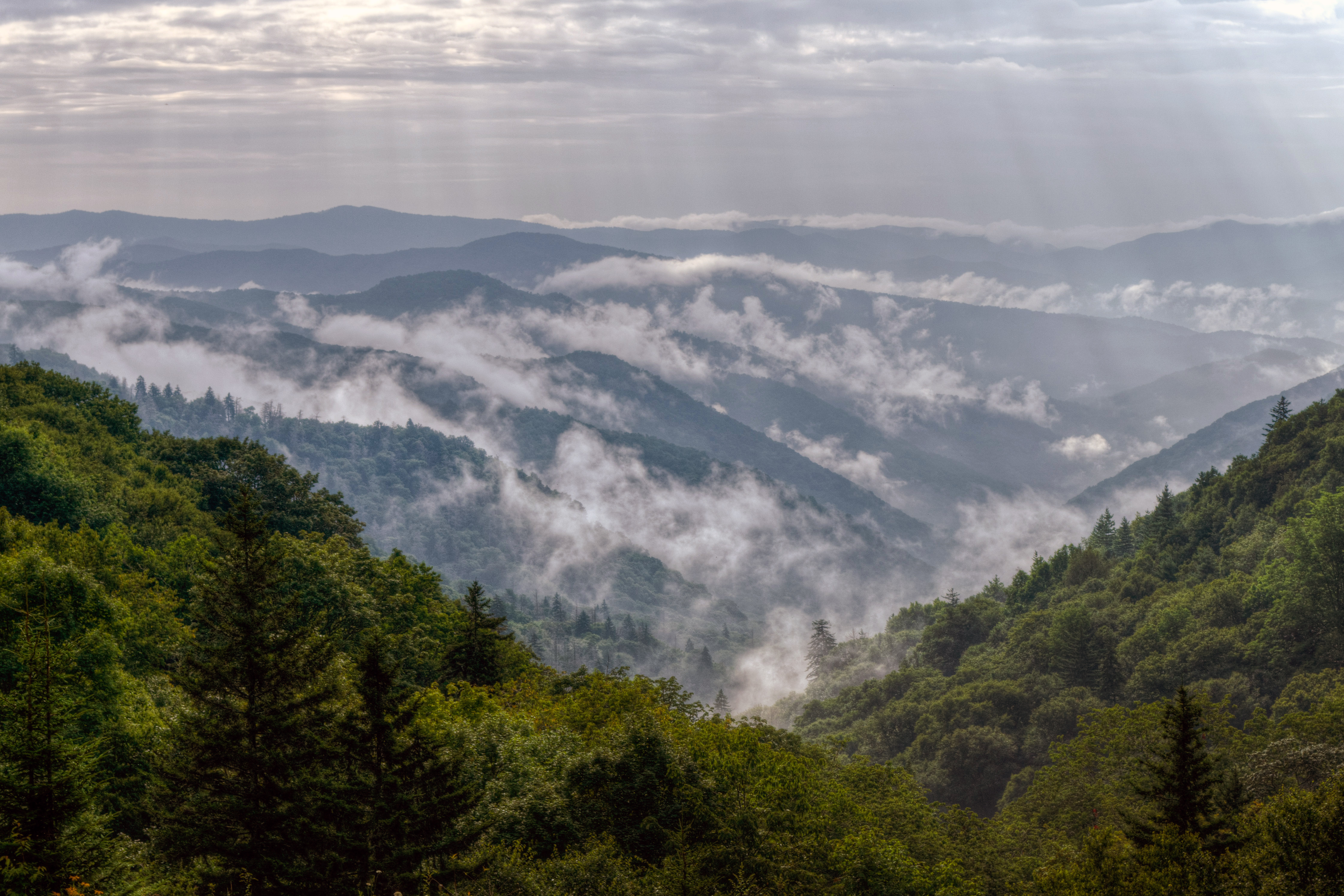
The best national parks near Knoxville begin with Great Smoky Mountains National Park, the most-visited national park in the country, whose main Tennessee gateway sits less than an hour from downtown. Knoxville is arguably the single best big-city basecamp for the Smokies, and it puts a surprising amount of Southern Appalachian wilderness within easy reach.
How close is the Great Smoky Mountains to Knoxville?
Gatlinburg, the northern gateway to Great Smoky Mountains National Park, is only about 40 miles south of Knoxville, roughly an hour by car. That means you can reach the Sugarlands Visitor Center, Cades Cove, or the Newfound Gap Road before mid-morning. The park straddles the border of Tennessee and North Carolina, so a single visit lets you cross a state line at the crest of the Appalachians while looking out over ridgelines that fade into blue haze.
What can you do in the Smokies on a day trip?
A classic Knoxville day trip pairs the 11-mile Cades Cove loop, where black bears and white-tailed deer graze historic meadows, with a short waterfall hike such as Laurel Falls. Drivers chasing views should climb Newfound Gap Road to Clingmans Dome, the highest point in the park. Because the Smokies charge no entrance fee but now require a parking tag, budget travelers love how affordable a day in the park can be. Confirm the current-year rules for parking tags before you go.
Are there other parks within reach?
Beyond the Smokies, the Blue Ridge Parkway begins near the park's eastern edge and threads toward North Carolina's high country. Big South Fork National River and Recreation Area sits about two hours northwest for arches and gorges with far fewer crowds. History travelers can reach several national historic sites in East Tennessee, and a longer haul opens Mammoth Cave to the northwest. The Smokies alone, however, are more than enough for most itineraries.
When should you visit?
Autumn is legendary here, with color peaking at high elevations in early October and lower valleys later in the month. Spring brings wildflowers and roaring waterfalls, summer offers lush green tunnels of forest but heavier traffic, and winter delivers quiet roads and occasional snow at the summits. Whenever you go, mornings are best for wildlife and for beating the Gatlinburg crowds.
Where should you stay?
Knoxville itself offers walkable downtown hotels and easy interstate access, making it a great bookend. For deeper immersion, Gatlinburg and Townsend put you at the park's doorstep, and the park's developed campgrounds like Elkmont and Cades Cove reward those who book early. Reservation windows shift each season, so check availability well ahead.
FAQ
Do you need a pass for the Great Smoky Mountains?
There is no entrance fee, but vehicles parking for more than 15 minutes need a paid parking tag. Check the current-year rules for tag pricing and where to buy one.
How long is the drive from Knoxville to Cades Cove?
It is about 90 minutes from downtown Knoxville to the start of the Cades Cove loop, then allow two to four hours to drive the 11-mile loop itself, longer when wildlife stops traffic.
Can you see bears near Knoxville?
Yes, the Great Smoky Mountains have one of the densest black bear populations in the East. Cades Cove and quiet forest roads at dawn and dusk offer the best odds, but never approach or feed them.
Is one day enough for the Smokies?
One day lets you sample a scenic drive and a short hike, but two or three days let you explore both the Tennessee and North Carolina sides without rushing.What is the best month for fall color near Knoxville?
Early to mid October usually brings peak color to the highest Smoky Mountain elevations, while the valleys around Gatlinburg and Townsend often hold their brightest reds and golds into late October and early November.