
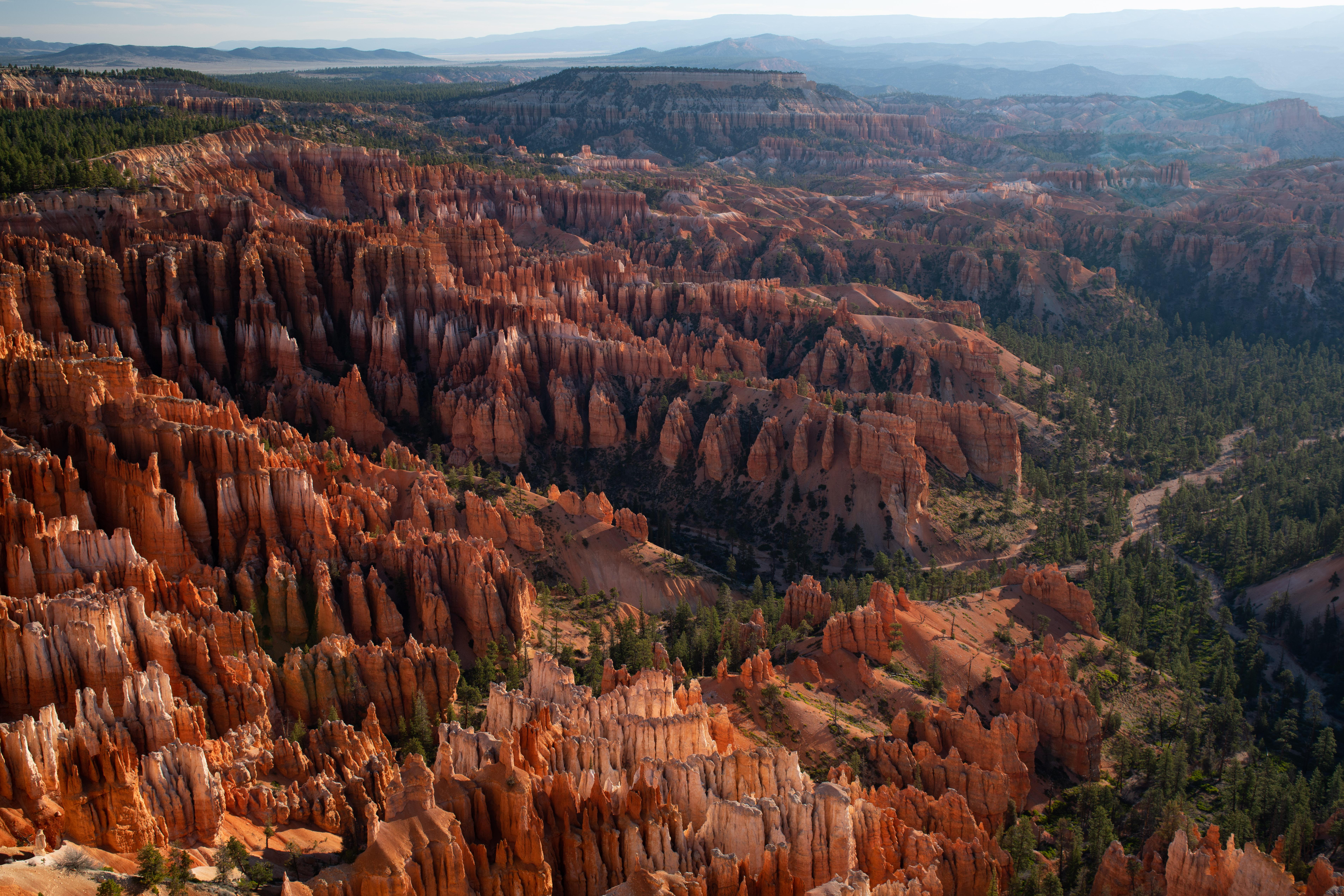
Bryce Canyon vs Arches is a tough call between two of Utah's most iconic red-rock parks, and each one showcases a completely different kind of desert wonder. Bryce Canyon is famous for its towering orange hoodoos and cool, high-elevation air, while Arches is famous for the largest concentration of natural stone arches on earth. This guide compares scenery, hiking, elevation, crowds, and timing so you can pick the right Utah adventure.
Where are Bryce Canyon and Arches?
Both parks sit in Utah, but in different corners. Bryce Canyon National Park is in southern Utah at high elevation, often above 8,000 feet along the rim, which keeps it cooler than the desert below. Arches National Park lies near Moab in eastern Utah, at lower, hotter desert elevation, right beside Canyonlands National Park. They are roughly four hours apart by car, so many road-trippers pair them across a longer Utah loop.
How is the scenery different?
This is the heart of the comparison. Bryce is not a true canyon but a series of natural amphitheaters filled with thousands of hoodoos, spires of orange and pink rock that glow at sunrise. Arches delivers a very different spectacle: more than 2,000 catalogued arches, including the world-famous Delicate Arch and the soaring Landscape Arch. Bryce feels like standing above a stone forest; Arches feels like wandering through a sculpture garden. If you can only pick one signature image, both are unforgettable but utterly distinct.
Which park has better hiking?
Both parks offer superb, mostly moderate hiking. In Bryce, the Navajo Loop and Queen's Garden trails drop you right among the hoodoos, while the rim trail offers easy strolls with big views. In Arches, the hike to Delicate Arch is the marquee outing, and trails like Devils Garden and the Windows section pack many arches into short distances. Bryce's altitude can make hikes feel harder, while Arches' heat is the main challenge in summer. Carry water and sun protection in both.
When should you visit each park?
Spring and fall are ideal for both. Arches can be brutally hot from June through August, so early mornings are essential, and it now uses a timed-entry system in peak months. Bryce's high elevation keeps summer pleasant but brings snow and cold in winter, when the red hoodoos dusted in white are stunning. Check the current-year rules for reservations and road conditions before you go, since both change seasonally.
How many days do you need, and can you combine them?
You can see the highlights of either park in a single day, but two days lets you enjoy sunrise, sunset, and a longer hike without rushing. Because they sit about four hours apart, a classic southern Utah road trip links Bryce, Arches, Canyonlands, and often Zion National Park into one unforgettable week. If you have limited time, choose based on the scenery that excites you most.
Which park is right for you?
Choose Bryce Canyon if you love dramatic hoodoos, cooler temperatures, and sunrise photography from a rim. Choose Arches if you want easy access to world-famous stone arches and a classic Moab desert experience. Better yet, visit both on a Utah loop and enjoy the contrast.
FAQ
Is Bryce Canyon or Arches better for families?
Both are family-friendly. Arches has shorter, flatter trails to big payoffs, while Bryce has cooler weather and easy rim walks. Younger kids often love the giant arches, and older kids enjoy descending among the hoodoos.
Do these parks require reservations?
Arches has used a timed-entry reservation system during peak season in recent years. Bryce generally does not, though shuttle use is encouraged. Confirm the current-year rules before your visit.
Which park is hotter?
Arches is significantly hotter because of its lower desert elevation near Moab. Bryce stays cooler year-round thanks to its high rim, and can be cold or snowy in winter.