
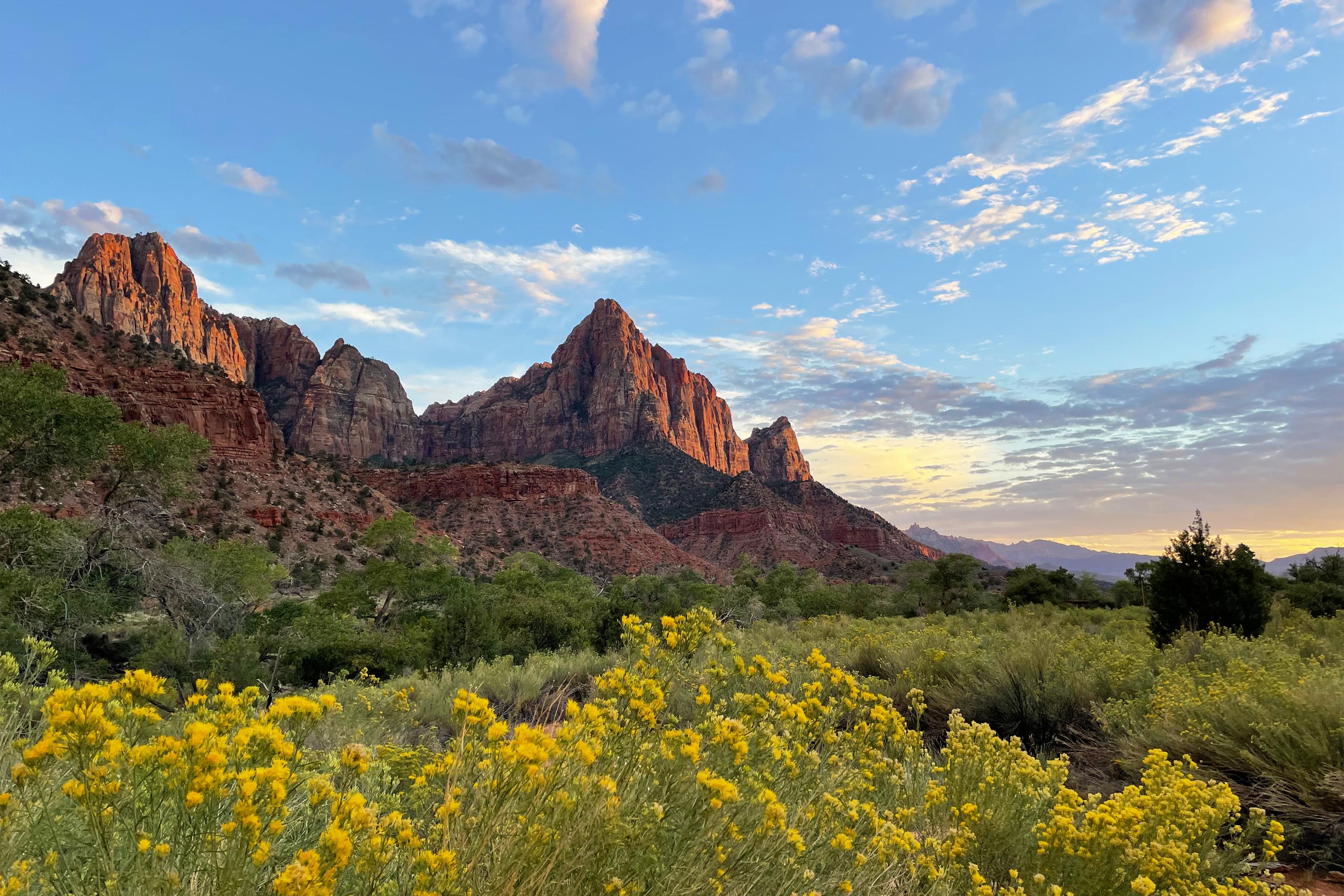
The best time to visit Zion National Park is spring (April to May) and fall (September to October), when daytime temperatures are comfortable, the Virgin River is safe for wading, and the summer crowds have thinned. That said, the right month depends on what you want to do, so this guide breaks Zion down season by season.
When is the best overall time to visit Zion?
For the best balance of weather and manageable crowds, aim for late April through May or mid-September through October. Highs typically sit in the 70s and 80s Fahrenheit, canyon wildflowers or fall cottonwoods add color, and the mandatory Zion Canyon shuttle is running so you can reach the trailheads deep in the canyon. Summer brings the biggest crowds and afternoon heat that can top 100 degrees on exposed trails, while winter is quiet and beautiful but colder, with some services reduced.
What is Zion like in each season?
Spring delivers rushing waterfalls and green hanging gardens, but snowmelt can make The Narrows too high and cold to hike, so check current river flow before planning that route. Summer is hot and busy, best for early-morning starts and shaded canyon walks. Fall offers arguably the finest hiking weather of the year, with warm days, cool nights, and lower water levels ideal for The Narrows. Winter transforms the red rock with occasional snow, brings the smallest crowds, and often lets you drive the scenic road yourself when the shuttle pauses for the season.
When is the best time to hike Angels Landing and The Narrows?
Angels Landing is hikeable most of the year, but spring and fall give you the safest footing and the most pleasant temperatures on that exposed chain section; note that a permit is required for the final stretch, so check the current-year rules before you go. The Narrows is best in late summer and early fall, when water levels drop and temperatures stay warm enough for hours in the river. Avoid slot canyons entirely when there is any flash-flood risk in the forecast.
When is Zion least crowded?
Zion is quietest from late November through February and on weekdays outside the summer peak. Visiting midweek in the shoulder seasons gets you thinner trails and easier parking without the deep-winter chill. If you can only come in summer, arrive at the visitor center before sunrise to beat both the heat and the shuttle lines.
What should you know about the shuttle and weather?
During the busy season, private vehicles cannot drive the Zion Canyon Scenic Drive; you ride the free shuttle instead, so build your day around its schedule. Summer afternoons bring monsoon thunderstorms that trigger dangerous flash floods in narrow canyons, and winter can leave ice on shaded upper trails. Always check the current forecast and any trail or shuttle notices the morning of your hike.
Where else can you go nearby?
Zion pairs naturally with other national parks in the region. Bryce Canyon sits about 90 minutes away at higher elevation, so it stays cooler in summer, and Capitol Reef makes a great add-on for a longer road trip. For a full itinerary, see our Utah parks guide and the main Zion National Park page.
FAQ
What is the single best month to visit Zion?
May and October are the standout months, offering warm-but-not-scorching days, comfortable nights, and good conditions for both Angels Landing and, in October, The Narrows.
Is winter a good time to visit Zion?
Yes, if you do not mind cold mornings. Winter brings the smallest crowds, dramatic snow-dusted cliffs, and often the freedom to drive the scenic road yourself, though some higher trails may be icy.
When is The Narrows open?
The Narrows is typically best from June through October, but it closes whenever the Virgin River runs too high or fast, especially during spring snowmelt and flash-flood conditions. Check the current-year river flow and forecast first.
How hot does Zion get in summer?
Summer highs frequently reach the upper 90s to over 100 degrees Fahrenheit in the canyon, so hike early, carry plenty of water, and save exposed routes for the cooler parts of the day.