
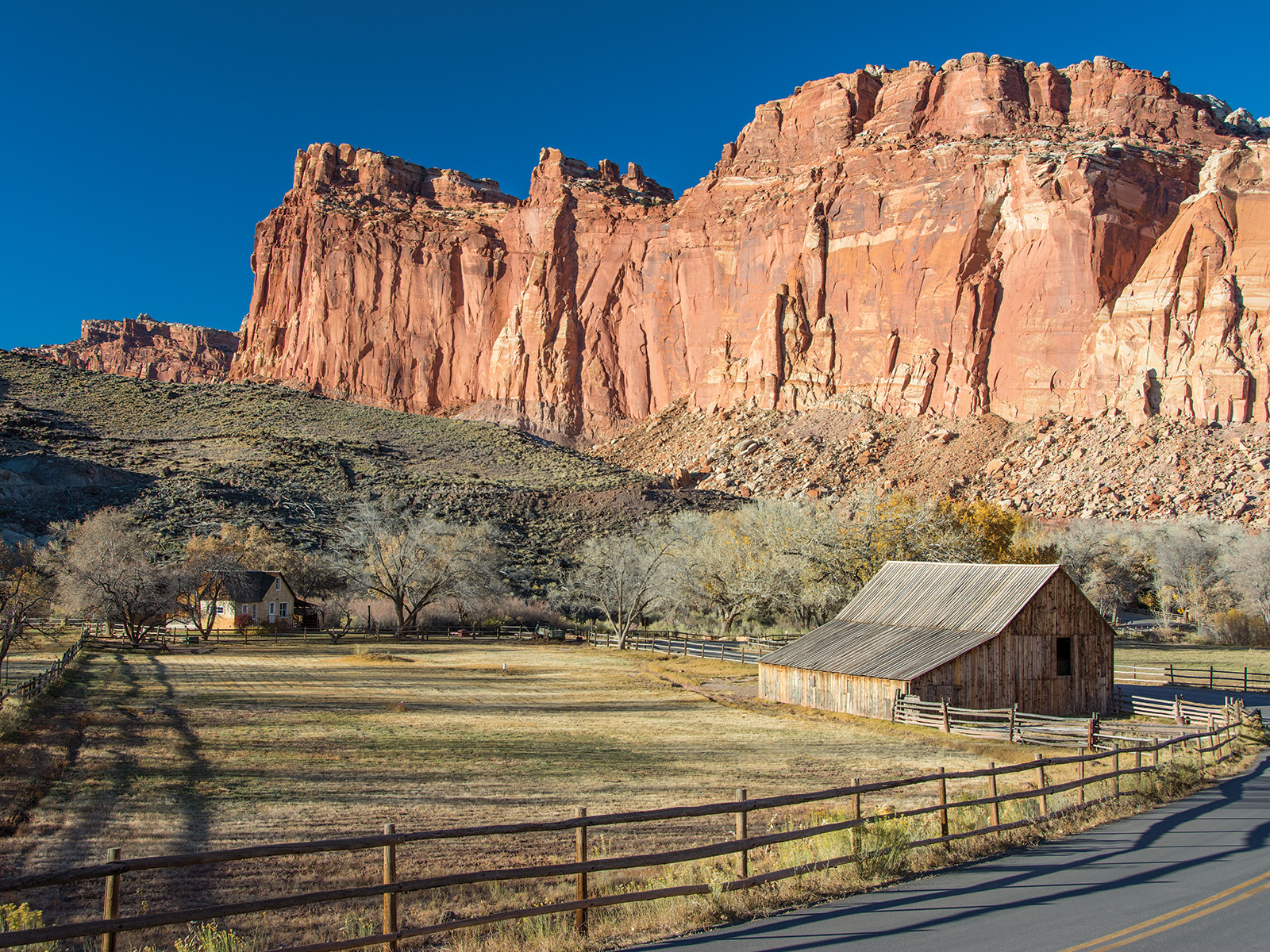
The best time to visit Capitol Reef National Park is April through May or September through October, when daytime highs sit in the 65–80°F range, the Scenic Drive and Fruita orchards are at their best, and the slot canyons of the Waterpocket Fold are less likely to flood. Capitol Reef is the least-visited of Utah's Mighty Five, which means the shoulder seasons here still feel genuinely quiet — a real advantage over Zion National Park at the same time of year.
What makes Capitol Reef's timing different from other Utah parks?
Two things: fruit and water. Capitol Reef contains the historic Fruita orchards, roughly 3,000 heritage trees planted by Mormon settlers, and the park still runs a U-pick harvest that no other national park offers. It is also built around the Waterpocket Fold, a 100-mile wrinkle in the earth's crust cut by narrow drainages — which makes monsoon-season flash flooding a real scheduling constraint rather than a footnote. Both factors put specific weeks on the calendar that matter more than the general "spring or fall" advice you would give for Arches National Park.
When can you actually pick fruit in the Fruita orchards?
Harvest generally runs from late June through October, but each fruit has a short window: cherries and apricots first in early summer, peaches and pears in August, and apples from roughly early September into October. Only orchards posted as open are pickable, and a per-pound fee applies at self-pay stations. Yields swing hard year to year — a late spring frost can wipe out a crop entirely — so check the current-year orchard status before planning a trip around it. Early September is the sweet spot: apples are coming in and the heat has broken.
How bad is summer in Capitol Reef?
Hotter than most people expect. June through August regularly brings highs in the mid-90s°F, and the exposed sandstone radiates heat well into the evening. The bigger issue is the North American monsoon, which typically runs from mid-July through mid-September and brings intense, localized afternoon storms. Grand Wash and Capitol Gorge are both drive-in narrows that can flood from rain falling miles away with no cloud overhead where you are standing. If you visit in summer, hike early, and never enter a narrow canyon when storms are in the forecast.
Is spring or fall better?
Fall wins narrowly. September and October deliver the same comfortable hiking temperatures as April and May, but add the apple harvest, golden cottonwoods along the Fremont River, and more settled weather once the monsoon breaks. Spring's advantage is wildflowers and running water in the Fremont, though April can still bring cold snaps and wind, and the high-clearance backcountry routes like Cathedral Valley are often still muddy. Fall also has slightly better odds for the Cathedral Valley Loop, which requires fording the Fremont River.
Is Capitol Reef worth visiting in winter?
Yes, if you want solitude. Winter highs run in the 40s°F with cold nights, and light snow on red rock is one of the most striking sights in Utah. The Scenic Drive stays open and the Fruita campground operates year-round, but unpaved roads including Cathedral Valley and Notom-Bullfrog become unreliable and the Gifford House seasonal shop closes. Days are short, so plan tight itineraries.
How should you fit it into a Utah loop?
Capitol Reef sits roughly midway between Bryce Canyon National Park and Canyonlands National Park, which makes it the natural second or third stop on a Mighty Five route along Highway 24 and Scenic Byway 12. Because it is lower and warmer than Bryce, it also works as a shoulder-season substitute when Bryce's rim is still icy. See the whole state on our Utah national parks guide.
FAQ
What is the best month to visit Capitol Reef National Park?
October is the strongest single month: highs in the 60s and 70s°F, apple harvest in the Fruita orchards, fall color along the Fremont River and the monsoon season over.
What is the worst time to visit Capitol Reef?
Mid-July through August combines high-90s°F heat with peak flash-flood risk in Grand Wash and Capitol Gorge. It is the one stretch worth actively avoiding.
How many days do you need at Capitol Reef?
One day covers the Scenic Drive, Fruita, and a short hike such as Hickman Bridge or Grand Wash. Two to three days lets you add Cassidy Arch, the Cohab Canyon trail, and a high-clearance run at Cathedral Valley.
Do you need a reservation for Capitol Reef National Park?
No timed entry is required. An entrance fee applies on the Scenic Drive, and Fruita Campground sites are reservable in the busy season — check the current-year rules before you go.
When do the Capitol Reef orchards have fruit?
Roughly late June through October, varying by fruit and by year: cherries and apricots in early summer, peaches and pears in August, apples from September into October.
Is Capitol Reef crowded?
It is the quietest of Utah's five national parks. Even in peak season it sees far fewer visitors than Zion or Arches, though the Fruita area and Scenic Drive parking fill midday in spring and fall.