
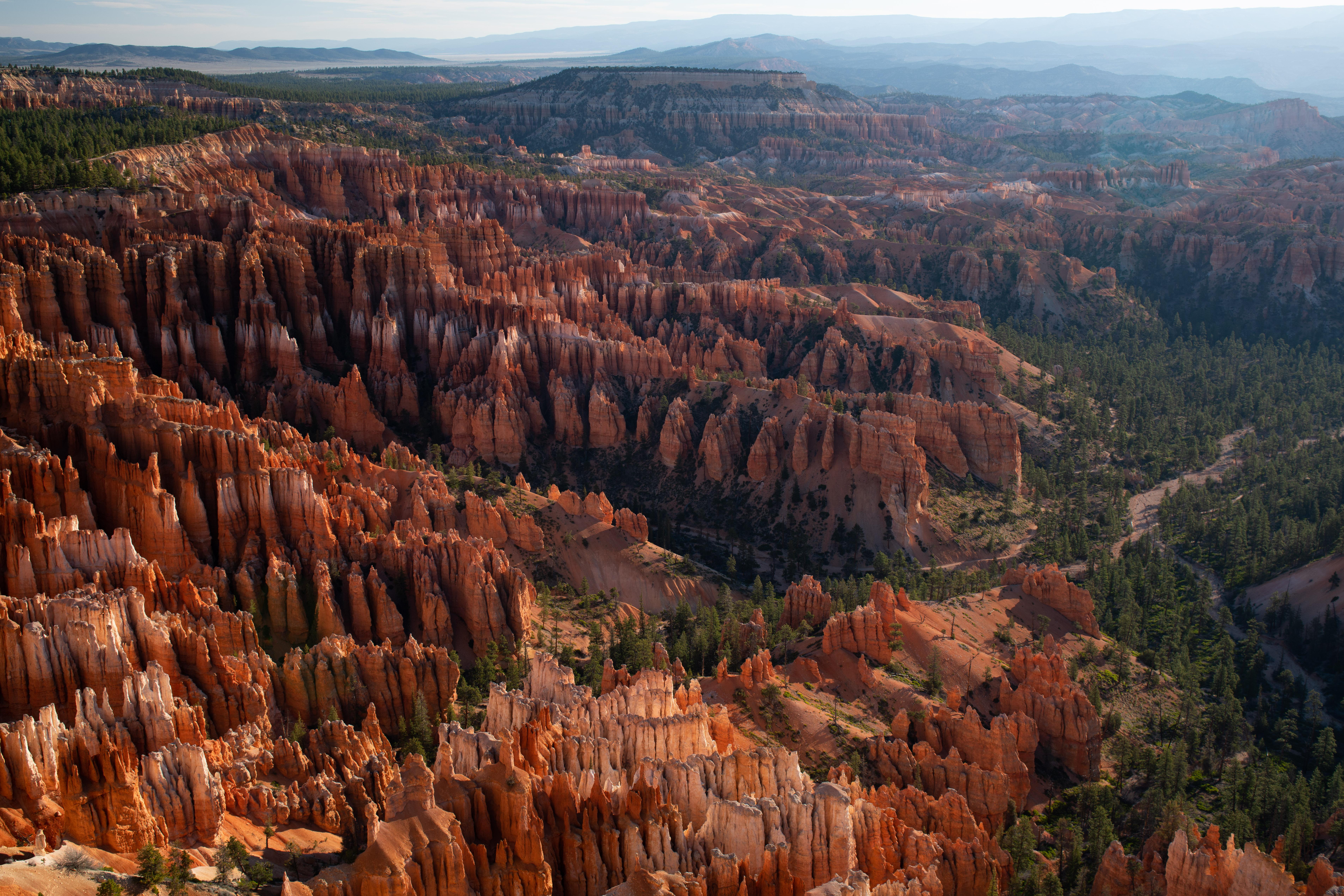
The best time to visit Bryce Canyon National Park is late May through June and September through mid-October, when the rim road is fully open, overnight lows stay above freezing, and the hoodoos glow without the summer thunderstorm crowds. Bryce is the outlier among Utah's Mighty 5: its rim sits between 8,000 and 9,115 feet, so it runs roughly 15–20°F cooler than Zion on the same afternoon. That single fact reshapes every seasonal decision you make here.
What makes Bryce Canyon's timing different from other Utah parks?
Elevation. While Arches and Canyonlands bake past 100°F in July, Bryce's July highs hover in the low 80s and its nights drop into the 40s. The practical upshot: Bryce is the one Utah park that stays comfortable in high summer, and the one that genuinely closes down in winter. Snow lingers on the amphitheater rim into April, and the road beyond Sunset Point is plowed only to Rainbow Point intermittently after storms.
If you are stitching together a Mighty 5 loop, this means Bryce should anchor the hottest leg of a summer trip, not the shoulder season. Reverse that ordering and you will hike Zion's Narrows in April snowmelt while Bryce's trails are still icy.
When is the best weather for hiking Bryce Canyon?
June and September are the two strongest hiking months. Both deliver dry trails on the Navajo Loop and Queen's Garden switchbacks, daytime highs in the 70s, and low humidity. June edges ahead for long daylight; September edges ahead for stable skies, because the North American monsoon typically pushes afternoon thunderstorms into July and August.
A monsoon caveat worth planning around: storms at 8,000 feet arrive fast and bring lightning to exposed rim viewpoints. In July and August, start descending into the amphitheater by 7 a.m. and be back on the rim before 1 p.m.
Is winter a good time to visit Bryce Canyon?
For photographers, winter is arguably Bryce's finest season and its most underrated. Fresh snow caps the orange hoodoos in white, the contrast is unlike anything else in the Southwest, and the park sees a fraction of its summer visitation. Sunrise at Bryce Point over a snow-filled amphitheater is the single most distinctive view in the park.
The trade-offs are real. Highs sit in the 30s and 40s, overnight lows regularly hit single digits, and interior trails such as Wall Street close when ice makes the switchbacks unsafe. Traction devices are effectively mandatory. The rim trail between Sunrise and Sunset Points is usually packed and walkable, and the park grooms sections for cross-country skiing.
Which month has the fewest crowds?
Excluding deep winter, late September through October is the quietest stretch with usable weather. Visitation drops sharply after Labor Day while daytime conditions stay hikeable well into the third week of October. November through March are quieter still but come with closures.
Peak congestion runs mid-June through August, concentrated at the four amphitheater viewpoints — Sunrise, Sunset, Inspiration and Bryce Point — between 10 a.m. and 4 p.m. The park has run a seasonal shuttle in past summers; check the current-year rules before you go, as service dates and whether it is optional or required have shifted between seasons.
What time of day should you actually be at the rim?
Bryce rewards early risers more than almost any park in Utah. The amphitheater faces east, so first light rakes directly across the hoodoos and lights them from within. Sunset, despite the viewpoint's name, is the weaker show — Sunset Point is named for its afternoon accessibility, not its light. Plan sunrise at Bryce Point or Sunrise Point, then hike down while the canyon is still shaded.
Bryce is also a certified International Dark Sky Park. Clear moonless nights from May through September deliver Milky Way views that are worth building an evening around.
FAQ
What is the best month to visit Bryce Canyon National Park?
June and September are the best overall months, balancing dry trails, mild daytime temperatures in the 70s, and open access to the full 18-mile scenic drive. September has the added advantage of thinner crowds and fewer afternoon storms.
Is Bryce Canyon open in winter?
Yes. The park stays open year-round, and the main road is plowed, though sections beyond Sunset Point can close temporarily after heavy snow. Some interior trails close for ice. Confirm current-year road status before driving up.
How many days do you need at Bryce Canyon?
One full day covers the amphitheater viewpoints and the Navajo Loop–Queen's Garden combination. Two days lets you add the scenic drive to Rainbow Point, the Fairyland Loop, and a sunrise plus a stargazing night.
Do you need a reservation to enter Bryce Canyon?
Bryce Canyon has not used a timed-entry reservation system, unlike some larger parks. Entrance fees still apply and shuttle arrangements vary by season, so check the current-year rules.
Can you visit Bryce Canyon and Zion in the same trip?
Easily. The two parks are about 85 miles apart, roughly a two-hour drive. Because Bryce runs much cooler, pairing them lets you chase comfortable temperatures in either direction depending on the season.
Browse more destinations across our national parks directory or plan by region with our state-by-state guides.