
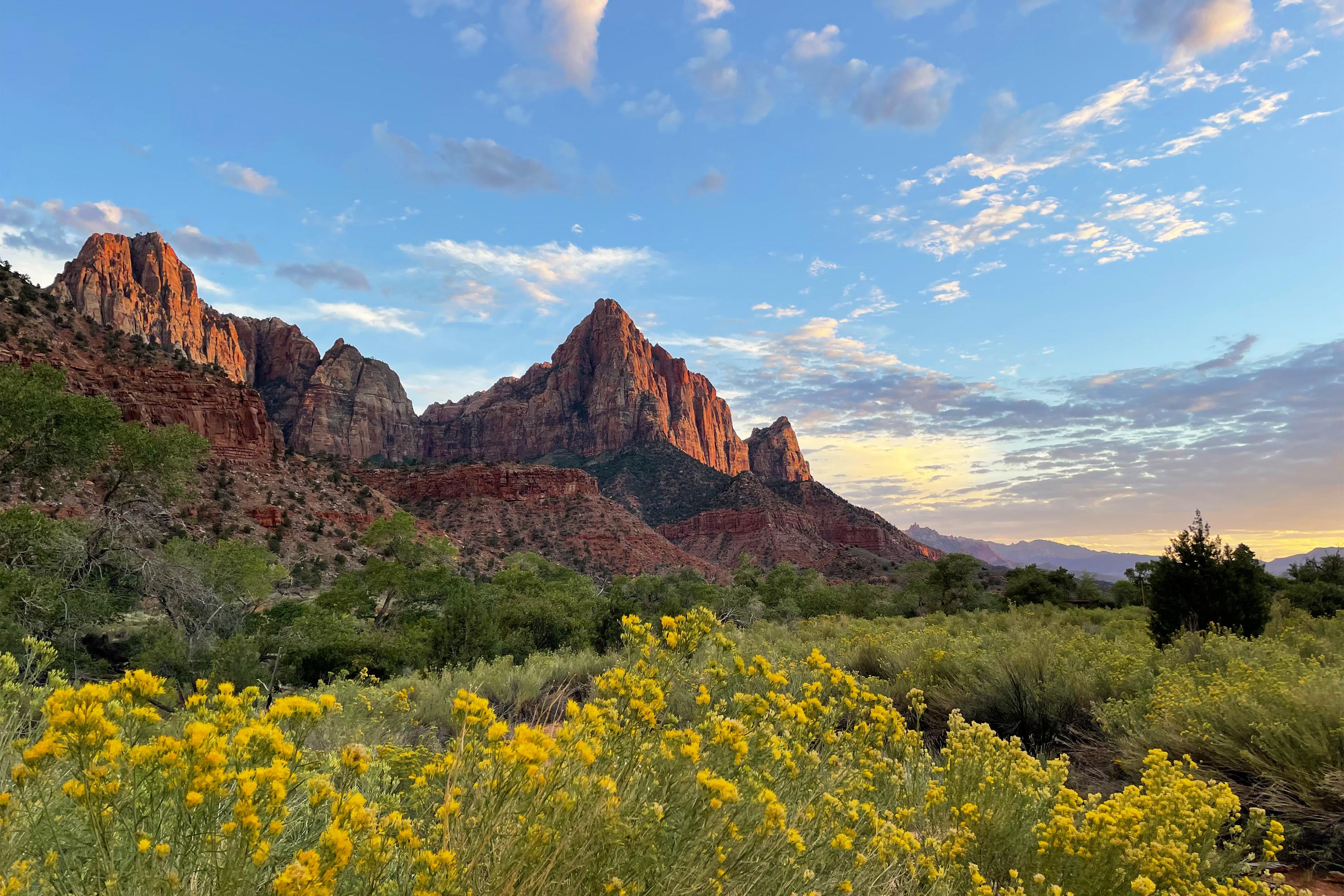
The best hikes in Zion National Park range from the paved Riverside Walk to the vertigo-inducing chains of Angels Landing, so there is a trail for every comfort and fitness level. This guide covers the top routes, how difficult they are, and how to plan around the park shuttle so you spend more time on the trail and less time waiting in line. Zion packs an enormous variety of terrain into a compact canyon, which is one reason it is among the most visited national parks in the country.
What are the best hikes in Zion for first-timers?
If it is your first visit, start with the Riverside Walk, a flat, mostly paved 2.2-mile round trip that follows the Virgin River to the mouth of The Narrows. The Pa'rus Trail is another gentle option and the only trail in the canyon where dogs and bikes are allowed. Both give you the towering sandstone walls that make Zion National Park famous without any exposure or steep climbing. For a little more effort with a big payoff, the Lower and Middle Emerald Pools trails add gentle elevation and seasonal waterfalls.
Which Zion hikes are the most iconic?
Angels Landing is the park's signature climb, a 5.4-mile round trip that gains roughly 1,500 feet and finishes along a narrow spine with support chains bolted into the rock. You now need a permit through a seasonal lottery, so check the current-year rules before you go. The Narrows, where you wade and sometimes swim up the river through a soaring slot canyon, is the other bucket-list route and can be tackled as a bottom-up day hike from the Temple of Sinawava. Observation Point, reached from the East Mesa Trail, rewards you with a view looking down on Angels Landing itself.
What should I know before hiking in Zion?
From spring through late fall, most of Zion Canyon is car-free and you reach the trailheads by the free park shuttle, so plan for wait times during peak season. Summer temperatures regularly top 100°F, which makes an early start essential and plenty of water non-negotiable. Flash-flood risk is real in The Narrows and other slot canyons, so always check the forecast and ranger warnings. Zion pairs naturally with other Utah parks and is an easy add-on to a wider tour of the state's Mighty Five, including nearby Bryce Canyon.
When is the best time to hike in Zion?
Spring and fall offer the most comfortable temperatures and the best light for photography, though heavy spring runoff can make The Narrows too high to enter. Summer is hot and busy but has the longest daylight, while winter is quiet and often lets you drive the canyon road yourself. Whenever you visit, arrive early because parking in the town of Springdale and at the visitor center fills quickly.
FAQ
Do I need a permit to hike in Zion?
Most trails are permit-free, but Angels Landing requires a lottery permit and through-hikes of The Narrows need a wilderness permit. Always check the current-year rules on the park website before planning your trip.
What is the hardest hike in Zion?
Angels Landing is the most demanding popular day hike because of its steep switchbacks and exposed, chain-assisted final section. Hikers uncomfortable with heights often turn around at Scout Lookout, which still offers superb canyon views.
How many days do you need in Zion?
Two full days lets you combine an easy valley walk, one marquee hike like Angels Landing or The Narrows, and time to ride the shuttle without rushing. Add a third day to explore the quieter Kolob Canyons section in the park's northwest corner.