
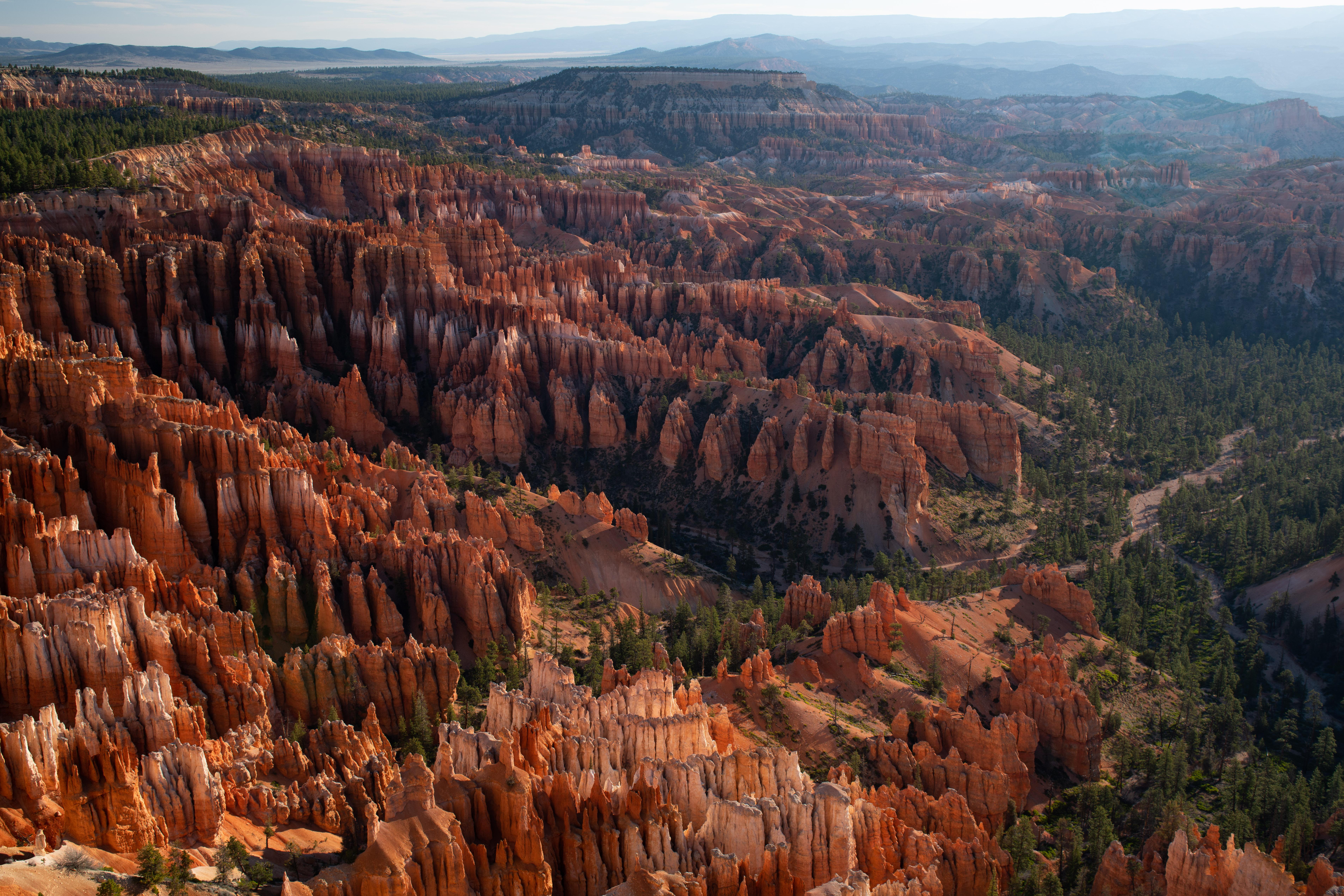
The best hikes in Bryce Canyon National Park drop you straight into a maze of glowing orange hoodoos, and most of the highlights can be done as short half-day loops. This guide ranks the park's signature trails by difficulty, explains how to combine them, and answers the elevation and safety questions that catch first-time visitors off guard so you can spend less time planning and more time in the amphitheater.
What is the best hike in Bryce Canyon?
The Navajo Loop combined with the Queen's Garden Trail is widely considered the best hike in the park and one of the finest short hikes in the country. Starting at Sunset Point, you descend the switchbacks of Wall Street into the amphitheater, wind past towering hoodoos, tunnel through narrow rock passages, and climb back out at Sunrise Point. The full loop runs about 3 miles with roughly 600 feet of elevation change. Hike it clockwise to make the steep Wall Street section a descent rather than a lung-busting climb. It is the perfect introduction to Bryce Canyon National Park and works for most fitness levels.
Which trails go deep into the hoodoos?
For a longer immersion, the Peekaboo Loop plunges into the heart of the amphitheater and can be linked with Navajo and Queen's Garden to form the roughly 5-mile Figure 8 combination, generally regarded as the best way to see the most hoodoos in a single outing. The Fairyland Loop, an 8-mile route starting from Fairyland Point, is quieter and more strenuous, rewarding hikers with constantly changing rock formations and views of Tower Bridge. These trails share the same trailheads as the rim viewpoints, so you can lengthen or shorten your day on the fly.
Are there easy hikes and rim walks?
Yes. The Rim Trail runs along the amphitheater edge and can be walked in flat, short sections between Sunrise and Sunset Points, offering enormous views with minimal effort. The Bristlecone Loop near Rainbow Point is a gentle 1-mile forest walk at the park's highest elevation, passing ancient bristlecone pines. These routes are ideal for families and anyone short on time, and they pair well with a longer regional trip that also includes Zion National Park just a couple of hours away.
How does elevation affect hiking here?
Bryce sits between roughly 8,000 and 9,100 feet, so the thin air makes every climb harder than the mileage suggests. Give yourself time to acclimatize, drink far more water than usual, and remember that every trail into the amphitheater means climbing back out at altitude. Snow and ice linger on shaded switchbacks well into spring, when microspikes become essential. For seasonal planning across the region, see our Utah parks overview.
What should you bring on a Bryce hike?
Pack layers, because temperatures swing sharply between the rim and the canyon floor and between morning and afternoon. Bring sun protection, at least two liters of water per person, sturdy shoes with grip for loose gravel, and snacks for the climb out. Afternoon summer thunderstorms are common, so carry a rain layer and plan to be off exposed trails by early afternoon.
When should you hike in Bryce Canyon?
Late spring through early fall offers the most comfortable trail conditions, with sunrise at Sunrise Point delivering the most dramatic light on the hoodoos. Summer afternoons bring thunderstorms, so start early. Winter transforms the red rock with snow but requires traction devices and careful footing.
FAQ
How long does the Navajo Queen's Garden loop take?
Most hikers finish the 3-mile loop in two to three hours, including plenty of stops for photos among the hoodoos.
Do you need a permit to hike in Bryce Canyon?
Day hikes on the main trails do not require a permit. Backcountry overnight trips do, and rules change annually, so check the current-year rules before you go.
Is Bryce Canyon good for beginner hikers?
Yes, as long as you respect the altitude. The Rim Trail and Queen's Garden descent are manageable for most beginners who pace themselves on the climb back up.