
Yellowstone vs Grand Teton comes down to this: Yellowstone is the vast, otherworldly land of geysers and wildlife, while Grand Teton is the compact, jaw-dropping park of jagged peaks and glassy lakes. They sit only a few miles apart in northwest Wyoming, so the real question for most travelers is not which one to choose, but how to divide their time between two very different neighbors.
What is the main difference between Yellowstone and Grand Teton?
Yellowstone National Park is enormous, about 2.2 million acres, and built around geothermal spectacle: Old Faithful, the Grand Prismatic Spring, and the Grand Canyon of the Yellowstone, plus wolves and bison in the Lamar Valley. Grand Teton National Park is roughly a tenth the size and defined by the abrupt granite wall of the Teton Range rising straight from the valley floor. Yellowstone dazzles with variety and scale; Grand Teton overwhelms with concentrated alpine beauty.
Which park is better for wildlife?
Both are superb, but they showcase different scenes. Yellowstone is the better bet for large predators and herds, with wolves, grizzlies, and thousands of bison spread across sweeping valleys. Grand Teton offers exceptional moose, elk, pronghorn, and bear viewing along its rivers and willow flats, often against a stunning mountain backdrop. Wildlife lovers who want the classic Western safari lean Yellowstone; photographers chasing reflections and peaks lean Teton.
Which is better for hiking?
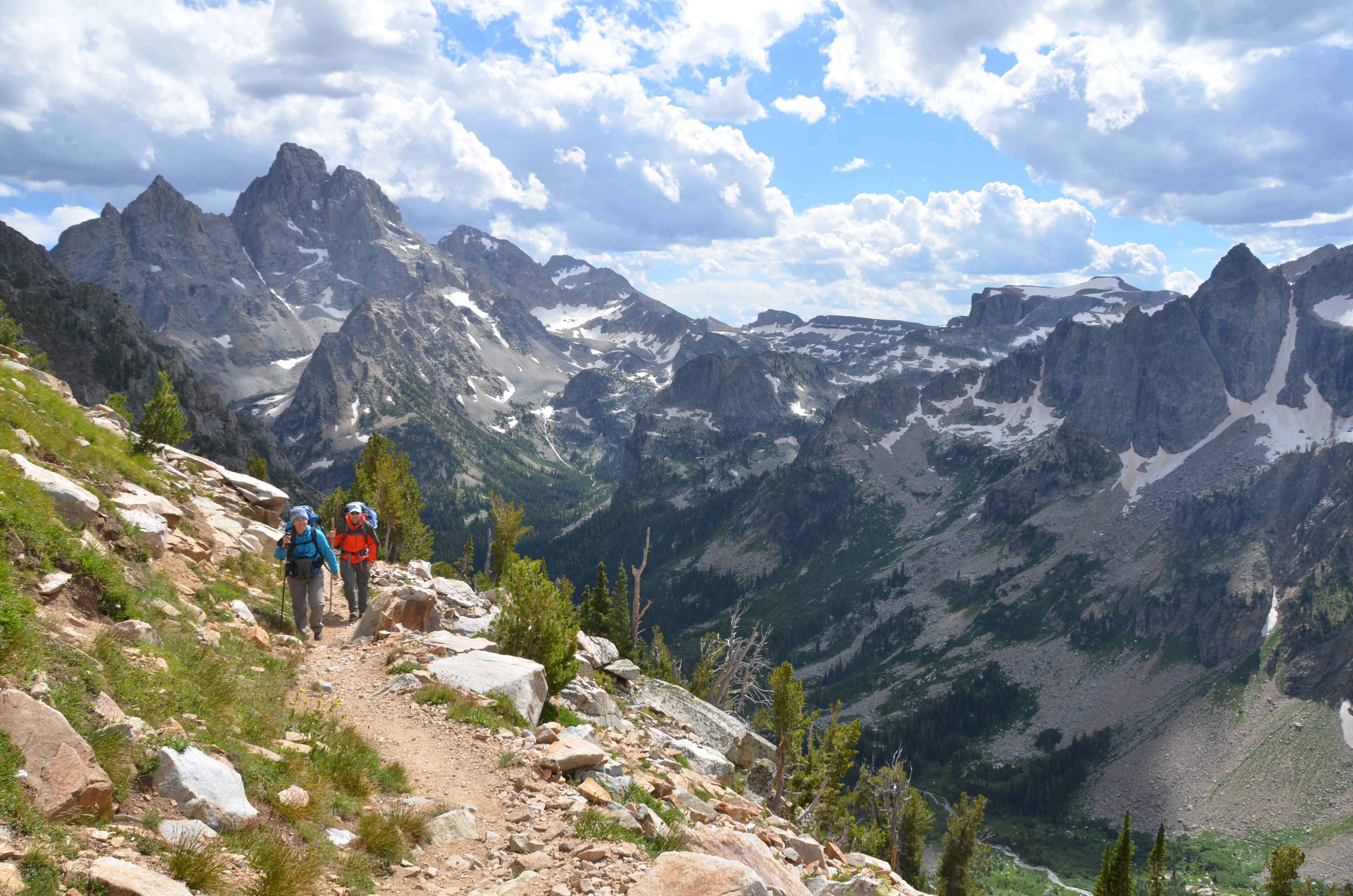
Grand Teton is the hiker's park, with iconic trails like Cascade Canyon, Jenny Lake, and Delta Lake climbing quickly into dramatic high country. Yellowstone has excellent trails too, but its highlights are more spread out and often reached by car between trailheads. If your ideal day is a big mountain hike from a single trailhead, Grand Teton wins; if you prefer a road-trip sampler of geysers and canyons, Yellowstone delivers.
Should you visit both on one trip?
Almost always, yes. The two parks connect via the John D. Rockefeller Jr. Memorial Parkway, so combining them is one of the great American road trips. A common plan gives Yellowstone three days and Grand Teton two. Travelers flying into Bozeman can follow our guide to the national parks near Bozeman for the northern approach, while Jackson serves the southern end. Entrance fees, reservations, and road openings change yearly, so check the current-year rules.
When is the best time to go?
Summer offers the fullest access and warmest weather but the biggest crowds. September brings golden aspens, elk rut, and thinner traffic. Late spring is prime for baby animals, though high roads may still be closed by snow. Winter turns both parks into snowy wonderlands with limited but magical access.
FAQ
How far apart are Yellowstone and Grand Teton?
Grand Teton's northern boundary is only about 10 miles from Yellowstone's South Entrance, connected by a scenic parkway, so driving between the two parks takes well under an hour excluding stops.
Which park is better for a first-timer?
Yellowstone is the more famous introduction thanks to its geysers and wildlife, but Grand Teton is easier to see fully in a short visit. Most first-timers do both, starting with Yellowstone.
Do you need reservations for Yellowstone or Grand Teton?
Neither park currently requires a timed-entry reservation to drive in, but lodging and campgrounds book out far in advance. Confirm the current-year rules before planning.
Which park has geysers?
Yellowstone has the geysers and hot springs, home to roughly half the world's geothermal features. Grand Teton has no significant thermal areas, focusing instead on mountains and lakes.How many days do you need for both parks?
Five days is a comfortable target, giving Yellowstone three days for its geyser basins, canyon, and a wildlife valley, and Grand Teton two days for a signature hike and a lakeside sunrise. With only three days total, prioritize Yellowstone's Upper Geyser Basin and Grand Teton's Jenny Lake area to sample the best of each.
Which park is more crowded?
Yellowstone draws more total visitors and its famous attractions like Old Faithful can feel busy at midday, while Grand Teton, though popular, spreads its crowds across trailheads and lakes. Early mornings dramatically reduce congestion in both parks.