
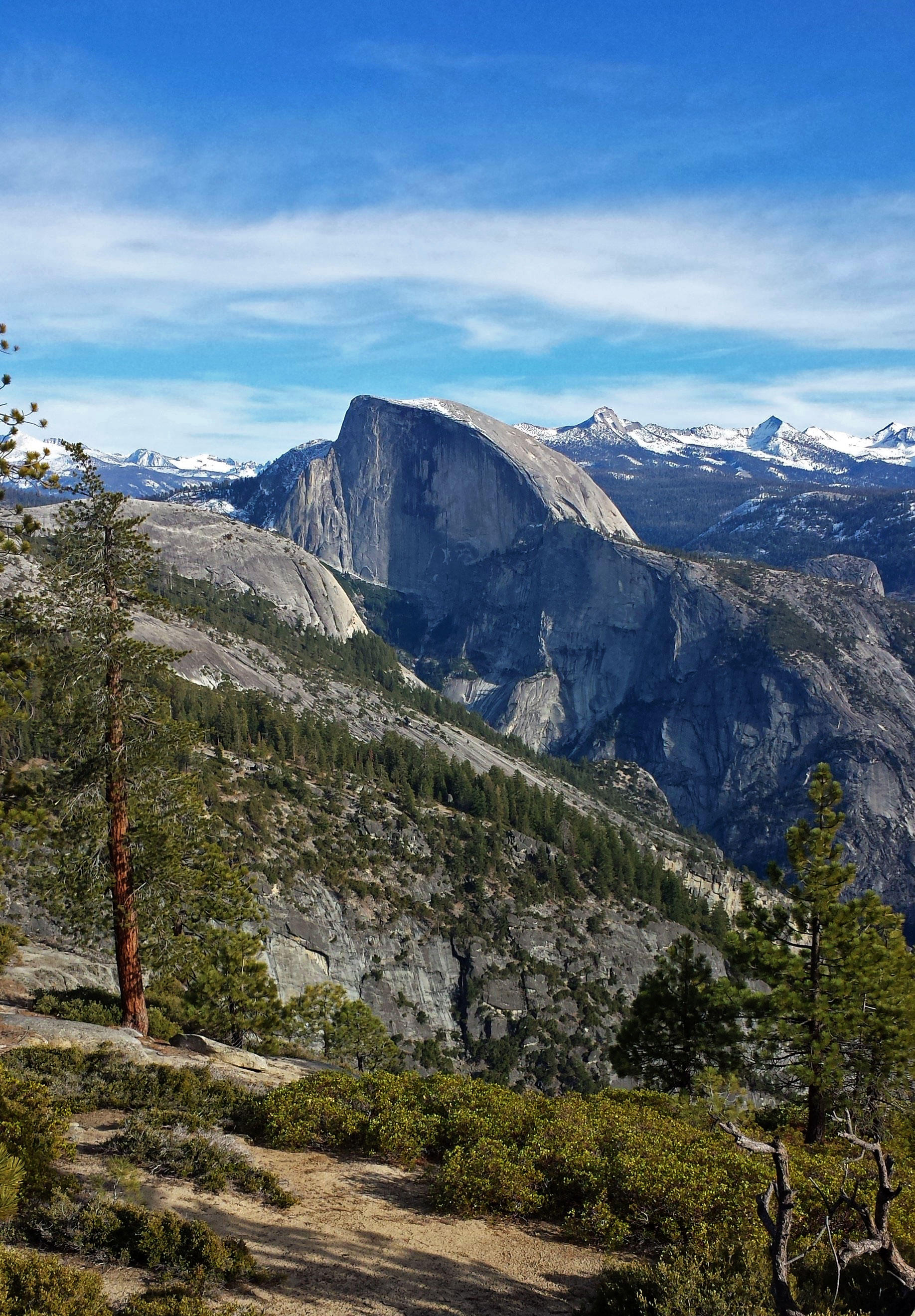
One day in Yosemite National Park is enough to see Yosemite Valley properly — Tunnel View, Bridalveil Fall, Lower Yosemite Fall, and the Merced River meadows — but only if you enter before 8 a.m. and give up on Glacier Point and the giant sequoias entirely. The mistake almost every one-day visitor makes is treating the park as one destination when it is really four regions separated by an hour of mountain driving each.
Why should you spend your one day in Yosemite Valley?
Yosemite is roughly the size of Rhode Island. Yosemite Valley is a seven-mile-long floor holding the highest concentration of famous landmarks in the park, and a free shuttle loops it continuously. Glacier Point is an hour from the Valley floor each way; the Mariposa Grove of giant sequoias is about 75 minutes; Tuolumne Meadows and Tioga Road are two hours and closed by snow most of the year. Choosing the Valley buys you six or seven landmarks instead of two, and it removes almost all driving from your day.
If you have already seen the Valley on a previous trip, the better single-day alternative is Glacier Point plus the short Sentinel Dome and Taft Point walks — but do not try to combine that with the Valley.
What is the best hour-by-hour Yosemite one-day itinerary?
6:45 a.m. — enter the park. Arriving before 8 a.m. is the single highest-leverage decision of the day. Valley day-use lots at Yosemite Village and Curry Village fill by roughly 9:30 a.m. in summer, and once they are full you circle.
7:15 a.m. — Tunnel View. Coming in on Highway 41 from the south, this is your first stop and it is best in early light, with El Capitan on the left, Bridalveil Fall on the right, and Half Dome centered. Fifteen minutes.
7:45 a.m. — Bridalveil Fall. A paved half-mile round trip from the parking area at the Valley's west end. Expect spray in May and June and a thin ribbon by September.
8:30 a.m. — park the car and stop driving. Leave it at Yosemite Village or Curry Village for the rest of the day and use the Valleywide shuttle. This is the step people skip and then lose 90 minutes to.
9:00 a.m. — Lower Yosemite Fall. A one-mile paved loop to the base of North America's tallest waterfall. Peak flow is May; by late August it often runs dry, which surprises visitors who planned the whole day around it.
10:30 a.m. — Mist Trail to Vernal Fall footbridge. Shuttle to Happy Isles and climb 1.6 miles round trip, about 400 feet of gain, on pavement. Going beyond the footbridge to the top of Vernal Fall adds steep granite stairs and two more hours — a fair trade only if you skipped Bridalveil.
1:00 p.m. — lunch and Yosemite Valley Welcome Center. Twenty minutes in the exhibits genuinely improves how the afternoon looks.
2:30 p.m. — Cook's Meadow loop and Sentinel Bridge. A flat one-mile boardwalk loop with the classic Half Dome reflection from the bridge. This is the most scenery per unit of effort anywhere in the park.
4:00 p.m. — Mirror Lake or El Capitan Meadow. Mirror Lake is a two-mile round trip and holds water in spring; by late summer it is a sandy flat. El Capitan Meadow is the better late-day choice, and you can usually spot climbers on the wall through a spotting scope.
6:30 p.m. — Valley View for sunset, on your way out along Northside Drive. Ten minutes, and less crowded than Tunnel View.
What should you cut when you fall behind?
You will fall behind. Cut in this order: Mirror Lake first, then the Mist Trail above the footbridge, then Bridalveil Fall. Protect Tunnel View, Lower Yosemite Fall, and Cook's Meadow — those three plus the shuttle are the irreducible core of a one-day Yosemite visit. Our guide to the best hikes in Yosemite covers the longer trails worth a second day.
Do you need a reservation for one day in Yosemite?
Yosemite has used peak-hours day-use reservations in some recent years and not in others, and the rules have changed season to season. Check the current-year rules on the park's official page before you drive, and plan for the possibility that entry between roughly 6 a.m. and 2 p.m. requires a booked reservation in addition to your entrance fee. Arriving before the reservation window opens has historically been a legal workaround, and it happens to be what this itinerary already asks you to do.
When is the best time of year for a single day in Yosemite?
Late May and early June: waterfalls near peak, Valley fully open, days long enough to fit everything above. April is quieter with strong falls but unpredictable weather. September and October trade waterfalls for thin crowds and warm, clear light. Winter closes Tioga and Glacier Point roads but leaves the Valley open and startlingly empty. See our month-by-month breakdown of the best time to visit Yosemite for detail.
FAQ
Is one day enough for Yosemite National Park?
One day is enough for Yosemite Valley and roughly six of the park's signature landmarks. It is not enough for the Valley plus Glacier Point plus the sequoias — attempting all three leaves you with about four hours of driving and no time to walk anywhere.
Can you drive through Yosemite in one day?
You can, but it is the worst use of the day. Parking once in Yosemite Valley and riding the free shuttle sees more in less time than driving between viewpoints, because the Valley's one-way roads and full lots make short hops slow.
What time should you arrive at Yosemite for a day trip?
Before 8 a.m., and ideally by 7 a.m. in summer. Valley day-use parking typically fills mid-morning, and the difference between a 7 a.m. and a 10 a.m. arrival is usually two hours of your itinerary.
Can you see Half Dome without hiking it?
Yes. Sentinel Bridge, Cook's Meadow, and Tunnel View all give clear Half Dome views on flat ground. Climbing the cables requires a lottery permit — see our Half Dome permit guide — and takes 10 to 14 hours, so it cannot be part of a one-day sightseeing trip.
Which entrance is best for a one-day Yosemite trip?
The South Entrance on Highway 41, because it puts Tunnel View on your way in rather than as a detour. Arriving from the west on Highway 140 is the fastest route to the Valley floor but skips that overlook.
Yosemite sits in the Sierra Nevada of California, one of the densest national park states in the country — Sequoia and Kings Canyon and Pinnacles are both within a half-day's drive. Full details, fees, and current conditions are on our Yosemite National Park page, and you can browse the rest of the system from all national parks.