
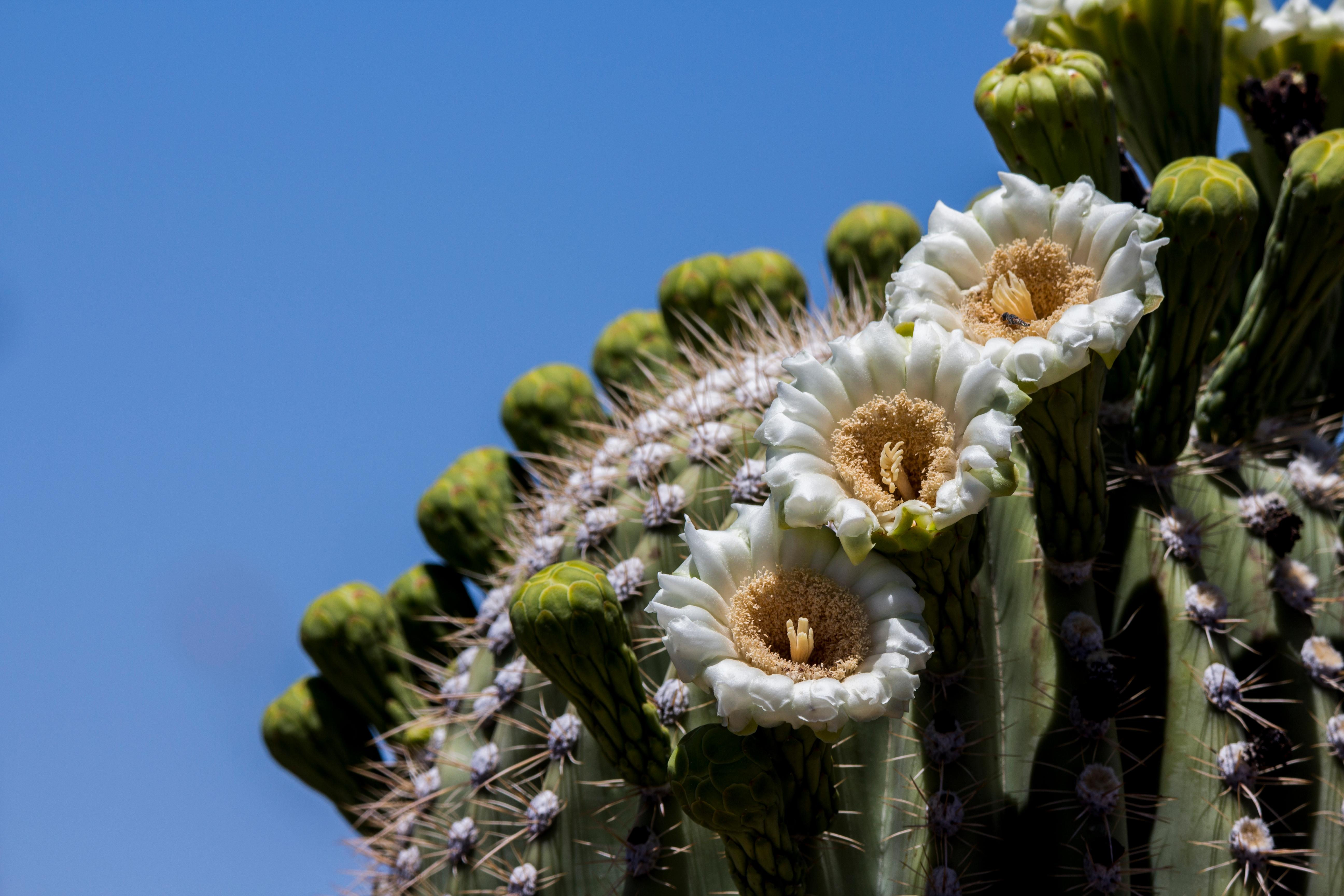
One day in Saguaro National Park works best if you split it between the park's two districts, either side of Tucson, so you see both the dense cactus forests of the west and the higher, greener slopes of the east. This itinerary gives you a realistic order, the short trails worth your time, and the heat and timing tips that matter in the Sonoran Desert.
How should you plan one day in Saguaro National Park?
Saguaro National Park is divided into the Tucson Mountain District on the west side and the Rincon Mountain District on the east side. They are roughly 30 miles apart by road, and each has its own visitor center and scenic drive, so you need to choose an order. A common plan is the west district for sunrise or morning and the east district for the afternoon and golden hour. Allow about an hour of driving between them, plus time for a lunch stop in Tucson.
What should you see first in the Tucson Mountain District?
Start at the Red Hills Visitor Center for maps and ranger advice, then drive the Bajada Loop Drive, a roughly six-mile graded dirt road through thick saguaro stands. Check current conditions, since washboard sections can be rough after rain. Stop at the Valley View Overlook Trail, an easy walk of under a mile with wide views, and the short Signal Hill trail, where you can see ancient petroglyphs on a small rock outcrop. The Desert Discovery Nature Trail is a flat, paved half mile that is good for learning about the plants and for photographing saguaros against the Tucson Mountains.
Where do you spend the afternoon in the Rincon Mountain District?
The eastern district holds older, larger saguaros and more variety in elevation. Begin at the Rincon Mountain Visitor Center, then take the paved Cactus Forest Loop Drive, an eight-mile one-way route that is also popular with cyclists. Stop at Javelina Rocks and Mica View for short walks and views toward the Santa Catalina Mountains. The Freeman Homestead Trail, about one mile, mixes a saguaro forest with the remains of a homestead and a wash lined with mesquite. If you want a longer walk, parts of the Cactus Forest Trail connect several viewpoints.
What are the best tips for a single day among the cactus?
Heat is the main planning issue. From late spring through early fall, temperatures can climb well above 100 degrees Fahrenheit, so do your walking early or late, wear a hat, and carry plenty of water. Stay on the trail, never touch a cactus, and give wildlife room; rattlesnakes are active in warm weather. Saguaros bloom from late April into June, and the white flowers open at night and last into the next morning, so spring visits add a seasonal bonus. Check the current-year entrance fee, hours, and any road closures before you go. For more ideas, read the best hikes in Saguaro, the best time to visit Saguaro, or the comparison of Joshua Tree vs Saguaro. You can also browse Arizona parks or the full national parks directory.
FAQ
Can you see both districts of Saguaro National Park in one day?
Yes. Plan on roughly six to eight hours: the Bajada Loop and a couple of short walks in the west, then the Cactus Forest Loop Drive and Freeman Homestead Trail in the east, with about an hour of driving between them.
Which district is better if you only have a few hours?
The west district is closer to central Tucson and has the densest saguaro stands, so it is the better choice for a short visit. The east district rewards you with older saguaros and more elevation change.
When do the saguaros bloom?
Blooms typically appear from late April through June, with the peak varying by year and elevation. Check with the park for current conditions.
Is the Bajada Loop Drive suitable for any vehicle?
It is a graded dirt road that is usually passable for ordinary cars when dry, but conditions change after rain, so check the current road status before driving it.
What is the best time of day to visit?
Early morning and the hour before sunset are best for light and cooler temperatures, and sunset behind the saguaros is a highlight in the west district.