
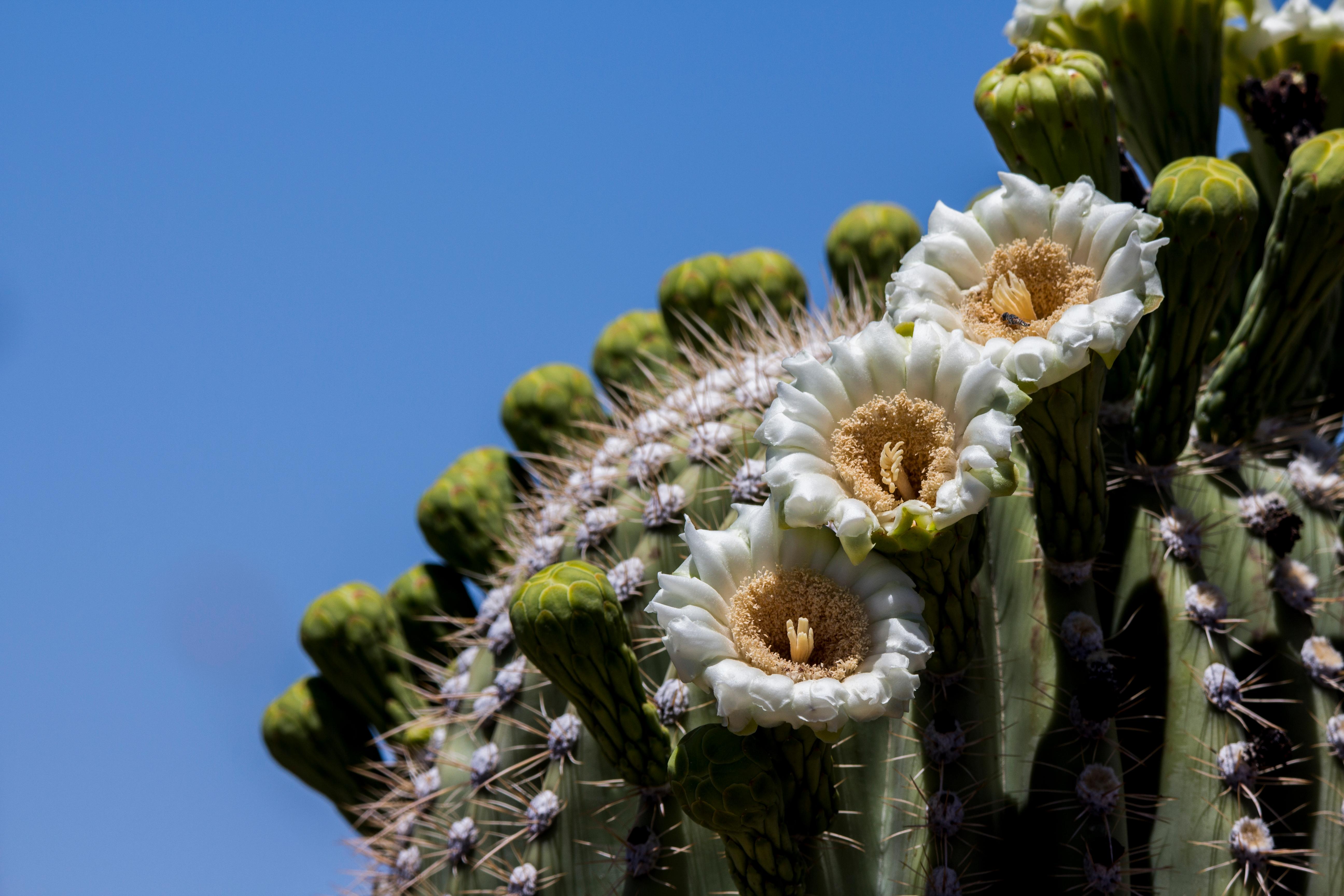
The best time to visit Saguaro National Park is November through April, when daytime highs sit in the comfortable 60s and 70s Fahrenheit and desert hiking is actually safe. Saguaro is a two-district park on either side of Tucson, and unlike mountain parks where winter is the closed season, here it is summer that shuts down realistic plans — June highs routinely pass 100°F and the park regularly warns visitors off trails after mid-morning. If you can only travel in summer, the trip still works, but it becomes a sunrise activity rather than a day out.
Why is winter the peak season here?
The Sonoran Desert runs on an inverted calendar. From November through April, Tucson averages daytime highs in the 60s and 70s with cold, clear nights that can dip near freezing in December and January. That is ideal weather for the long, exposed trails in both the Rincon Mountain District (east) and the Tucson Mountain District (west), neither of which offers much shade. Expect company: this is when snowbird traffic peaks and the small trailhead lots at Signal Hill and Douglas Spring fill early.
When do saguaros actually bloom?
Saguaro flowers — Arizona's state flower — typically open from late April into early June, peaking in May. The white blooms open at night and close by the following afternoon, so morning is the only reliable viewing window. Fruit ripens in late June and July. A separate spring show, the desert wildflower bloom of poppies and lupine, depends heavily on winter rainfall and usually peaks in March in a good year; in a dry winter it barely happens at all. If flowers are the point of your trip, May is the safer bet than March because saguaro bloom is far less rainfall-dependent.
How bad is summer, really?
May through September is genuinely dangerous for unprepared hikers. Highs of 100 to 110°F are normal in June, and heat-related rescues are a recurring problem. If you visit then, be on the trail at sunrise, carry far more water than feels reasonable, and be off exposed ground by 9 or 10 a.m. The upside: the July–September monsoon brings dramatic afternoon storms, cooler evenings, and the greenest desert of the year — great for photography from a scenic drive, less good for a long hike.
Which district should you pick, and when?
The two districts are about a 45-minute drive apart with Tucson in between, and they are not interchangeable. The west district (Tucson Mountain) has the denser, more photogenic saguaro forest, the Signal Hill petroglyphs, and the classic Bajada Loop Drive — best for short visits and sunset. The east district (Rincon Mountain) climbs toward 8,000 feet and offers real backcountry and cooler high-country trails, which makes it the better choice if you are stuck visiting in warm months. Our best hikes in Saguaro National Park guide breaks the trails down by district, and full logistics are on the Saguaro National Park page.
What else can you add to the trip?
Because Saguaro brackets a major city, it pairs easily. See national parks near Tucson for day trips, including Chiricahua National Monument to the southeast. Our Arizona national parks guide covers the wider state loop. Fees and any vehicle or permit requirements change, so check the current-year rules before you go.
FAQ
What is the best month to visit Saguaro National Park?
March is the strongest all-round month: warm but not hot, the best odds of a wildflower bloom, and long daylight. If you specifically want saguaro flowers, choose May instead and hike at dawn.
Is it too hot to visit Saguaro in summer?
It is too hot to hike midday. June through August highs commonly exceed 100°F. Summer visits should be limited to sunrise hikes, scenic drives, and evening visitor center stops.
When do saguaro cactus flowers bloom?
Late April through early June, peaking in May. Blooms open at night and close by the next afternoon, so plan to be in the park in the morning.
How many days do you need at Saguaro National Park?
One day is enough to see one district well. Two days lets you cover both the east and west districts without rushing the drive across Tucson.
Which side of Saguaro National Park is better?
The west (Tucson Mountain) district has the thicker saguaro stands and better sunsets. The east (Rincon Mountain) district has longer trails and higher, cooler elevations.
Does it snow at Saguaro National Park?
Rarely at the desert floor, and only briefly, but the high Rincon Mountains in the east district do receive snow most winters.