
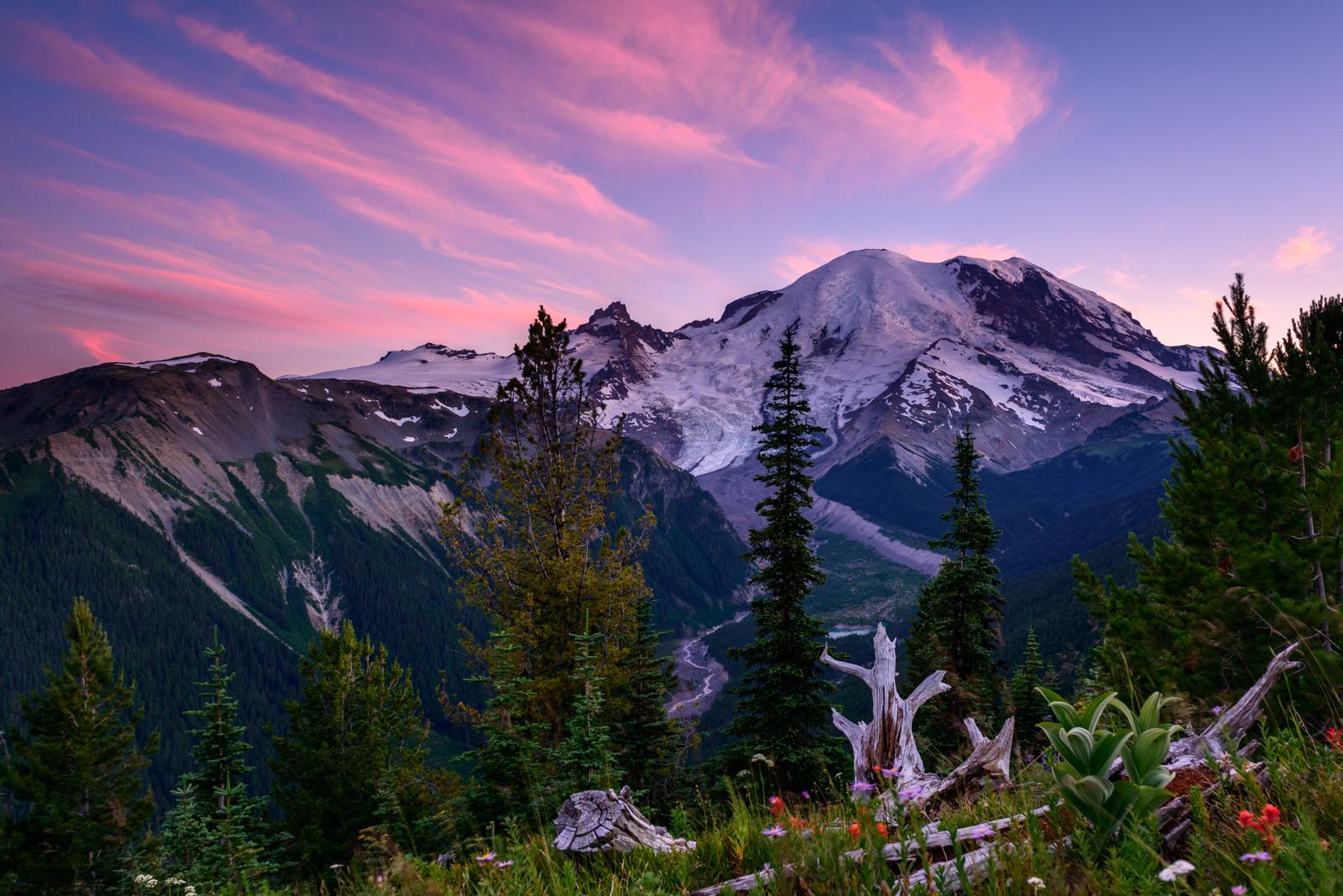
One day in Mount Rainier National Park works best when you commit to a single corner of the mountain rather than trying to circle it, because Rainier's five entrance areas — Paradise, Sunrise, Longmire, Ohanapecosh, and Carbon River — aren't connected by a quick cross-park road, and driving between them can eat two or more hours you don't have. Pick the wrong corner, or try to see two, and a one-day trip turns into a day mostly spent in the car.
Why Mount Rainier isn't a "drive around and see it all" park
Mount Rainier's road network loops around the mountain's base rather than crossing it (a layout it shares with Olympic National Park a few hours northwest), and the loop itself isn't fully open or fast at every point — sections near Cayuse Pass and Stevens Canyon connect the south and east sides, but getting from Paradise to Sunrise by car takes roughly two and a half hours even though the two areas are only a few miles apart as the crow flies. For a single day, the realistic move is choosing one corner and building the whole itinerary around it, rather than treating the park like a scenic drive-through.
The Paradise corner: the classic one-day pick
Paradise, on the mountain's south side, is the most visited area for good reason: it has the most developed trail network, the most reliable summer wildflower meadows, and the closest up-close glacier views reachable on foot. A one-day plan built around Paradise looks like an early arrival (parking fills by mid-morning in summer), a loop hike on the Skyline Trail or a shorter section of it depending on snow and fitness, lunch at or near the Paradise Inn or a packed picnic, and a stop at the Jackson Visitor Center to check trail and weather conditions before heading out. Building in a stop at Narada Falls on the way in or out adds a short, high-payoff detour without derailing the schedule.
The Sunrise corner: the quieter alternative
Sunrise, on the northeast side, is the highest point in the park reachable by car and tends to draw smaller crowds than Paradise, partly because it opens later in the season (often not until July) due to snowpack. A one-day Sunrise plan centers on the Sourdough Ridge or Sunrise Rim trails, both offering wide subalpine meadow views and, on clear days, direct sightlines to the mountain's north face. Because Sunrise sits at higher elevation with a shorter season, it's worth checking current-year opening dates before building a trip around it.
If the weather turns: Longmire and Ohanapecosh as a backup plan
Paradise and Sunrise both sit high enough that clouds and rain can erase the mountain view entirely, which is a real risk in a park known for socked-in summit weather. Longmire, at lower elevation near the southwest entrance, stays open essentially year-round and has easier, forest-floor trails like the Trail of the Shadows that still deliver a satisfying day even with the peak hidden. Ohanapecosh, in the park's southeast corner, offers old-growth forest and the Grove of the Patriarchs area as a similar low-elevation fallback, though it's a separate entrance from Longmire and shouldn't be combined with Paradise in the same one-day plan.
Building your actual one-day schedule
Whichever corner you choose, the shape of a good one-day visit is the same: arrive as close to opening as possible, hike the highest-payoff trail for your fitness level while the weather and light are best, eat lunch on-site rather than driving out and back, and leave a buffer before sunset for the return drive, since mountain roads near Rainier are narrow and slower after dark. Trying to combine Mount Rainier with a same-day stop at a different corner of the park is the single most common way a one-day trip goes sideways. If you have more time, Rainier pairs well with a longer Washington itinerary that includes North Cascades National Park — browse our full national park guides for more route ideas.
FAQ
Can I visit both Paradise and Sunrise in one day?
It's possible but not advisable for a relaxed visit — the drive between them takes roughly two and a half hours each way, which leaves little time for actual hiking. Most one-day visitors get a better experience committing to one corner.
Which corner is better for a first visit, Paradise or Sunrise?
Paradise is the more reliable first-timer choice thanks to its longer season, more developed facilities, and easier access to glacier views. Sunrise is a strong pick for travelers who want a quieter alternative and are visiting in peak summer when Paradise is most crowded.
Do I need a timed-entry reservation to visit Mount Rainier?
Mount Rainier has used timed-entry systems for certain corridors during peak summer months in recent years, but the specific requirements and dates change — check the current-year rules on the park's official site before your visit.
What if the mountain is covered in clouds on my visit day?
Head for Longmire or Ohanapecosh instead of the higher viewpoints — both sit at lower elevation with forest trails that hold up well even when Paradise and Sunrise are socked in.