
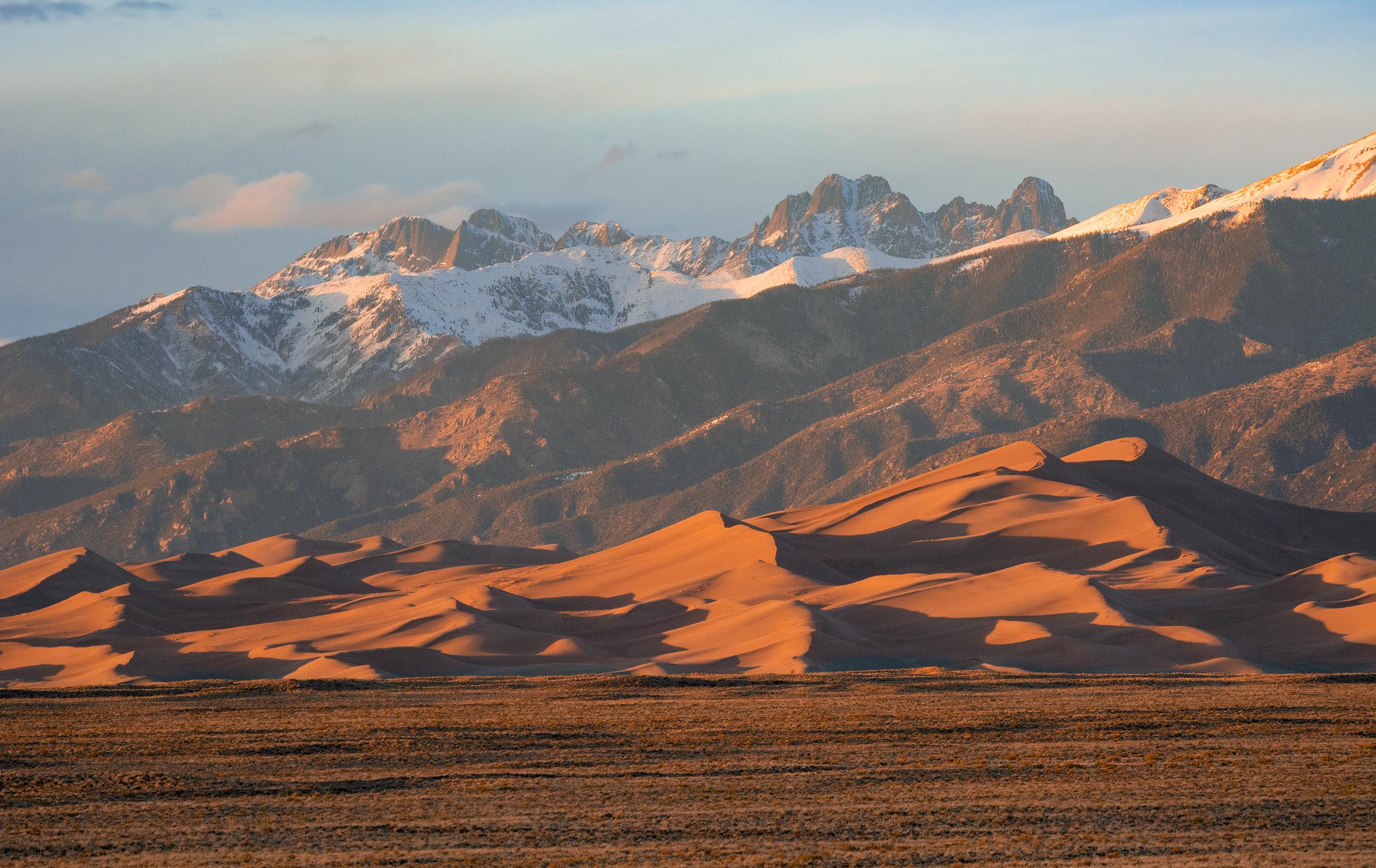
One day in Great Sand Dunes National Park is enough to climb North America's tallest dunes, splash in a seasonal creek, and watch the sand turn gold at sunset. This itinerary shows how to sequence the day around heat, wind, and light so you spend your energy on the dunes when conditions are best.
Plan on a full day. The dunefield sits in Colorado's San Luis Valley at roughly 8,000 feet, so even short walks feel harder than they look. Use our Great Sand Dunes park guide for logistics and the best hikes in Great Sand Dunes if you want more trail options.
What is the best time of day to start?
Start early or plan to hike late. In summer the sand surface can become dangerously hot by midday, hot enough to burn bare feet, and afternoon thunderstorms bring lightning risk across the open dunes. Morning and early evening are cooler and give the best light for photos, because low sun creates sharp ridgelines and long shadows.
Begin at the visitor center to check conditions, pick up a map, and ask rangers about Medano Creek flow, wind, and any closures. Then drive to the main dunes parking area at Dunes Parking Lot.
Is Medano Creek worth a stop?
Yes, when it is flowing. Medano Creek runs along the base of the dunes, usually strongest in spring and early summer as snowmelt arrives, and it often drops or disappears by late summer. Its surge flow creates small waves that kids love. Check the current-year conditions before building your day around wading, since flow varies a lot from year to year.
How hard is climbing the dunes?
There is no trail on the dunes, so you choose your own route. High Dune, at around 700 feet above the valley floor, is a popular goal and takes roughly two to three hours round trip for most people. Star Dune, near 750 feet, is the tallest in North America but is a much longer, full-day effort. Climbing sand is slow work, so bring more water than you think you need and wear sunglasses to protect against blowing grit.
A good rule is to turn around when the weather changes or you run low on water. Sand sleds and boards can be rented at shops outside the park, and they make the descent the best part of the day. Use sand sleds only on the dunes, and follow posted guidance.
What can you do in the middle of the day?
When the sand heats up, shift to shadier or indoor options. Walk the Montville Nature Trail through pinyon and juniper, drive toward the Mosca Pass trailhead for a forested hike, or visit the visitor center exhibits. The Zapata Falls area nearby offers a short, cool hike to a waterfall tucked into a rock canyon, but check access and water conditions first.
How should you finish the day?
Return to the dunes in the last two hours before sunset for cooler sand and golden light. Walk out along the ridgeline for photos, then stay for stars. Great Sand Dunes is an International Dark Sky Park, so skies can be exceptional on clear, moonless nights. Bring a headlamp and a warm layer, since temperatures drop fast at this elevation.
Combine this stop with a Colorado road trip through Black Canyon of the Gunnison, Mesa Verde, or Rocky Mountain. Browse every national park in Colorado or the full parks directory for more ideas.
FAQ
Can you do Great Sand Dunes in one day?
Yes. A day gives you time to climb a dune, walk or wade Medano Creek if it is flowing, and see sunset. Staying overnight adds stargazing.
What should you wear and bring?
Bring plenty of water, sunscreen, sunglasses, a hat, and layers. Sturdy shoes protect feet from hot sand, and closed shoes also keep sand out when it is windy.
Is the sand really that hot?
Summer afternoons can make the surface very hot, so hike in the morning or evening and avoid walking barefoot at midday.
Do you need a permit or reservation?
Day use generally does not require a reservation, but backcountry camping on the dunes needs a permit. Always check the current-year rules, fees, and conditions on the National Park Service site.
Is it good for kids?
Yes. Kids enjoy the sand and creek play, but watch for heat, wind, and storms, and keep everyone hydrated.