
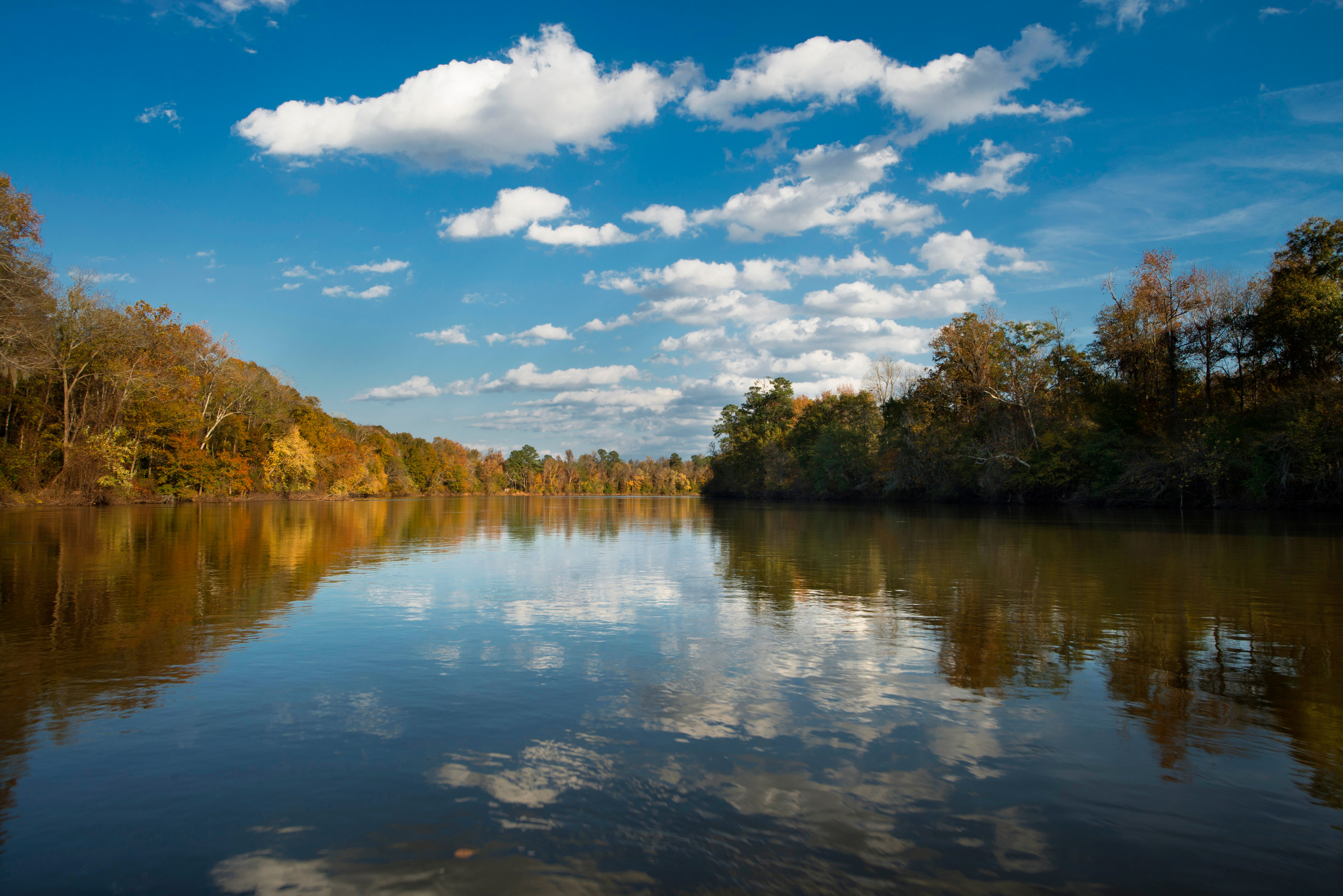
One day in Congaree National Park is enough to walk among some of the tallest old-growth trees in the eastern United States, paddle a blackwater creek and still be back in Columbia, South Carolina, for dinner. This itinerary is built around the park's real constraints: a flat, flood-prone floodplain, heat and mosquitoes in summer, and a single main visitor area.
What is the best way to spend one day in Congaree National Park?
Start early at the Harry Hampton Visitor Center, walk the elevated boardwalk in the cool morning light, add one longer woodland trail in the middle of the day, and finish with a paddle or a slow evening on the trails. Congaree protects the largest intact expanse of old-growth bottomland hardwood forest left in the southeastern U.S., so the payoff is the forest itself rather than any single viewpoint.
How should you plan the morning?
Arrive soon after the visitor center opens, stop in for a map and the current trail and flood conditions, and then take the Boardwalk Loop, an elevated walkway of roughly 2.4 miles that keeps you dry above the floodplain. Go slowly: the big loblolly pines, bald cypress and tupelo are the point, and the light under the canopy is best before midday. The boardwalk is level and the most accessible part of the park, which makes it a good first stop for mixed-ability groups.
What should you do at midday?
Pack lunch, because services in the park are minimal, and eat near the visitor center. Afterwards choose one unpaved trail. The Weston Lake Loop, about 4.6 miles, leads to a quiet oxbow lake with cypress knees and good bird and turtle watching. If you want a shorter outing, the Bluff Trail is under a mile and shows the forest's edge. Trails can be muddy or underwater after heavy rain, so ask a ranger before committing.
Is the afternoon better for paddling?
Paddling the Cedar Creek Canoe Trail is the most distinctive way to see Congaree, because the creek winds through the forest at water level. Outfitters near the park offer guided trips, and rangers sometimes lead paddles on set dates. Water levels matter, so check conditions first and bring your own boat only if you are comfortable with logjams and variable flow.
When is the best time of year for a one-day visit?
Late fall through spring is the most comfortable window, with cooler temperatures and far fewer biting insects. Summer is hot, humid and buggy, and the mosquito forecast posted at the visitor center is worth reading. In late spring the park is known for its synchronous firefly display, which is managed through a limited-access system, so check the current-year rules before planning around it.
What should you pack?
Bring water, insect repellent, sun protection, closed-toe shoes and a rain layer. Cell service can be patchy, so download directions before you leave Columbia. Check the current-year rules for fees, pets, drones and any trail closures, since conditions here change with the river.
How does this fit into a bigger trip?
Congaree pairs well with other southern stops. See our guide to Congaree National Park, browse the full South Carolina page, or compare other forest destinations such as Great Smoky Mountains National Park and Mammoth Cave National Park. For more ideas, explore all national parks and states, or read our best hikes in Congaree guide.
FAQ
Is one day enough for Congaree National Park?
Yes. Most visitors see the highlights in a single day by combining the Boardwalk Loop with one longer trail or a paddle.
How far is Congaree from Columbia, SC?
The park is roughly 30 miles southeast of Columbia, typically a drive of around 40 minutes depending on traffic.
Do you need reservations for Congaree?
Day use generally does not require reservations, but special programs such as firefly viewing and some tours are limited, so check the current-year rules.
What is the best trail for first-time visitors?
The Boardwalk Loop is the best starting point because it is flat, accessible and passes the park's largest trees.
Is Congaree good for kids?
Yes, the boardwalk is stroller-friendly in most conditions and the Junior Ranger program makes the forest engaging for children.