
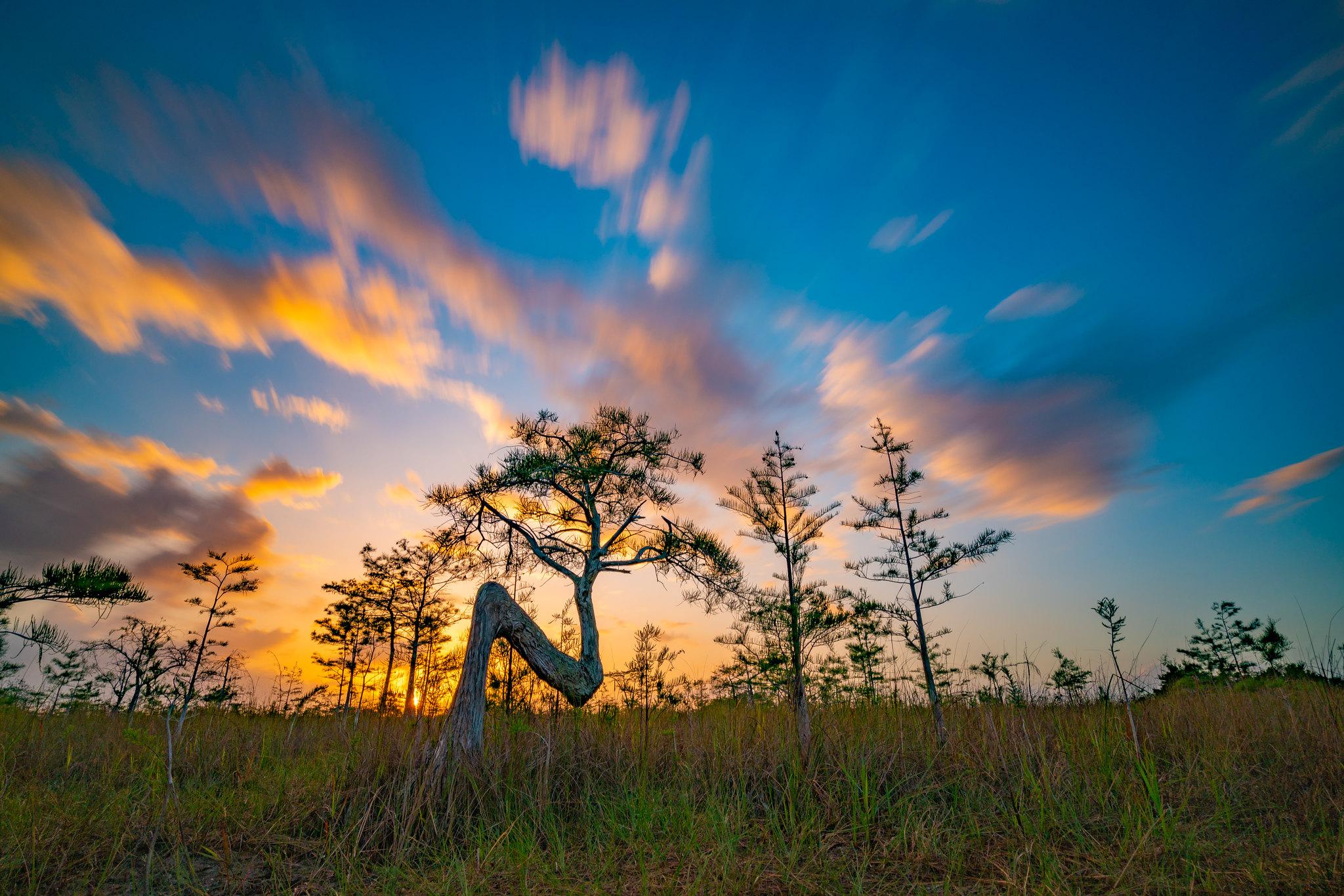
The best national parks near Miami are Everglades National Park and Biscayne National Park, two utterly different wildernesses, one a river of grass, the other a turquoise reef, that both sit within an hour of the city. Few metros in America let you paddle a mangrove tunnel and snorkel a coral reef in the same weekend, which makes Miami a rare double-park basecamp.
What national parks are closest to Miami?
Two national parks flank the city. Everglades National Park spreads across the southern tip of Florida, and its Ernest F. Coe entrance near Homestead is about an hour southwest of downtown Miami. Biscayne National Park, which is 95 percent water, has its Dante Fascell Visitor Center about 45 minutes south. Together they protect sawgrass prairies, cypress domes, mangrove coasts, and living coral reefs, an astonishing range of ecosystems packed into a single day-trip radius.
What can you do in the Everglades?
The Everglades reward slow, patient exploration. Walk the Anhinga Trail at dawn to see alligators, herons, and turtles at close range, then drive the 38-mile road to Flamingo for crocodiles and manatees. Airboat tours operate along the park's northern edge, while paddlers can explore the Nine Mile Pond canoe trail. Winter, the dry season, concentrates wildlife around remaining water and keeps mosquitoes manageable. Entrance fees and tour reservations shift yearly, so check the current-year rules before you go.
How do you visit Biscayne National Park?
Because Biscayne is almost entirely underwater, the best experiences happen by boat. Concession-run trips offer snorkeling and diving over coral reefs and historic shipwrecks on the Maritime Heritage Trail, and paddlers can explore the mangrove shoreline near the visitor center. Even land-bound visitors enjoy the jetty walk and the aquarium-quality views from shore. Boat tours book up fast in season, so reserve ahead and confirm the current-year schedule and pricing.
When is the best time to visit?
The dry winter season from December through April brings comfortable temperatures, fewer bugs, and the best wildlife viewing in the Everglades. Summer is hot, humid, buggy, and prone to afternoon storms, though the landscape turns lush and green. Hurricane season peaks in late summer and early fall, so watch forecasts. For most travelers, the winter months are the clear sweet spot for both parks.
Where should you stay?
Miami and Miami Beach offer the widest range of hotels and dining, with an easy drive south to either park. Homestead and Florida City sit closest to the Everglades and Biscayne entrances for early starts. The Everglades also has two developed campgrounds, Long Pine Key and Flamingo, which fill quickly in the dry season, so book early.
FAQ
Can you see both parks in one trip?
Yes. Everglades and Biscayne are only about 40 minutes apart near Homestead, so many visitors devote a morning to a reef boat tour at Biscayne and an afternoon to the Everglades, or split them across two days.
Are there alligators in the Everglades?
Absolutely. The Everglades is one of the only places on Earth where alligators and crocodiles coexist. The Anhinga Trail is among the most reliable spots to see alligators safely from a boardwalk.
Do you need a boat for Biscayne National Park?
To experience most of Biscayne you do, but concession boat tours, kayak rentals, and the shoreline near the visitor center let you enjoy the park without your own vessel. Check the current-year tour availability.
How far is the Everglades from Miami?
The main Homestead entrance is roughly an hour from downtown Miami, while the Shark Valley entrance off Tamiami Trail is a similar distance to the northwest and famous for its wildlife-lined tram loop.