
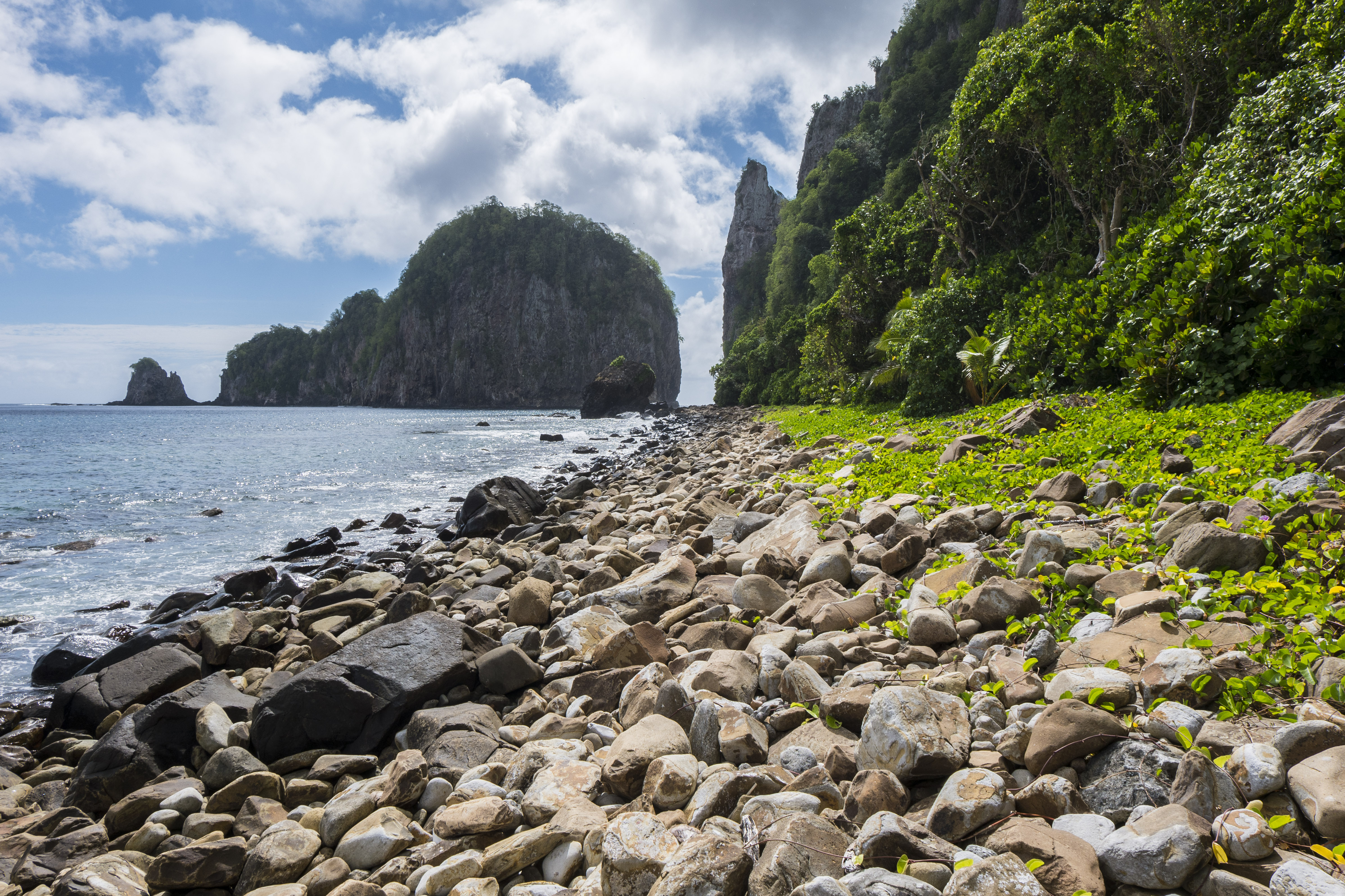
The National Park of American Samoa is the only US national park south of the equator, and visiting it means flying to Pago Pago on Tutuila — currently reachable on a roughly five-and-a-half-hour flight from Honolulu — then arranging your own ground transport, because the park has no entrance gate, no fee, no shuttle system and no lodging inside its boundaries. Fewer than 10,000 people visit in a typical year, which makes it the least-visited unit in the entire national park system by a wide margin.
Where exactly is the park?
The park is not one contiguous place. It is spread across three islands: Tutuila, Ofu and Ta'u, totalling about 8,257 acres of land plus 4,000 acres of offshore reef. Tutuila holds the visitor center in Pago Pago and the most accessible trails. Ofu has what many people consider the finest beach in the South Pacific, backed by a coral reef you can snorkel directly from shore. Ta'u contains Lata Mountain, the highest point in American Samoa at 3,170 feet, and some of the tallest sea cliffs on earth.
Unusually, the National Park Service does not own this land. It leases it from Samoan villages under a 50-year agreement, and the villages continue to use it. That arrangement shapes everything about how you visit.
How do you actually get there?
Almost everyone arrives through Honolulu on the flight to Pago Pago International Airport (PPG). Service is limited — historically a couple of flights a week — so your dates are dictated by the schedule rather than the other way round. Check the current-year flight schedule before you book anything else.
US citizens do not need a passport for American Samoa, but you do need proof of citizenship and onward travel, and you will need a passport to connect through any other country. Getting between islands means a small inter-island flight or a ferry to Ofu and Ta'u in the Manu'a group; both are weather-dependent and both cancel. Build slack days into your plan.
What can you actually do in the park?
The signature hike on Tutuila is the Mount Alava Trail, about 7 miles round trip from Fagasa Pass along a ridgeline to a summit overlooking Pago Pago Harbor. The steeper Mount Alava Adventure Trail climbs from Vatia through 56 ladders and 783 steps — a genuinely demanding route, not a stroll. The short Pola Island Trail near Vatia takes about 20 minutes and delivers the sea-stack view that appears on most photos of the park.
On Ofu, the activity is the beach and the reef. There is no dive shop, no rental counter and no restaurant on the beach — bring your own snorkel gear and food. On Ta'u, the Si'u Point Trail runs roughly 5 miles along the coast beneath the cliffs.
Where do you stay?
There is no lodging inside the park. On Tutuila, hotels cluster around Pago Pago and Tafuna. The more interesting option is the park's Homestay Program, which places visitors with Samoan families — it is the reason many people rate this park as the most culturally rewarding in the system, and it is arranged through the visitor center rather than an online booking site. On Ofu, accommodation is essentially one small lodge, so reserve far ahead and confirm it is operating in the current year.
What should you know about local custom?
This matters more here than at any other US national park. Sunday is widely observed and many villages hold an evening prayer curfew, Sa, during which you should stop walking or driving and wait quietly. Ask before entering village land or photographing people. Modest dress away from the beach is expected. Visitors who follow these norms are treated with remarkable generosity; visitors who ignore them are not.
How long should you budget?
A week is the realistic minimum: two travel days, three or four on Tutuila, and a two-to-three-night Manu'a extension if the inter-island flights cooperate. A weekend trip is not practical given the flight schedule. Tropical conditions run warm and humid year-round, with a wetter season roughly November through April and cyclone risk in that window.
FAQ
Is there an entrance fee for the National Park of American Samoa?
No. The park charges no entrance fee and does not require a permit for day hiking. Your America the Beautiful pass is not needed here, though it still covers the rest of the system — see our America the Beautiful pass guide.
Do you need a passport to visit American Samoa?
US citizens travelling directly from the United States need proof of citizenship and onward travel rather than a passport, but a passport is strongly recommended and required for any connection through another country. Check the current-year entry rules before departure.
What is the best time of year to go?
May through September is drier and slightly cooler, and it avoids the November-to-April cyclone season. Temperatures stay near 80°F year-round regardless.
Can you snorkel or dive in the park?
Yes. The park protects about 4,000 acres of coral reef, and the reef off Ofu Beach is snorkelled straight from the sand. There is no on-site gear rental, so bring your own mask and fins.
How does it compare to other remote US parks?
It is harder to reach than Kobuk Valley in terms of scheduling, though less expensive once you are there. If your goal is quiet parks in general, our roundup of the least visited national parks covers the alternatives, and Virgin Islands National Park offers a similar reef-and-rainforest mix far closer to the mainland.
Browse the full National Park of American Samoa guide, see everything in American Samoa, or explore all national parks.