
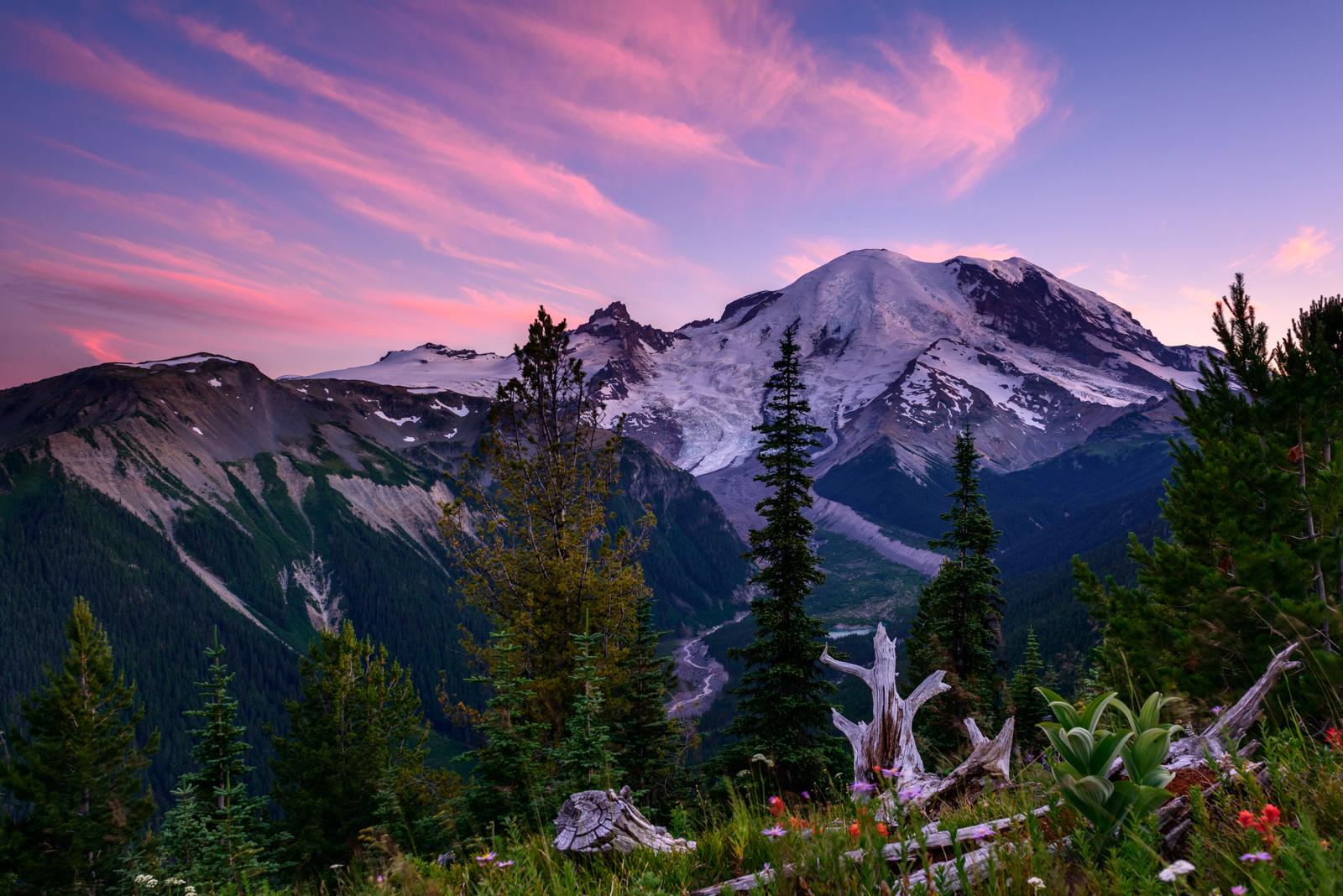
The best time to visit Mount Rainier National Park is late July through mid-September, when the subalpine wildflower meadows at Paradise and Sunrise are in full bloom, every road in the park including Sunrise Road and Stevens Canyon Road is open, and you have the highest odds of actually seeing the mountain. Rainier makes its own weather, and outside that window the summit is hidden behind cloud more often than not.
That short peak season is the defining fact about this park. Rainier holds one of the deepest snowpacks in the country — Paradise averages well over 50 feet of snowfall a year — so the meadows that look like high summer in early August were under snow in June.
What Is the Best Month to Visit Mount Rainier?
August is the single best month. The wildflower bloom at Paradise typically peaks from late July into the first two weeks of August, all park roads are open, and August is statistically the driest and clearest month of the year in western Washington. Early September is a close second: the flowers are past, but crowds thin, the air is often clearer, and huckleberry and mountain ash colour starts turning at elevation.
June is the month most first-time visitors misjudge. It feels like summer in Seattle, but Paradise can still have 10 feet of snow on the ground and the Skyline Trail may be a snow route rather than a hike.
When Do the Wildflowers Peak at Paradise?
Late July through mid-August in a typical year, though the bloom tracks snowmelt rather than the calendar and can shift two to three weeks either direction. Sunrise, on the drier northeast side at 6,400 feet, usually peaks slightly later than Paradise. Stay on paved paths and boardwalks — the meadow soil here takes decades to recover from a single footprint.
Do You Need a Timed Entry Reservation?
In recent seasons Mount Rainier has run timed entry reservations for the Paradise and Sunrise corridors during peak summer, typically covering mid-morning through mid-afternoon on summer dates. The system, the dates it applies to, and the release schedule have changed year to year, so check the current-year rules before you book anything. Entering before the window opens in the morning has generally been the reliable workaround. Our Mount Rainier timed entry guide covers how the system has worked in practice.
When Is Mount Rainier Least Crowded?
Late September and October, once the reservation season ends and school is back. The trade-off is weather: the Pacific Northwest rainy season generally reasserts itself in October, and Sunrise Road closes for the season, usually in early October. Weekdays in any month are dramatically quieter than weekends — Rainier is a day-trip destination for the whole Seattle–Tacoma metro area, and Saturday parking at Paradise can fill before 9 a.m.
Is Mount Rainier Open in Winter?
Partly. The Nisqually entrance and the road to Paradise stay open in winter during daylight hours, weather permitting, and Paradise becomes a major snowshoeing and sledding destination. Chains are required to be carried in all vehicles, including all-wheel drive, and the road to Paradise is gated overnight and opens only after plowing. The Carbon River, Mowich Lake, Stevens Canyon and Sunrise areas are closed. Confirm current-year winter access and gate times before driving up.
What About Cloud Cover — Will You Actually See the Mountain?
This is the question that matters most and the one most itineraries ignore. Rainier is obscured far more often than visitors expect, and July through September gives you meaningfully better odds than any other period. If you have flexible dates, watch the forecast and go on the clear day rather than the planned day. If your dates are fixed and the mountain is socked in, the lower-elevation Grove of the Patriarchs and Ohanapecosh area and the park's waterfalls are far less weather-dependent.
How Does Rainier Compare to Washington's Other Parks by Season?
All three Washington parks peak in the same narrow summer window, but they fail differently in shoulder season. Olympic National Park has a year-round coastal and rainforest half that stays accessible when the high country closes, making it the better bad-weather option. North Cascades National Park has an even shorter season than Rainier, with the North Cascades Highway typically closed from November into spring. Details and current conditions for this park are on the Mount Rainier National Park page, and you can compare all three on our Washington national parks guide.
FAQ
What is the best month to visit Mount Rainier National Park?
August. It combines peak wildflower bloom, fully open roads, the driest weather of the year, and the best odds of clear views of the mountain.
When do the wildflowers bloom at Paradise?
Typically late July through mid-August, but the bloom follows snowmelt and can shift two to three weeks in either direction depending on the winter's snowpack.
Is June a good time to visit Mount Rainier?
Only with adjusted expectations. Paradise often still has deep snow in June, Sunrise Road is usually still closed, and the meadows have not emerged. Lower-elevation trails and waterfalls are the better June choice.
Do you need a reservation for Mount Rainier?
Timed entry reservations have applied to the Paradise and Sunrise corridors during peak summer hours in recent seasons. The rules change year to year, so check the current-year requirements before your trip.
When does Sunrise Road open?
Usually late June or early July, depending on snowpack, and it closes again around early October. It is the last major park road to open each year.
How many days do you need at Mount Rainier?
Two days lets you do Paradise and Sunrise properly, which sit on opposite sides of the mountain and are about two hours apart by road. One day forces you to pick one.