
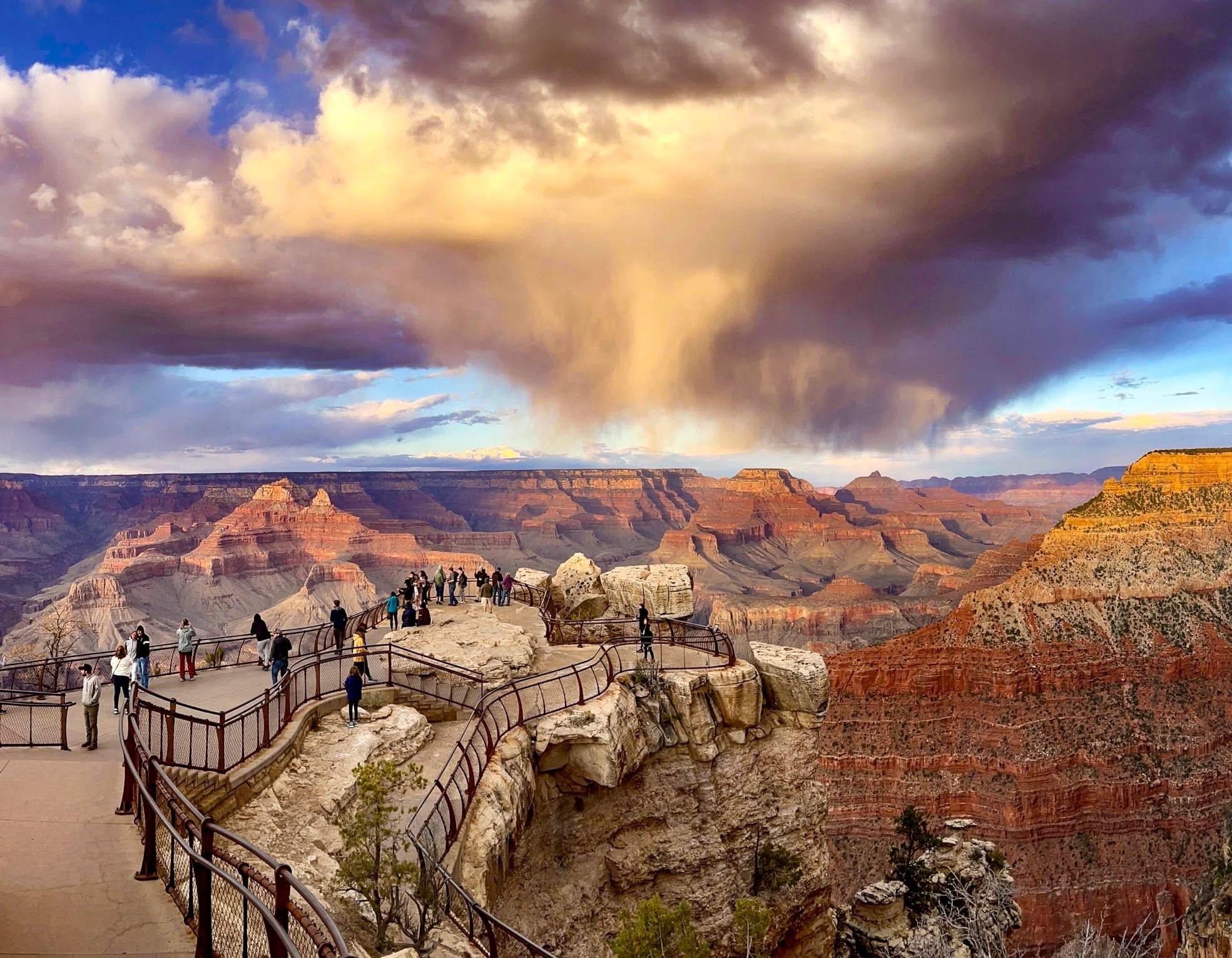
The best time to visit Grand Canyon National Park is spring (March to May) and fall (September to November), when rim temperatures are mild, crowds are lighter than in peak summer, and both rims are generally accessible. Because the park stretches across northern Arizona at very different elevations — the South Rim near 7,000 feet, the North Rim above 8,000 feet, and the Colorado River a mile below — the ideal timing depends on which part of the canyon you want to experience. This guide walks through each season so you can plan around weather, access, and crowds.
What is the overall best time to visit the Grand Canyon?
Spring and fall are the shoulder seasons that balance comfortable weather with manageable crowds. Daytime highs on the South Rim sit in the 60s and 70s Fahrenheit, nights are cool, and the extreme summer heat inside the canyon has eased. These windows are also the safest for hiking below the rim. Summer delivers the longest days and full services, but it brings the largest crowds and dangerous inner-canyon heat, while winter offers solitude in exchange for cold and reduced access.
When is the weather best on the South Rim?
The South Rim is open year-round, and late spring and early fall offer its most pleasant conditions. Expect warm, sunny days and chilly mornings. July and August bring the North American monsoon, with dramatic but sometimes hazardous afternoon thunderstorms and lightning along the exposed rim. If you plan to hike toward the river, remember that temperatures rise sharply as you descend — the inner canyon can be 20 to 30 degrees hotter than the rim.
When is the North Rim open?
The North Rim is far more seasonal than the South Rim. Its facilities and services typically operate from mid-May through mid-October, and the access road closes to vehicles for the winter once snow arrives, usually by early December. Because it sits roughly 1,000 feet higher, the North Rim is cooler, greener, and much quieter, drawing only a fraction of the park's visitors. Always confirm the current-year North Rim opening and closing dates before planning a trip there.
What about visiting in summer and winter?
Summer (June to August) is peak season: every service is running and shuttle lines are long, but inner-canyon temperatures can exceed 100 Fahrenheit, and rangers strongly warn against hiking to the river and back in a single day. Winter (December to February) transforms the snow-dusted South Rim into a serene, uncrowded landscape. Some services scale back, icy trails require traction devices, and the North Rim is closed to cars, but photographers love the contrast of snow against red rock.
When should you hike below the rim?
For corridor trails like Bright Angel and South Kaibab, and for rim-to-rim treks, spring and fall are by far the safest and most comfortable seasons. Summer descents are risky because of heat, and winter brings ice near the top. Overnight trips and any hike to the river require advance planning and current-year permit rules, so check requirements before you commit.
How can you avoid the worst crowds?
Visit midweek, arrive at viewpoints for sunrise, and consider the quieter North Rim in its open season. Many travelers also pair the Grand Canyon with nearby Utah parks such as Zion National Park and Bryce Canyon National Park to build a wider road trip. You can explore more destinations on our national parks hub to map out a full itinerary.
FAQ
What is the least crowded time to visit the Grand Canyon?
Winter and the late-fall weeks after the summer rush are the least crowded on the South Rim. You trade cold weather and reduced services for quiet viewpoints and easy parking.
Is the North Rim open in winter?
No. The North Rim's services close in mid-October and its access road closes to vehicles once winter snow arrives, typically by early December. It reopens in mid-May. Confirm current-year dates before visiting.
How many days do you need at the Grand Canyon?
One full day is enough for the main South Rim viewpoints, but two to three days lets you add a below-rim hike, sunrise and sunset, and a quieter section of the park.
Is it too hot to visit the Grand Canyon in summer?
The rims stay tolerable in summer, but the inner canyon becomes dangerously hot. Avoid long descents midday, carry plenty of water, and check current-year heat warnings before hiking.