
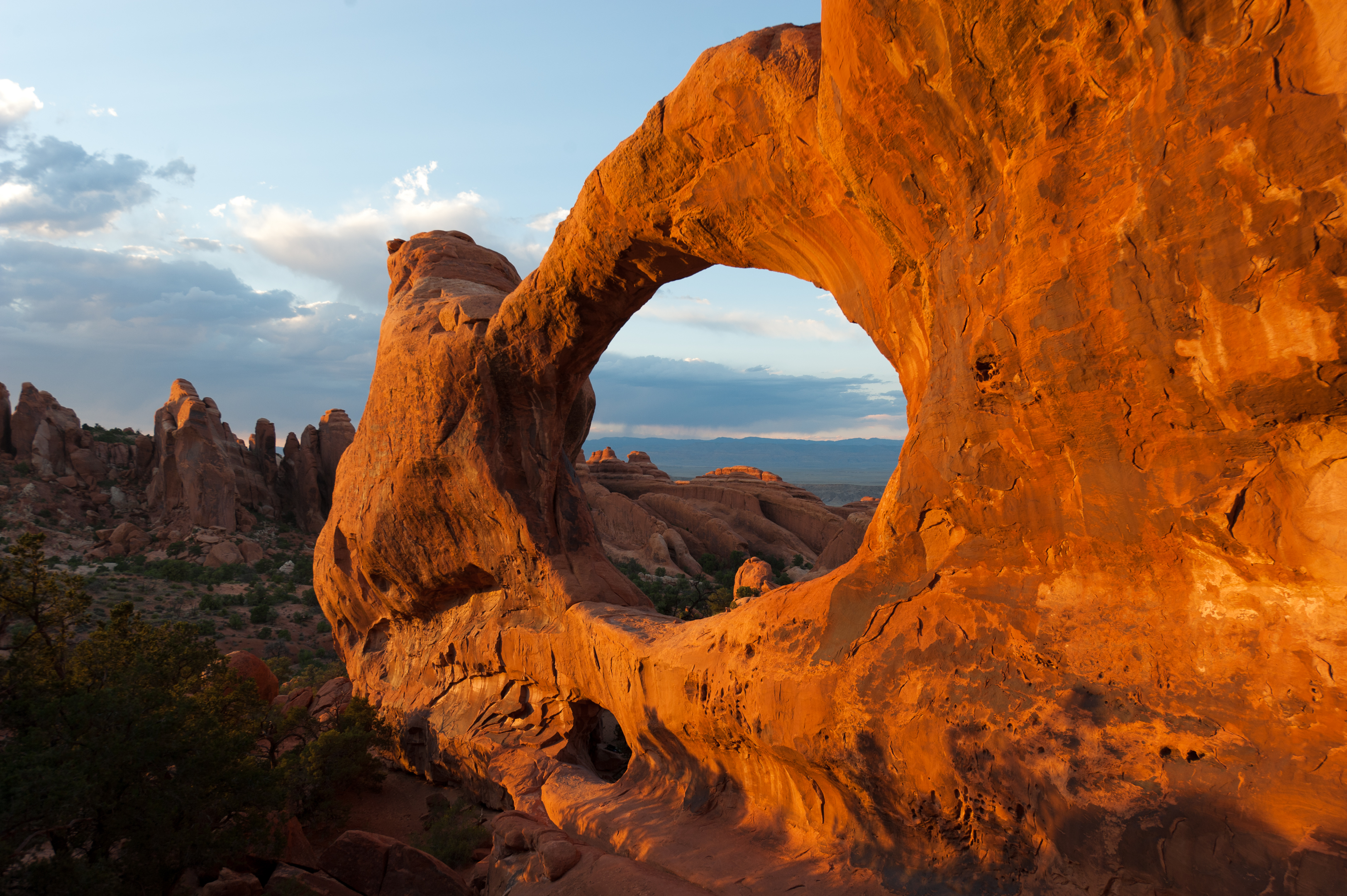
The best time to visit Arches National Park is April through May or mid-September through October, when daytime highs settle into the 60s and 70s Fahrenheit and the slickrock is comfortable to walk on. Those two windows are the only stretches of the year when Arches gives you long daylight, open roads, and weather that does not actively work against you.
Arches is a small, exposed, high-desert park — roughly 76,000 acres of sandstone at about 5,000 feet, with almost no tree cover on its signature trails. That geography, more than crowd levels, is what should drive your timing.
What Is the Single Best Month to Visit Arches?
October. Average highs land near 74°F with overnight lows around 45°F, the summer thunderstorm season has faded, and the post-Labor Day drop in visitation is real. Late April is the close runner-up: cottonwoods leaf out along the Colorado River corridor and the desert wildflowers along Park Avenue are at their peak, but spring winds can be relentless and spring break traffic overlaps the first half of the month.
If you want the fullest version of the park — every trail dry, every viewpoint reachable, and a reasonable chance of having Landscape Arch to yourself at 8 a.m. — aim for the first three weeks of October.
How Does Timed Entry Change the Best Time to Visit?
Arches operates a seasonal timed-entry reservation system during its busiest months, and it directly shapes the calculus. During the reservation season you need a ticket for a specific entry window; outside it, you can simply drive in. Always check the current-year rules before you book flights, because both the season dates and the daily entry hours have shifted between years.
The practical upshot: visiting in late fall or winter removes an entire planning step. If you do visit during the reservation window, the entry requirement typically applies only during daytime hours, so arriving before dawn or in the late afternoon is a legitimate workaround — and it happens to coincide with the best light on the arches anyway.
What Is Summer Actually Like at Arches?
Hot enough to be a safety issue. June through early September regularly delivers highs above 100°F, and the sandstone radiates heat back at you. The Delicate Arch trail — 3 miles round trip with 480 feet of climbing across bare rock — has no shade and no water. Rangers routinely respond to heat emergencies there.
Summer also brings the monsoon. From roughly mid-July into September, afternoon thunderstorms can turn a dry wash into a flash flood in minutes, which matters if you are heading into the Fiery Furnace or the canyons over in neighboring Canyonlands National Park. If summer is your only option, hike before 9 a.m., carry at least a gallon of water per person, and treat midday as a driving-and-viewpoints window rather than a hiking one.
Is Winter a Good Time to Visit Arches?
Winter is the park’s most underrated season. Highs run in the 40s, lows dip into the teens and twenties, and visitation drops by roughly two-thirds from the summer peak. Snow dusting red sandstone is one of the genuinely great sights in the American Southwest, and it usually melts off the main roads within a day.
The trade-offs are real: shorter daylight, icy patches on the slickrock sections of the Delicate Arch and Devils Garden trails, and reduced ranger programming. Microspikes are worth packing. But if crowds are your main objection to Arches, December and January solve that problem completely.
What Time of Day Should You Arrive?
Before sunrise or after 4 p.m., in any season. The Arches entrance queue backs up onto Highway 191 mid-morning during peak months, and the flat overhead light between 11 a.m. and 3 p.m. is the worst of the day for photographing red rock. Delicate Arch faces roughly west, so it lights up at sunset; Turret Arch and the North and South Windows are a sunrise proposition.
How Long Do You Need at Arches?
One full day covers the scenic drive, the Windows Section, Landscape Arch, and a sunset at Delicate Arch. Two days lets you add the Devils Garden primitive loop and a ranger-led Fiery Furnace walk. Because Moab sits between two parks, most people pair Arches with Canyonlands; Capitol Reef National Park is a natural third stop on a longer Utah national parks loop. Our full Arches National Park guide covers fees, campgrounds, and trail details, and you can browse every park on the national parks directory.
FAQ
What is the best month to visit Arches National Park?
October is the strongest single month, with highs near 74°F, cool nights, dry trails, and noticeably thinner crowds than spring. Late April and May are the best alternatives if you want wildflowers and longer daylight.
What is the worst time to visit Arches?
Mid-June through mid-August. Highs above 100°F combined with unshaded slickrock trails make hiking genuinely hazardous, and late July onward adds flash-flood risk from monsoon thunderstorms.
Do I need a reservation to enter Arches National Park?
During the park’s seasonal timed-entry period you need a reservation for daytime entry; outside that season you do not. Entry hours and season dates have changed between years, so check the current-year rules on the park’s official site before your trip.
Is Arches open in winter?
Yes. The park and its scenic drive stay open year-round, though snow and ice can briefly close sections and some facilities run on reduced hours. Winter brings the lowest visitation of the year.
How many days should I spend at Arches?
One full day is enough for the scenic drive and the headline arches. Two days is better if you want the Devils Garden primitive loop or a Fiery Furnace permit, and it pairs well with a day in Canyonlands.
When is the best light for photographing Delicate Arch?
Sunset. The arch faces roughly west, so the last hour of daylight turns the sandstone deep orange. Plan to start the 3-mile round-trip hike about two hours before sunset and bring a headlamp for the walk out.