
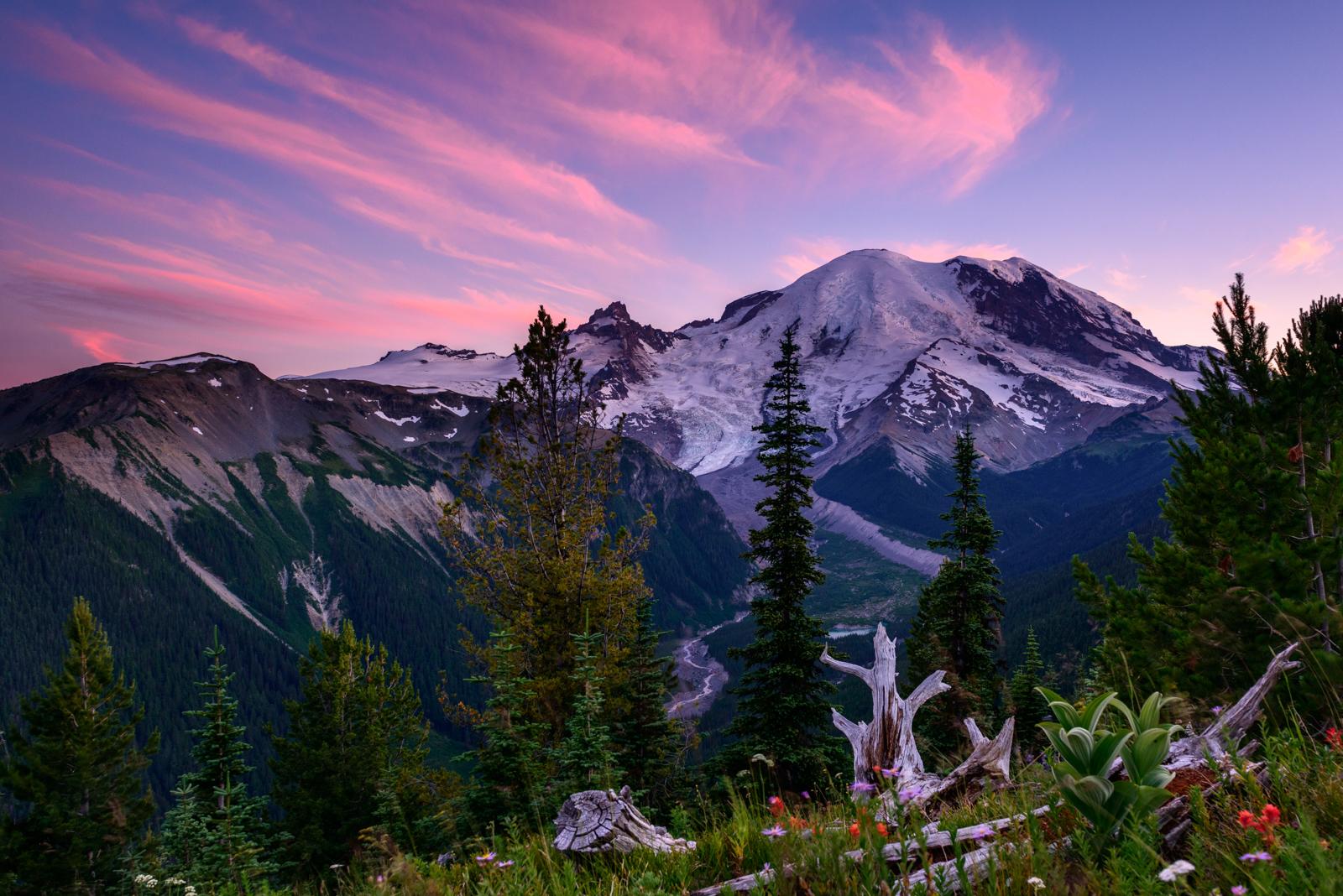
The best hikes in Mount Rainier National Park range from short wildflower loops to demanding alpine climbs, and this guide walks you through the trails worth planning a whole trip around. Rising 14,410 feet above Washington’s Cascade Range, Mount Rainier crowns a wilderness of glaciers, subalpine meadows, and old-growth forest that rewards hikers at every fitness level and every season the roads are open.
What are the best easy hikes in Mount Rainier?
For families and first-timers, the Nisqually Vista Trail and the paved paths around Paradise deliver enormous payoff for little effort. The 1.2-mile Nisqually Vista loop opens onto glacier views and, in July and August, some of the densest wildflower blooms in the park. The Grove of the Patriarchs, when its river bridge is open, winds through 1,000-year-old cedars and firs on a flat, shaded mile. These gentle trails are ideal for acclimating before you tackle steeper ground higher on the mountain.
Which trails have the best views?
The Skyline Trail from Paradise is the park’s signature day hike, a 5.5-mile loop that climbs to Panorama Point with sweeping looks at the summit, the Nisqually Glacier, and the jagged Tatoosh Range. On the quieter east side, the Naches Peak Loop offers a gentler 3.5-mile circuit that blazes with color in late summer and frames Rainier across a string of alpine tarns. For a full-day effort, the Burroughs Mountain Trail crosses tundra-like ridges to some of the closest, most dramatic glacier views you can reach on foot anywhere in the Cascades.
What is the hardest hike in the park?
Serious hikers set their sights on the Wonderland Trail, a 93-mile circumnavigation of the mountain that gains and loses more than 22,000 feet. Most backpackers spend 10 to 14 days on it and need a wilderness permit reserved months ahead. Shorter but still strenuous, the climb to Camp Muir at 10,188 feet follows the Muir Snowfield and demands sure footing, navigation skill, and real respect for fast-changing weather even in midsummer.
When is the best time to hike Mount Rainier?
Late July through September is the sweet spot, when snow has melted from most high trails and the meadows peak in bloom. Snow lingers on upper routes well into summer, so check current-year trail and road conditions before you go. Early autumn brings crisp air, thinner crowds, and huckleberry color across the subalpine zone. Pair a Rainier trip with other Washington icons: the rugged peaks of North Cascades National Park and the rainforests and wild coastline of Olympic National Park make a classic loop. See our full Washington national parks guide, and read up on the park at Mount Rainier National Park before you lace up your boots.
What should you pack for Rainier hikes?
Mountain weather changes fast, so even on a bluebird morning you should carry the ten essentials: layers for wind and rain, plenty of water, high-energy snacks, sun protection, a map, and a headlamp. Trekking poles help on steep meadow switchbacks and lingering snowfields, and traction devices are smart for early-season Skyline and Muir attempts. Cell coverage is unreliable across most of the park, so download offline maps and tell someone your route and expected return. Start early to grab limited parking at Paradise and Sunrise, and always check the current-year road, shuttle, and trail status before you drive up, since seasonal closures are common well into summer.
FAQ
Do I need a permit to hike in Mount Rainier?
Day hikes do not require a permit, but timed-entry reservations for the Paradise and Sunrise corridors may apply in peak season, and overnight wilderness trips always need a permit. Check the current-year rules before your visit.
How long is the Skyline Trail?
The full Skyline Loop from Paradise is about 5.5 miles with roughly 1,700 feet of elevation gain, typically taking four to six hours at a relaxed pace.
Are the trails dog-friendly?
No. Pets are not allowed on Mount Rainier’s trails, so plan to leave dogs at home or with a sitter on hiking days.