
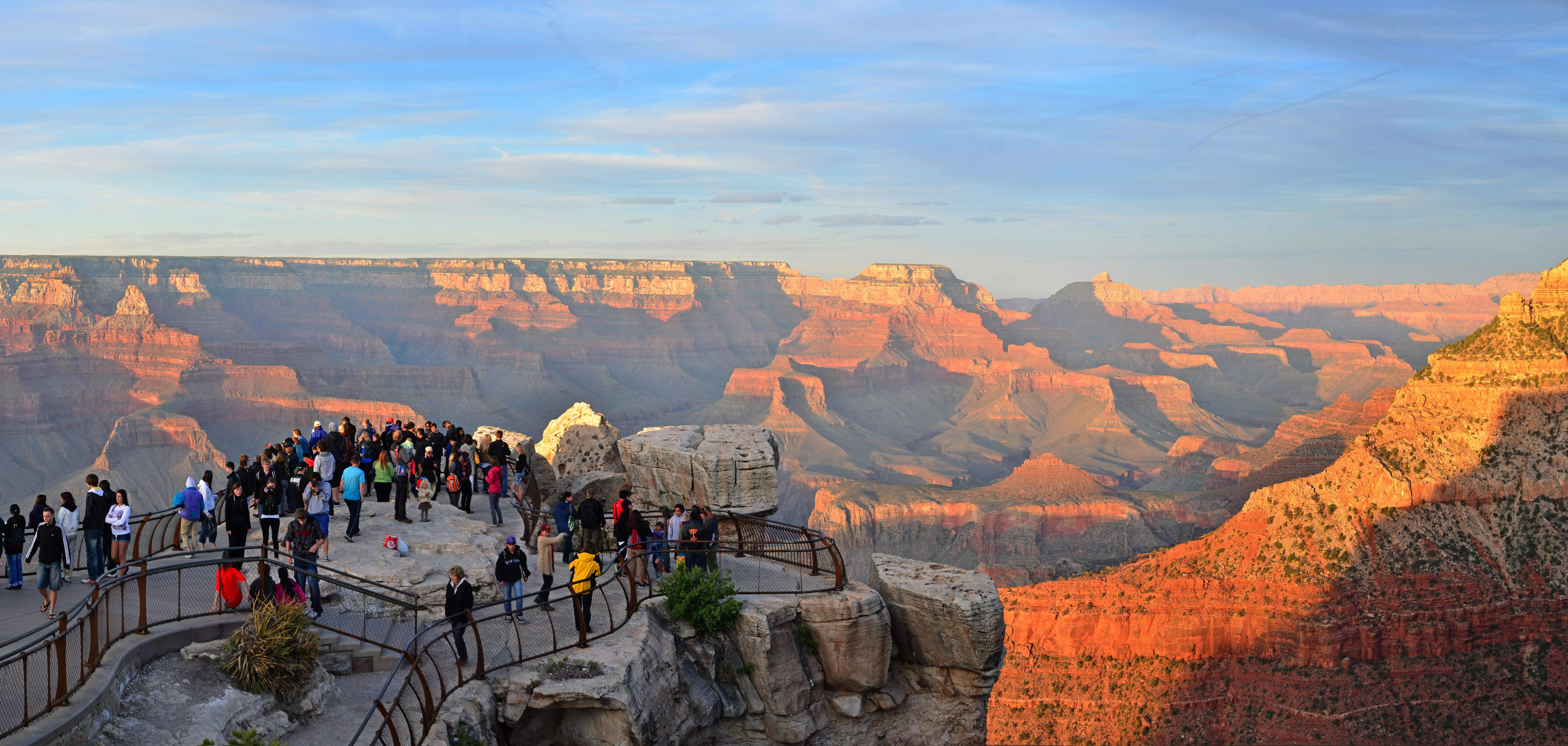
The best hikes in Grand Canyon range from flat, stroller-friendly rim walks to grueling descents deep below the rim, so there is a trail for every fitness level. Because hiking here means going down first and climbing out when you are tired, planning matters more than in most parks. This guide covers the top rim and inner-canyon trails on the South Rim, plus safety tips to help you hike smart.
What are the best easy hikes on the rim?
If you want big views without a hard climb, the Rim Trail is the place to start. It runs for miles along the South Rim, is mostly flat and partly paved, and connects many of the park's best overlooks, with shuttle stops that let you walk one way and ride back. The stretch between Mather Point and Yavapai Point is especially scenic and accessible. These easy walks in Grand Canyon National Park are perfect for families, sunrise, and sunset.
What are the best hikes into the canyon?
To feel the canyon's scale, drop below the rim on the Bright Angel Trail or the South Kaibab Trail. On South Kaibab, Ooh Aah Point and Cedar Ridge are excellent, rewarding turnaround points with panoramic views. On Bright Angel, the shaded switchbacks lead to rest houses with seasonal water. Remember that every step down must be reversed uphill in the heat, so choose a turnaround time and stick to it. Descending to the river and back in one day is strongly discouraged.
What about longer and more challenging hikes?
Experienced, well-prepared hikers can tackle bigger objectives. Plateau Point, via Bright Angel, is a long, strenuous day hike to a dramatic overlook above the Colorado River. The classic rim-to-rim trek links the South and North rims and usually requires an overnight at Phantom Ranch or a backcountry campground with a permit. The Hermit Trail offers a rugged, less-crowded alternative for those seeking solitude. These routes demand fitness, an early start, and plenty of water and food.
When should you hike, and how do you stay safe?
Spring and fall bring the most comfortable temperatures for inner-canyon hiking. Summer heat below the rim can be dangerous, often exceeding 100 degrees, so hike early and rest during midday. Carry more water than you think you need, eat salty snacks, and turn around before you are exhausted. Check current-year conditions, water availability, and any permit rules before you go, since these change seasonally. From the nearby region you can also explore Zion National Park and Bryce Canyon National Park on a wider Arizona and Utah loop.
Which Grand Canyon hike should you choose?
For a relaxed visit, walk the Rim Trail at sunrise. For a taste of the inner canyon, hike to Ooh Aah Point or Cedar Ridge on South Kaibab. For a full-day challenge, consider Plateau Point or Skeleton Point, and for a bucket-list adventure, plan a permitted rim-to-rim. Match the trail to your fitness, the season, and your available water and daylight.
FAQ
What is the most popular hike in the Grand Canyon?
The Bright Angel Trail is the most popular inner-canyon hike thanks to its shade, seasonal water, and rest houses. The Rim Trail is the most popular easy walk for its accessible, sweeping views.
Can you hike to the bottom of the Grand Canyon in one day?
Hiking to the Colorado River and back in a single day is strongly discouraged and can be deadly in summer heat. Most hikers split the trip with an overnight at the bottom under a backcountry permit.
Do you need a permit to hike the Grand Canyon?
Day hikes on the main corridor trails do not require a permit, but overnight backcountry trips do. Permit rules and demand change yearly, so check the current-year requirements before planning.