
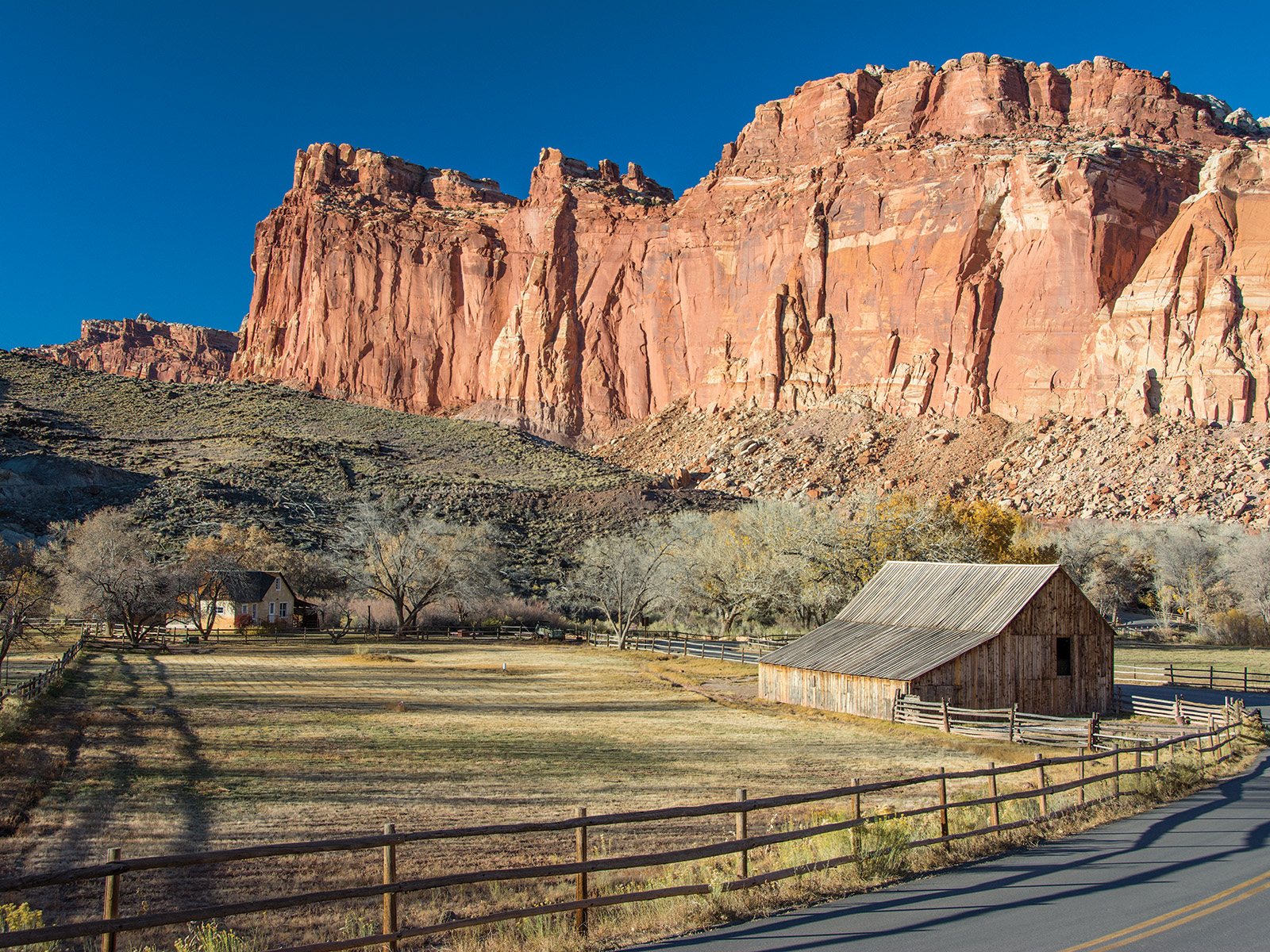
The best hikes in Capitol Reef National Park pack an incredible range of desert scenery into one quiet Utah park, from shady fruit orchards to slot-like washes and soaring red-rock arches. Less crowded than its Mighty 5 neighbors, Capitol Reef rewards hikers with the Waterpocket Fold, a 100-mile wrinkle in the earth full of canyons and domes. Here are the trails worth building a trip in Utah around.
What is the best easy hike in Capitol Reef?
Hickman Bridge is the park's most popular moderate-easy hike, a roughly two-mile round trip that climbs gently to a 133-foot natural bridge. For something flatter, the Fremont River Trail and the orchard paths in the historic Fruita district offer relaxed walking with river, cliff, and, in season, pick-your-own fruit. These are perfect for families or a warm-up day.
What is the best hike for views?
Cassidy Arch is a standout, climbing from Grand Wash to a viewpoint where you can stand atop a huge arch high above the canyon. For a bigger effort, the Navajo Knobs trail delivers one of the finest panoramas in southern Utah after a long, steady climb along the rim. Rim Overlook is a shorter alternative on the same route with sweeping views over Fruita.
What is the best canyon hike?
Grand Wash is an easy, mostly flat walk through towering canyon walls that narrow dramatically in the middle, a great introduction to slot-style scenery without technical skills. Cohab Canyon climbs briefly then winds through a hidden gorge dotted with small alcoves. Always check the current-year rules and, crucially, the weather, since these washes can flood quickly during storms.
How hard are the hikes in Capitol Reef?
Capitol Reef offers trails for every level. Easy options like Hickman Bridge and Grand Wash suit most visitors, while Cassidy Arch and Navajo Knobs demand more climbing, exposure, and water. Summer heat is intense, so carry more water than you think you need and start early. The desert sun and lack of shade are the biggest challenges on longer routes.
How do you plan a Capitol Reef hiking trip?
Base yourself in Torrey, just west of the park, and give yourself two or three days to mix an easy orchard walk with a couple of bigger climbs. For a longer Utah road trip, Capitol Reef pairs naturally with Arches and Canyonlands to the east. Always check the current-year rules for road conditions on the unpaved scenic routes before you go.
When is the best time to hike?
Spring and fall are ideal, with comfortable temperatures and lower flash-flood risk than the summer monsoon. Summer brings brutal heat and afternoon storms, so hike early and watch the sky. Winter is cold and quiet, with occasional snow that dusts the red rock beautifully but can make higher trails slick.
FAQ
What is the most popular hike in Capitol Reef?
Hickman Bridge is the most popular trail, a moderate two-mile round trip to a large natural bridge. It is a great first hike that captures the park's mix of desert and rock scenery.
Can you hike Capitol Reef in one day?
Yes. In a single day you can combine an easy walk like Grand Wash or Hickman Bridge with a viewpoint hike such as Cassidy Arch. Two or three days lets you explore more of the Waterpocket Fold.
Do you need a permit to hike in Capitol Reef?
Day hiking on established trails does not require a permit, though backcountry and canyoneering trips have their own rules. Check the current-year regulations before attempting technical routes.What should you bring for hiking here?
Carry plenty of water, sun protection, and sturdy shoes with grip for slickrock. There is little shade on most trails, so a hat and early start make a big difference in warm months. Check the current-year rules and the forecast before entering any wash, since flash floods are the most serious hazard in the park.