
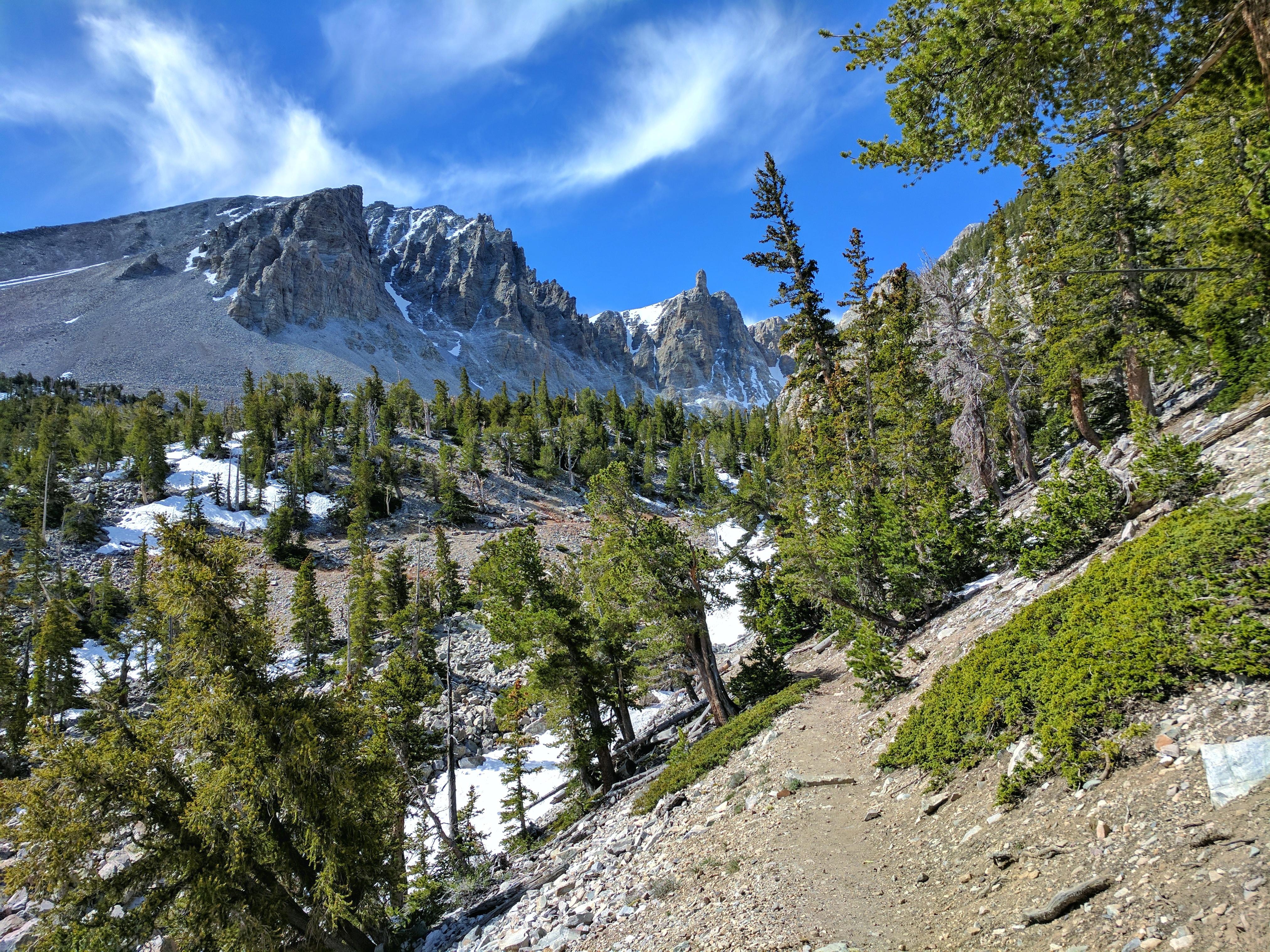
The best hikes in Great Basin National Park range from an easy stroll among 4,000-year-old bristlecone pines to a lung-burning climb up 13,065-foot Wheeler Peak, all inside one of the least-crowded national parks in the country. Tucked into remote eastern Nevada, this park packs alpine lakes, a rare rock glacier, and some of the darkest night skies in America into a compact, hiker-friendly footprint.
What are the best hikes in Great Basin National Park?
Most of the marquee trails start from the Wheeler Peak Scenic Drive, which climbs to nearly 10,000 feet, so you gain altitude before you even lace up. The standout hikes are:
Alpine Lakes Loop - a 2.7-mile loop past Stella and Teresa Lakes, the best easy hike for big scenery.
Bristlecone Pine and Glacier Trail - roughly 4.6 miles round trip to the oldest trees on Earth and Nevada's only glacier.
Wheeler Peak Summit Trail - an 8.6-mile round-trip push to the park's high point.
Baker Lake Trail - a quieter 12-mile out-and-back to a glacial cirque lake.
Lehman Creek Trail - a shaded 3.4-mile one-way route linking the two main campgrounds.
Which trail is best for seeing bristlecone pines?
The Bristlecone Pine and Glacier Trail is the only maintained path that reaches a grove of these ancient, gnarled trees. From the Wheeler Peak Campground trailhead, you climb gently through subalpine forest to interpretive signs among trees that predate the pyramids, then continue to an overlook of the rock glacier huddled beneath Wheeler Peak. Give yourself three hours and bring layers - the grove sits above 10,000 feet and stays cool even in summer.
How hard is the Wheeler Peak Summit hike?
This is the park's toughest day hike: about 8.6 miles round trip with 2,900 feet of gain, topping out at 13,065 feet. The trail is non-technical but relentless, finishing on an exposed rocky ridge where afternoon thunderstorms are a real hazard. Start at dawn, turn around by early afternoon, and treat the thin air seriously by spending a night at altitude first. On a clear morning the summit views stretch across the basin-and-range country into Utah.
What is the best easy hike in Great Basin?
The Alpine Lakes Loop is the perfect low-effort payoff. In under three miles you circle two clear alpine lakes with Wheeler Peak reflected on the surface, passing wildflower meadows in July and August. It pairs naturally with the bristlecone trail since they share a trailhead, making a half-day of hiking without a long drive. For more Nevada trip ideas, browse our Great Basin National Park guide and the wider Nevada park list.
When is the best time to hike Great Basin?
July through September is prime hiking season, when the Wheeler Peak Scenic Drive and its high trailheads are reliably snow-free. The road typically closes above Upper Lehman with the first heavy snows and reopens in early summer, so always check the current-year road and trail status before you go. Spring and fall bring solitude and cold nights, while winter turns the upper park into a snowshoe destination. If you are chaining together a Southwest road trip, Great Basin pairs well with Zion and Bryce Canyon a few hours east. Compare more destinations on our national parks and states hubs.
FAQ
Do you need a permit to hike in Great Basin National Park?
Day hiking requires no permit or entrance fee. Backcountry camping is free but asks that you fill out a voluntary registration, and the Lehman Caves tour is ticketed separately. Check the current-year rules for cave tickets and any seasonal backcountry guidance.
How long is the Wheeler Peak Summit Trail?
The summit trail is about 8.6 miles round trip with roughly 2,900 feet of elevation gain. Most fit hikers take six to eight hours, including breaks and time above 13,000 feet.
Are dogs allowed on Great Basin trails?
Dogs are not permitted on the park's hiking trails, though they are allowed on roads, in campgrounds, and in parking areas when leashed. Plan to leave pets at camp if you want to hike the high country.
What is the elevation of Great Basin National Park?
The park spans from about 6,800 feet at the valley floor to 13,065 feet atop Wheeler Peak. Most major trailheads sit between 9,000 and 10,000 feet, so give yourself time to acclimate.