
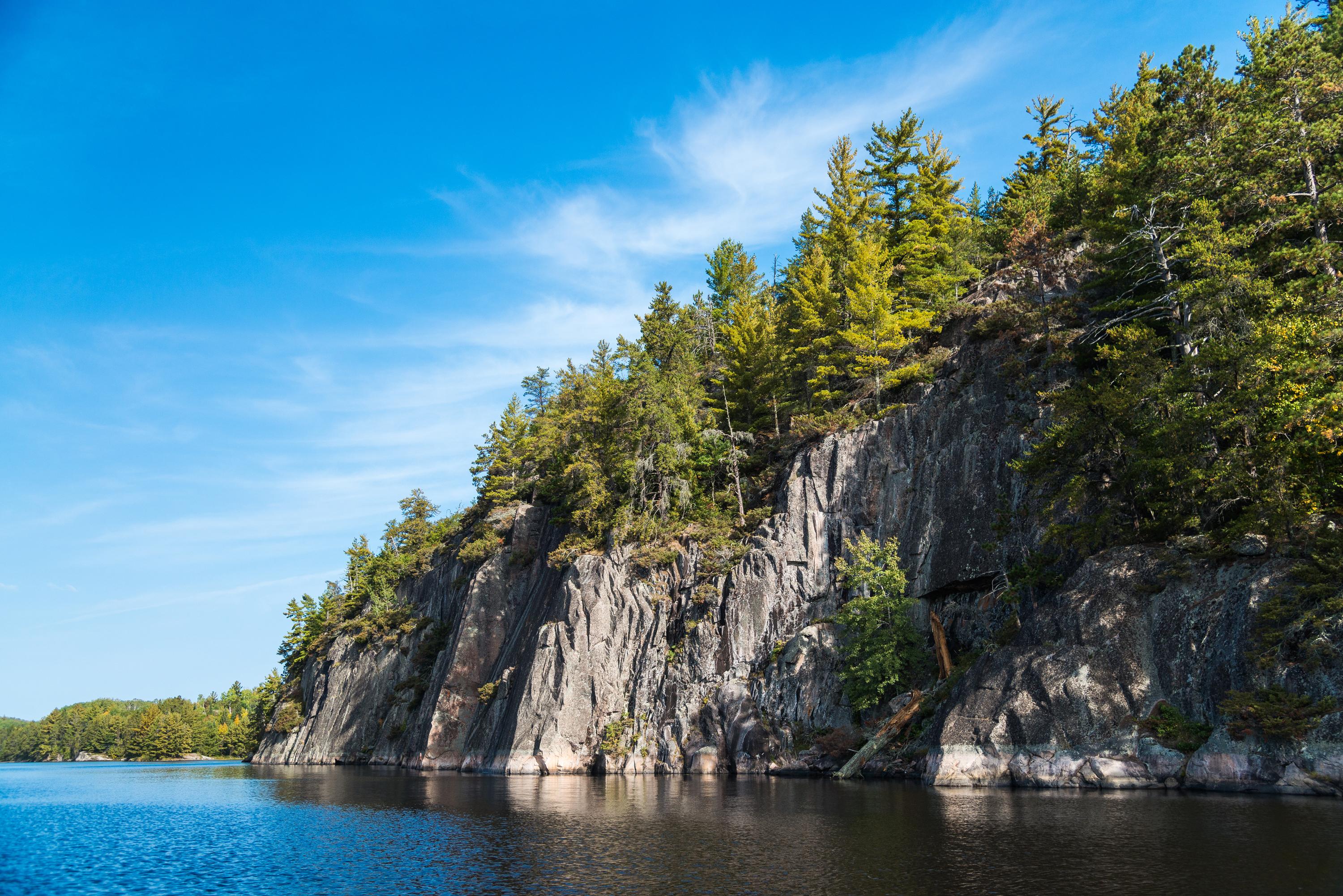
One day in Voyageurs National Park works best when you stop thinking about trails and start thinking about water: this Minnesota park is about a third lake, and most of its best moments happen from a boat, a canoe, or a lakeshore overlook. With one day, base yourself on the Rainy Lake side near International Falls or the Kabetogama side near Ash River, book one guided or ranger-led boat trip, and add a short hike plus an evening on the water.
This itinerary is built for a single day with a car, a modest budget, and no private boat. It leans on the park's visitor centers and concession tours, which is how most first-time visitors actually see the interior. Details such as tour schedules and seasonal openings change, so check the current-year rules and hours before you go.
How do you plan one day in Voyageurs National Park?
Pick one lake and commit to it. Voyageurs spans Rainy Lake, Kabetogama Lake, Namakan Lake, and Sand Point Lake, and the drives between them are long. Trying to see all four in a day means more windshield time than scenery. The Rainy Lake Visitor Center near International Falls is the easiest starting point because it has exhibits, rangers, and the departure point for many boat programs. The Kabetogama Lake and Ash River areas are better if you want quieter shorelines and a more remote feel.
Fill your tank and your cooler before you arrive. Services thin out quickly, and cell coverage can drop in the park. Bring bug protection from late spring through summer, a rain layer, and a hat; wind on open water is cooler than it feels on the dock.
What should you do in the morning?
Start at a visitor center for a map, a weather check, and current boat-tour information. Rangers can tell you which shorelines are worth your time on the day you visit, and the exhibits explain how glaciers and ancient rock shaped the lakes. Then book or board a boat tour. Concession-run and ranger-led cruises are the simplest way to reach places like old island homesteads and mining history that you cannot drive to. Ask in advance whether a given tour is running that day, because schedules are seasonal.
If you are comfortable on the water and want more freedom, a guided canoe or kayak outing or a rented motorboat can replace the cruise. Wear a life jacket, tell someone on shore your plan, and stay close to the shoreline if you are new to big lakes. Fast wind shifts are common.
Where should you eat and hike at midday?
Plan a picnic. Pack lunch and eat at a shoreline day-use area or a picnic spot near your visitor center rather than burning time looking for a restaurant. After lunch, choose one short trail. The Oberholtzer Trail and Locator Lake Trail are the kind of short, forested walks that give you a feel for the boreal woods without leaving your day behind schedule, and the Rainy Lake Recreation Trail near the visitor center is gentle and good for stretching your legs. Check trail conditions with a ranger, since wet ground and insects change what is pleasant.
What is the best way to spend the afternoon?
If you have not already, add one standout stop that only this park offers. Options include Ellsworth Rock Gardens, a hand-built garden of stone sculptures and flower beds on Kabetogama Lake that is reached by water, or a visit to Kettle Falls, where a historic hotel sits at the edge of the park near the Canadian border. Both usually need a boat, a shuttle, or a guided trip, so reserve ahead or pick whichever the concession is running that day. Do not try to do both in one afternoon.
Is Voyageurs a good place to see the night sky?
Yes. Voyageurs is designated an International Dark Sky Park, and the open water and low light pollution make it one of the better places in the Midwest for stars and, on active nights, the northern lights. Stay for sunset, wait for full dark, and head to a boat launch, dock, or open shoreline. Bring a red-light headlamp, warm layers, and a thermos. Check the aurora forecast and the cloud forecast before committing to a late night, and drive carefully on the way out, because deer and moose use the roads.
How does Voyageurs compare with other water-focused parks?
If you like the idea of a boat-first park, you may also want to look at Isle Royale National Park in Michigan, which is similar in remoteness but even harder to reach. Voyageurs is the easier one: you can drive to the gateway and be on the water in under an hour. For a broader look at what to see across the state, browse the Minnesota national park guide, or start from the full list of national parks to compare destinations. You can also read the main Voyageurs National Park page for the basics, directions, and seasons.
What should you pack for a day in Voyageurs?
Bring a physical map or an offline copy, water, snacks, sunscreen, sunglasses, a rain jacket, insect repellent, a headlamp, and a charged phone or camera. Dry bags are useful if you are paddling. A small first-aid kit is smart in a place where help can be far away.
FAQ
Can you see Voyageurs National Park in one day?
You can see a good slice of it. One day is enough for a visitor center stop, a boat tour, a short hike, and sunset, as long as you stick to one lake area rather than trying to cover the whole park.
Do you need a boat to visit Voyageurs?
Not strictly, but most of the park is only reachable by water. Guided or ranger-led boat tours are the practical option if you do not have your own boat. Check the current-year schedule and booking rules.
What is the best time of year for a one-day visit?
Summer has the most tours, warmest water, and longest days, but also bugs. Early fall brings cooler air and fewer people, though services run on reduced schedules. Always confirm what is open for your dates.
Is there an entrance fee?
Voyageurs has historically not charged a standard entrance fee, but some services, tours, and campsites carry their own costs. Check the current-year rules before you travel.
Can you see the northern lights at Voyageurs?
Sometimes. The park is a designated dark sky park, so when solar activity is high and skies are clear it is a strong place to look north over open water.