
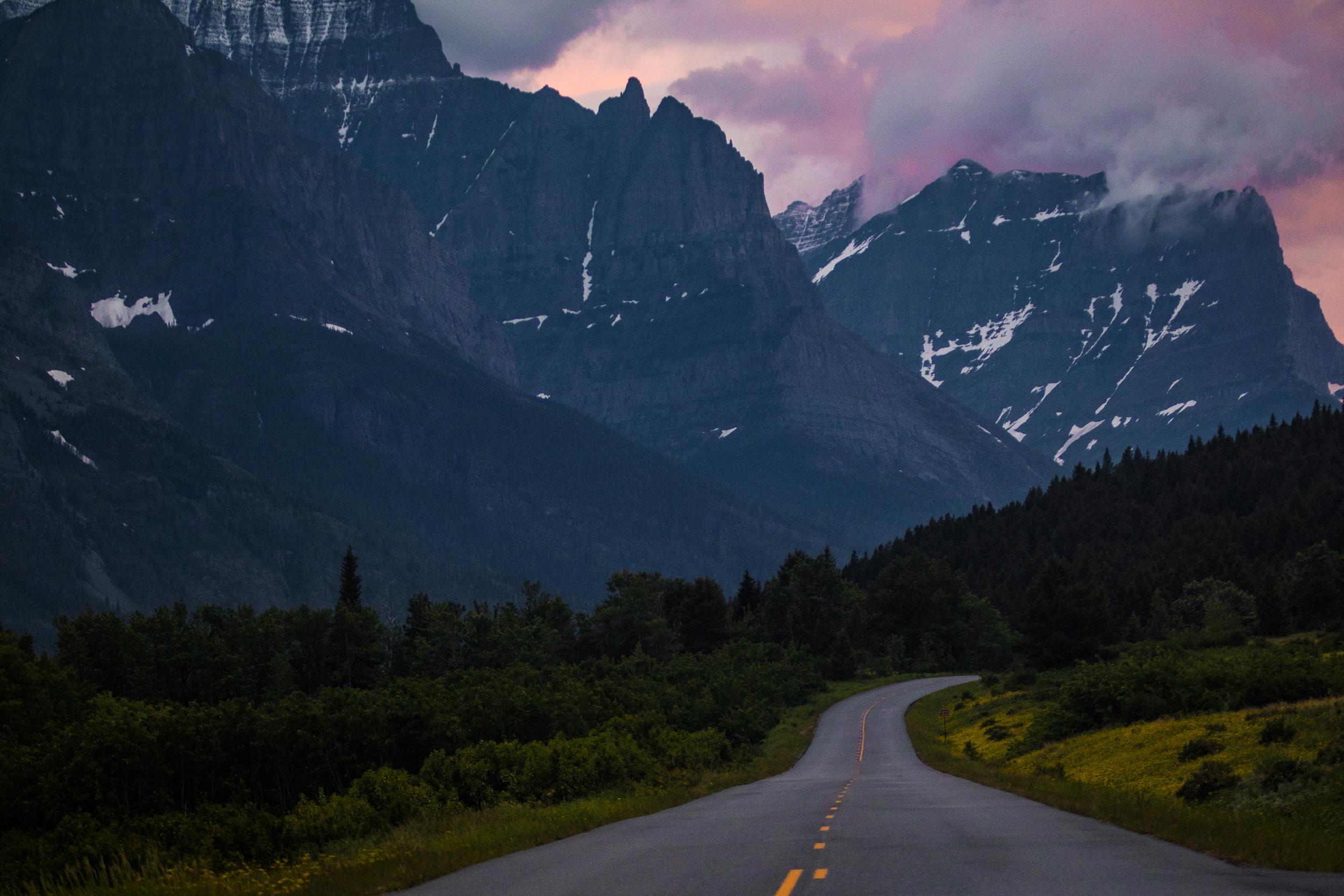
You can see the best of Glacier in a single day, but only if you treat one day in Glacier National Park as a Going-to-the-Sun Road day and accept that you will skip Many Glacier entirely. The 50-mile road between West Glacier and St. Mary is the park's spine, and driving it end to end with stops takes three to four hours before you add a single hike. Here is an hour-by-hour plan that fits.
Which direction should you drive Going-to-the-Sun Road?
Start from the west side at Apgar if you are coming from Whitefish, Kalispell, or Flathead Lake, and from St. Mary if you are arriving from the east or from Waterton. West to east is the more common approach and puts Lake McDonald's light behind you in the morning. Either way, leave before 7:00 a.m. — Logan Pass parking typically fills by mid-morning in July and August, and a full lot can cost you an hour of circling.
Glacier has used a vehicle reservation system for Going-to-the-Sun Road and several other corridors during peak season, with separate windows and release times. Check the current-year reservation rules before you go; requirements and dates have shifted between seasons. Our Glacier National Park guide covers entrances and seasonal road openings in more detail.
What does the morning look like?
7:00 a.m. — Lake McDonald. Pull off at Apgar Village or the Lake McDonald Lodge shoreline. The multicolored stones under clear shallow water are the park's most photographed detail and the lake is usually glassy at dawn.
8:00 a.m. — Trail of the Cedars and Avalanche Lake. Trail of the Cedars is a flat, accessible boardwalk loop under old-growth western red cedar, about one mile. From its midpoint, the Avalanche Lake trail climbs roughly 500 feet over two miles each way to a lake ringed by waterfalls pouring off the headwall. Budget two and a half hours round trip including photos. If you want a shorter day, walk the boardwalk loop only and continue on.
10:30 a.m. — The Loop and the climb to Logan Pass. The road narrows and climbs past the Weeping Wall, where snowmelt sprays across the pavement into early summer. Stop at Big Bend for the classic view of Heavens Peak.
What should you do at Logan Pass?
11:30 a.m. — Hidden Lake Overlook. At 6,646 feet, Logan Pass is the highest point on the road and the single best stop in the park. The Hidden Lake Overlook trail runs about 1.4 miles each way on boardwalk and stone steps through alpine meadow, gaining around 550 feet. Mountain goats and bighorn sheep are common along it, often at close range. Snowfields linger here well into July, so bring traction and layers even in midsummer.
If the overlook trail is snow-covered or the crowds are heavy, walk the first half-mile of the Highline Trail instead. It contours along a cliff ledge with a cable handline and delivers enormous views within fifteen minutes of the visitor center.
How should you spend the afternoon?
2:00 p.m. — The east descent. Stop at Jackson Glacier Overlook, one of the few places you can see a named glacier from the road. Then take the short walk to St. Mary Falls and, if legs allow, continue to Virginia Falls — about 1.7 miles each way combined, mostly gentle, through a burn area with wide-open views.
4:30 p.m. — Wild Goose Island and St. Mary Lake. The Wild Goose Island Overlook is the postcard shot of Glacier and takes two minutes. Finish at the St. Mary Visitor Center, or turn around and drive back west if your lodging is on that side — the return trip is a different experience in evening light.
If you have a second day, spend it at Many Glacier rather than repeating the road. For broader planning across the region, see our Montana guide, compare with Yellowstone National Park to the south, and browse all national park guides.
FAQ
Is one day enough for Glacier National Park?
One day is enough to drive Going-to-the-Sun Road and do one or two short hikes, which covers the park's signature scenery. It is not enough to include Many Glacier, Two Medicine, or the North Fork, so treat a single day as a highlights run rather than a full visit.
Do you need a reservation to drive Going-to-the-Sun Road?
Glacier has required vehicle reservations for the corridor during peak season in recent years, in addition to a park entrance pass. The dates, corridors, and booking windows have changed between seasons, so check the current-year rules before your trip.
When is Going-to-the-Sun Road fully open?
The alpine section over Logan Pass usually opens sometime between late June and mid-July depending on snowpack, and typically closes in mid-October. Lower sections on both ends stay open longer. Confirm current-year opening status before committing to a date.
What is the best short hike for one day in Glacier?
Hidden Lake Overlook from Logan Pass gives the most alpine scenery per mile. If it is snowbound, Avalanche Lake on the west side is the strongest alternative and stays accessible earlier in the season.
Where should you stay for a one-day Glacier trip?
West Glacier and Apgar put you closest to the west entrance for an early start; St. Mary works if you are approaching from the east. Whitefish and Kalispell offer more lodging and dining but add 30–60 minutes each way. See our state-by-state directory for nearby planning.