
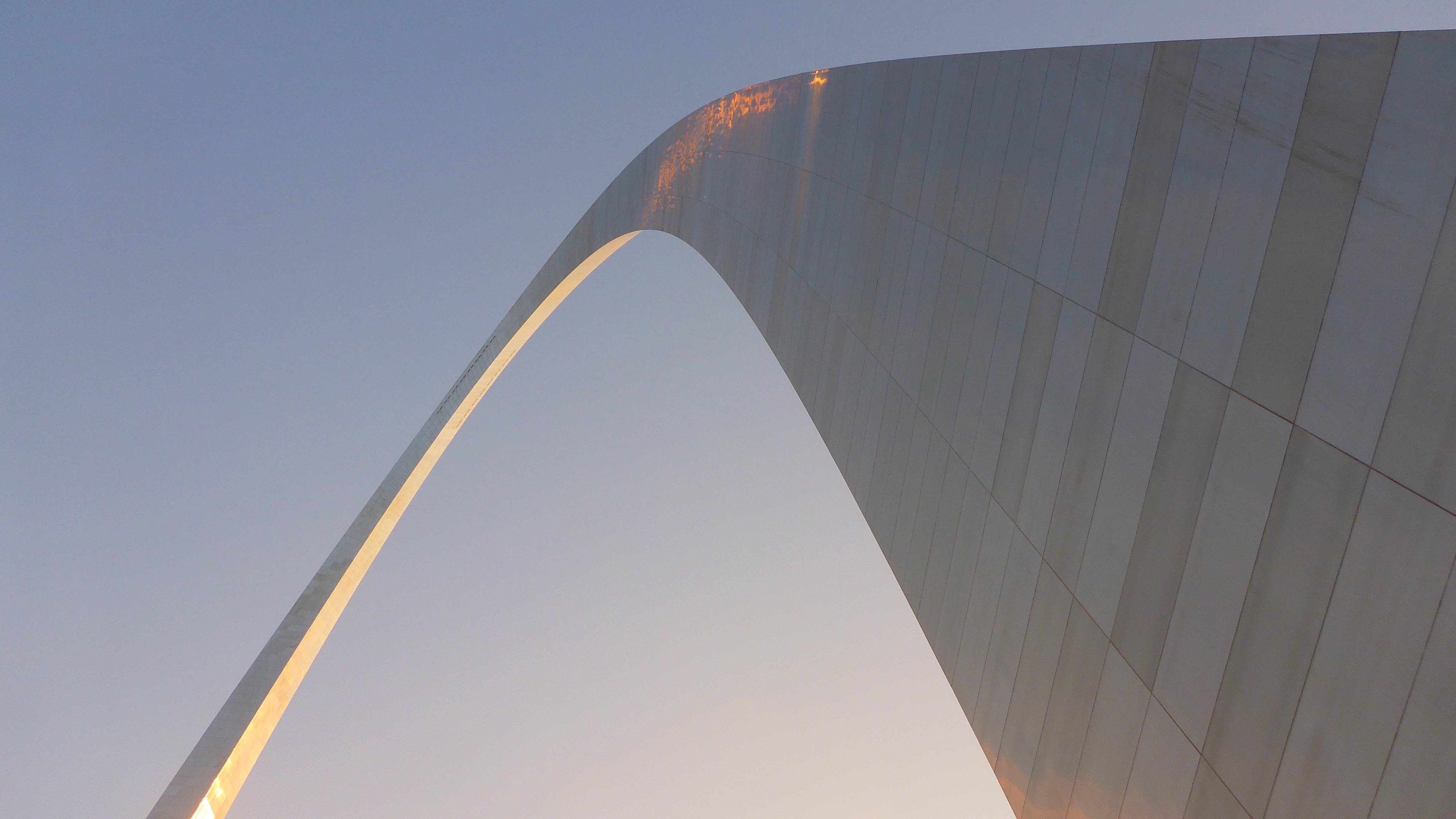
The closest national parks to Kansas City are Gateway Arch in St. Louis, about four hours east, and Hot Springs in Arkansas, about six and a half hours south — which means there is no true day-trip national park near Kansas City, but there are six within a comfortable weekend drive. That gap is worth knowing before you plan, because the smartest Kansas City park trips either commit to a two-night drive or trade the capital-N national park for one of the excellent National Park Service sites sitting an hour or two from downtown.
Below, every national park within roughly a day’s drive, ranked by how far you actually have to go, plus the closer NPS units most Kansas City planners overlook.
What is the closest national park to Kansas City?
Gateway Arch National Park in St. Louis is the closest, at roughly 250 miles and about four hours straight east on I-70. It is also the smallest national park in the system at about 91 acres, so treat it as an anchor rather than the whole trip: the tram ride to the top of the 630-foot arch and the underground Museum at the Gateway Arch fill a half day, and the rest of St. Louis fills the other half. Tram tickets sell out on summer weekends, so book ahead and check the current-year rules for pricing and timed boarding.
The practical upshot: Gateway Arch is the only national park you can visit from Kansas City and sleep in your own bed the same night. Everything else on this list is an overnight.
Which national parks are within a weekend drive of Kansas City?
Six parks sit inside a realistic Friday-to-Sunday window. In order of drive time from downtown Kansas City:
Gateway Arch (Missouri) — ~250 miles, ~4 hours. Urban park, arch tram, Old Courthouse.
Hot Springs (Arkansas) — ~440 miles, ~6.5 hours. Historic Bathhouse Row, thermal springs, and short wooded trails on Hot Springs Mountain.
Indiana Dunes (Indiana) — ~510 miles, ~7.5 hours. Lake Michigan shoreline, dune climbs, and unusually good birding.
Mammoth Cave (Kentucky) — ~590 miles, ~8.5 hours. The longest known cave system on Earth; nearly every worthwhile visit is a ticketed ranger tour.
Wind Cave (South Dakota) — ~700 miles, ~10.5 hours. Boxwork cave formations below, bison and prairie above.
Badlands (South Dakota) — ~730 miles, ~11 hours. Eroded spires, the Badlands Loop Road, and the best night skies on this list.
Wind Cave and Badlands are only about an hour apart, so the South Dakota drive buys you two parks for one long haul — the single best value trip from Kansas City if you have four days.
Are there any National Park Service sites closer to Kansas City?
Yes, and this is where Kansas City planners save themselves a lot of windshield time. The National Park Service manages more than 400 units; only 63 carry the “national park” title. Several NPS sites sit within two hours:
Harry S Truman National Historic Site, Independence — about 20 minutes from downtown. Truman’s home, preserved largely as the family left it.
Brown v. Board of Education National Historical Park, Topeka — about an hour west, inside the former Monroe Elementary School.
Tallgrass Prairie National Preserve, Strong City, Kansas — about two hours southwest. Roughly 11,000 acres of the less than four percent of tallgrass prairie that survives, plus a resident bison herd.
Tallgrass Prairie in particular delivers the wide-open, no-crowds feeling most people drive west for, at a fraction of the mileage. Browse everything nearby on our Kansas parks guide and Missouri parks guide.
When is the best time to make these drives?
Late September through October is the strongest window. Midwest heat and humidity have broken, Badlands and Wind Cave have shed their July crowds, and Indiana Dunes and Mammoth Cave are at their best in fall color. Spring, roughly late April through May, is the second choice — green prairie and full waterfalls, but a real severe-storm season across Kansas and Missouri.
Avoid mid-summer for the South Dakota run unless you are pairing it with the Black Hills anyway; Badlands regularly clears 95°F with almost no shade. Winter drives are viable for Gateway Arch and Mammoth Cave, whose caves hold a steady temperature year-round, but I-90 across South Dakota closes in blizzards.
How should you plan a Kansas City parks road trip?
Pick the trip by how many nights you have. One night gets you Gateway Arch plus St. Louis. Two nights gets you Hot Springs, with enough time for Bathhouse Row and a morning hike. Three nights makes Mammoth Cave or Indiana Dunes work without the drive eating the trip. Four or more nights is the Badlands and Wind Cave pairing, ideally looped through the Black Hills.
Book cave tours first. Mammoth Cave and Wind Cave both run on ranger-led ticketed tours that fill weeks out in summer, and a trip built around a tour you could not get is a wasted drive. Check the current-year rules for tour schedules, fees, and reservation windows before you lock in dates. For everything else, see our full park directory and browse parks by state.
FAQ
What is the closest national park to Kansas City?
Gateway Arch National Park in St. Louis, about 250 miles and four hours east on I-70. It is the only national park close enough to Kansas City for a long day trip.
Are there any national parks in Kansas or Missouri?
Missouri has one: Gateway Arch National Park. Kansas has no national park, though it has several National Park Service units, including Tallgrass Prairie National Preserve and Brown v. Board of Education National Historical Park.
How far is Kansas City from Badlands National Park?
About 730 miles, or roughly 11 hours of driving. Most people break it into two days or pair it with Wind Cave and the Black Hills.
Can you visit a national park from Kansas City in a day?
Only Gateway Arch, and it makes for a long day — roughly eight hours of driving plus your time in the park. Every other national park on this list needs at least one overnight.
Which national park near Kansas City is best for hiking?
Badlands, for variety and scenery, followed by Hot Springs for shaded, easy mileage close to town. Gateway Arch has essentially no hiking; Mammoth Cave and Wind Cave are best known for underground tours rather than surface trails.