
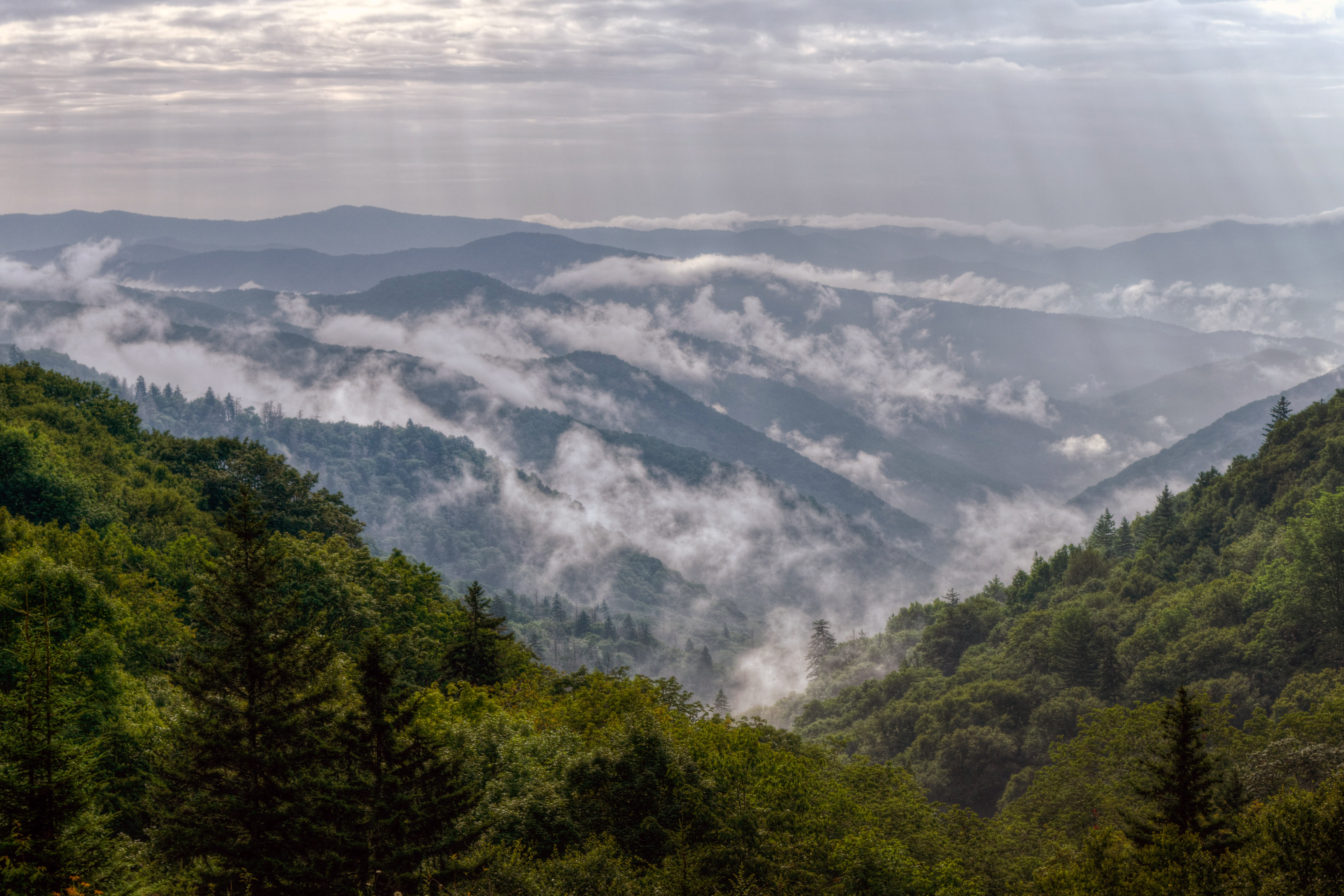
The national parks in Tennessee begin and end with one giant: Great Smoky Mountains National Park, the most visited national park in the United States. Straddling the Tennessee and North Carolina border, the Smokies wrap misty ridgelines, wildflower coves, and historic mountain cabins into a landscape that draws millions of visitors each year. This guide explains what Tennessee's national park offers, where to enter, and how to plan a smooth trip.
How many national parks does Tennessee have?
Tennessee has one official national park, Great Smoky Mountains National Park, which it shares with neighboring North Carolina. The state also contains several National Park Service sites, including the Big South Fork National River and Recreation Area and portions of the Appalachian National Scenic Trail. For the full regional picture, browse our guides to national parks in Tennessee and neighboring North Carolina.
What makes Great Smoky Mountains special?
Great Smoky Mountains National Park is celebrated for its biodiversity, earning the nickname the Salamander Capital of the World and hosting more tree species than all of northern Europe. Its blue-tinged ridges, synchronous fireflies, and preserved Appalachian homesteads give it a character unlike any other park. Best of all, it charges no entrance fee. Our Great Smoky Mountains National Park guide covers the top overlooks, trails, and scenic drives.
Where are the main entrances in Tennessee?
On the Tennessee side, the busiest entrance is at Gatlinburg, which flows directly into the park along Newfound Gap Road. The Townsend entrance to the west is quieter and leads to Cades Cove, the park's most popular valley for wildlife and history. Sugarlands Visitor Center near Gatlinburg is a good first stop for maps and ranger advice before heading deeper into the mountains.
What are the best things to do?
Drive the loop around Cades Cove for black bears, deer, and preserved cabins; hike to Laurel Falls or Rainbow Falls; and climb the observation tower at Clingmans Dome, the highest point in Tennessee. Newfound Gap Road offers a full cross-section of the park's scenery, while the Roaring Fork Motor Nature Trail packs waterfalls and old-growth forest into a short, winding drive.
When is the best time to visit Tennessee's national park?
Fall, from mid-October through early November, brings spectacular foliage but also the biggest crowds. Spring showcases wildflowers and rushing waterfalls, while summer is lush and green but hazier and busier. Winter is quiet and occasionally snowy, with some high roads closing temporarily. Always check current-year road openings and conditions, as Newfound Gap Road and Clingmans Dome Road can close in bad weather.
Do you need a pass or reservation?
The park has no entrance fee, but Tennessee now requires a paid parking tag for vehicles stopping longer than fifteen minutes. Tags are available daily, weekly, or annually. There is no timed-entry system for general access. Confirm the current-year parking-tag rules and prices before you arrive, as these details change.
Where should you stay?
Gatlinburg and Pigeon Forge offer the most lodging, restaurants, and family attractions right outside the Tennessee entrance, while Townsend markets itself as the peaceful side of the Smokies. Backcountry campers and those seeking rustic cabins have many options within a short drive. Book early for October weekends, when the whole region fills up for leaf season.
FAQ
Is Great Smoky Mountains free to enter?
Yes, there is no entrance fee, but a paid parking tag is required to park anywhere in the park for more than fifteen minutes. Confirm the current-year rules before your visit.
Which side is better, Tennessee or North Carolina?
The Tennessee side is livelier and closer to Gatlinburg and Cades Cove, while the North Carolina side around Cherokee is quieter and less developed. Many visitors experience both by driving Newfound Gap Road.
Can you see bears in the park?
Yes, the Smokies are home to roughly 1,900 black bears. Cades Cove and the Roaring Fork area are among the most reliable spots, especially at dawn and dusk. Keep a safe distance at all times.
How many days do you need in the Smokies?
Two to three days lets you drive the main roads, hike a few trails, and explore Cades Cove without rushing. A long weekend is a comfortable introduction to the park.