
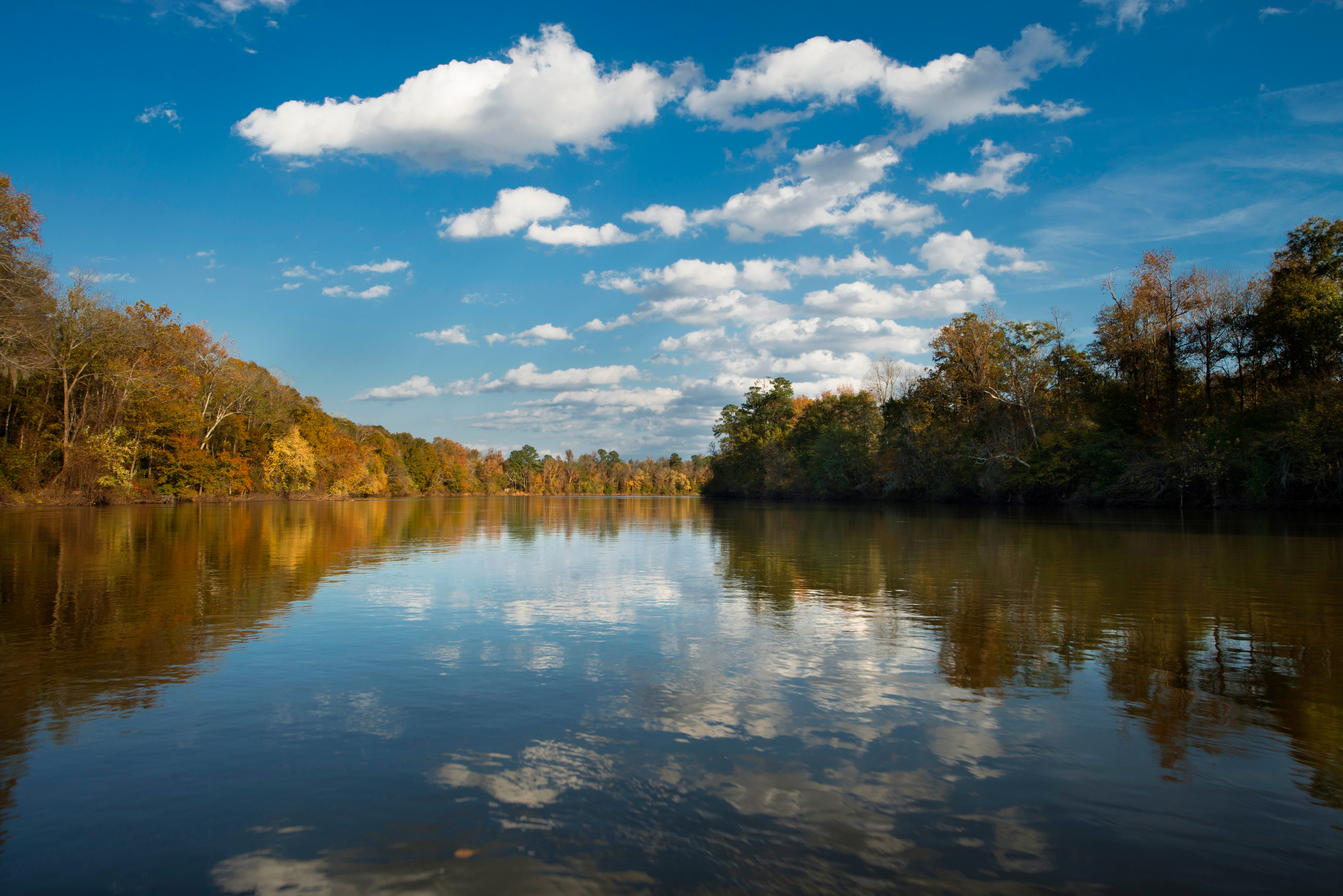
There is exactly one national park in South Carolina — Congaree National Park — but the state holds eight National Park Service sites in total, and the other seven are dense with Revolutionary War and Reconstruction history that most road-trippers drive straight past. If you are counting only the units that carry the "National Park" designation, the answer is one. If you are planning an actual trip, you have eight stops to work with, spread from the Blue Ridge foothills to the Lowcountry coast.
How many national parks are in South Carolina?
South Carolina has 1 national park: Congaree. The state has 0 national monuments and 7 historic sites, battlefields and trails, for 8 National Park Service units altogether. That puts it in the same category as Ohio or Indiana — a single marquee park surrounded by a strong historical portfolio. You can see the full breakdown on our South Carolina parks page.
What makes Congaree National Park worth visiting?
Congaree protects the largest intact expanse of old-growth bottomland hardwood forest left in the southeastern United States. It is not a swamp, despite its former name — it is a floodplain forest that the Congaree and Wateree rivers flood roughly ten times a year, depositing nutrients that grow some of the tallest trees in eastern North America. Loblolly pines here exceed 160 feet, and the park holds a cluster of state and national champion trees.
The centerpiece is the Boardwalk Loop, about 2.6 miles of elevated boardwalk from the Harry Hampton Visitor Center that takes you through cypress knees and tupelo without getting your feet wet. Beyond it the trails go primitive: Weston Lake Loop runs about 4.6 miles, Oakridge Trail about 6.6, and the Kingsnake Trail is the birders' route. The 15-mile marked Cedar Creek Canoe Trail is arguably the best way to experience the park, paddling under a closed canopy.
Congaree charges no entrance fee. It is also one of only a handful of places in North America with synchronous fireflies, which display in mid-to-late May under a lottery-based access system — check the current-year rules early, because the window is short and demand is heavy. Full hours and alerts are on our Congaree National Park page.
When is the best time to visit South Carolina's parks?
Spring and late fall. Congaree in particular is a shoulder-season park: summer brings heat, humidity and a genuinely serious mosquito population (the visitor center keeps a mosquito meter, which is only half a joke), while winter high water can submerge the low trails and occasionally the boardwalk itself. March through early May and October through November are the reliable windows. Coastal sites around Charleston stay pleasant later into the fall than the interior.
Which historic sites are worth building a day around?
Fort Sumter is the marquee one. The fort where the Civil War began sits on an island in Charleston Harbor and is reachable only by concessioner ferry, so it takes a half day and requires booking ahead in peak season; the same unit includes drive-up Fort Moultrie on Sullivan's Island. See Fort Sumter and Fort Moultrie for details.
In the upcountry, Cowpens National Battlefield and Kings Mountain National Military Park preserve two of the Revolution's decisive southern engagements and sit close enough to pair in one day. Ninety Six National Historic Site adds a rare surviving star fort. Near Charleston, Charles Pinckney National Historic Site interprets the life of a Constitution signer and the enslaved people at Snee Farm, and Reconstruction Era National Historical Park in Beaufort is one of the newest units in the system and one of the most important.
How do you build a South Carolina parks road trip?
A four-day loop works cleanly. Start in the upcountry with Kings Mountain and Cowpens, then Ninety Six. Drop to Columbia for a full day at Congaree — boardwalk in the morning, canoe or Weston Lake Loop in the afternoon. Finish on the coast with Charleston: Fort Sumter, Fort Moultrie and Charles Pinckney, plus Beaufort if you have a fifth day. Neighboring North Carolina extends the trip north into the Smokies, and you can plan the whole route from our parks-by-state directory.
FAQ
How many national parks are in South Carolina?
South Carolina has one national park, Congaree National Park. Counting all National Park Service units — historic sites, battlefields and trails — the state has eight.
Is there an entrance fee for Congaree National Park?
Congaree does not charge an entrance fee. Camping and some special programs carry fees, and firefly-season access has been managed by lottery. Check the current-year rules before you go.
What is the closest national park to Columbia, South Carolina?
Congaree National Park is the closest national park to Columbia, roughly 20 miles southeast of the city — about a 30-minute drive, which makes it an easy half-day trip.
What is the closest national park to Charleston, South Carolina?
Congaree National Park is also the closest national park to Charleston, about 100 miles inland, or roughly two hours by car. Fort Sumter and Charles Pinckney are the closest National Park Service sites.
Can you visit Congaree in one day?
Yes. The Boardwalk Loop takes one to two hours and covers the park's signature old-growth forest. A full day lets you add the Weston Lake Loop or a paddle on Cedar Creek.
Does South Carolina have any national monuments?
No. South Carolina has no national monuments. Its non-park units are national historic sites, battlefields, a national military park and a national historic trail.