
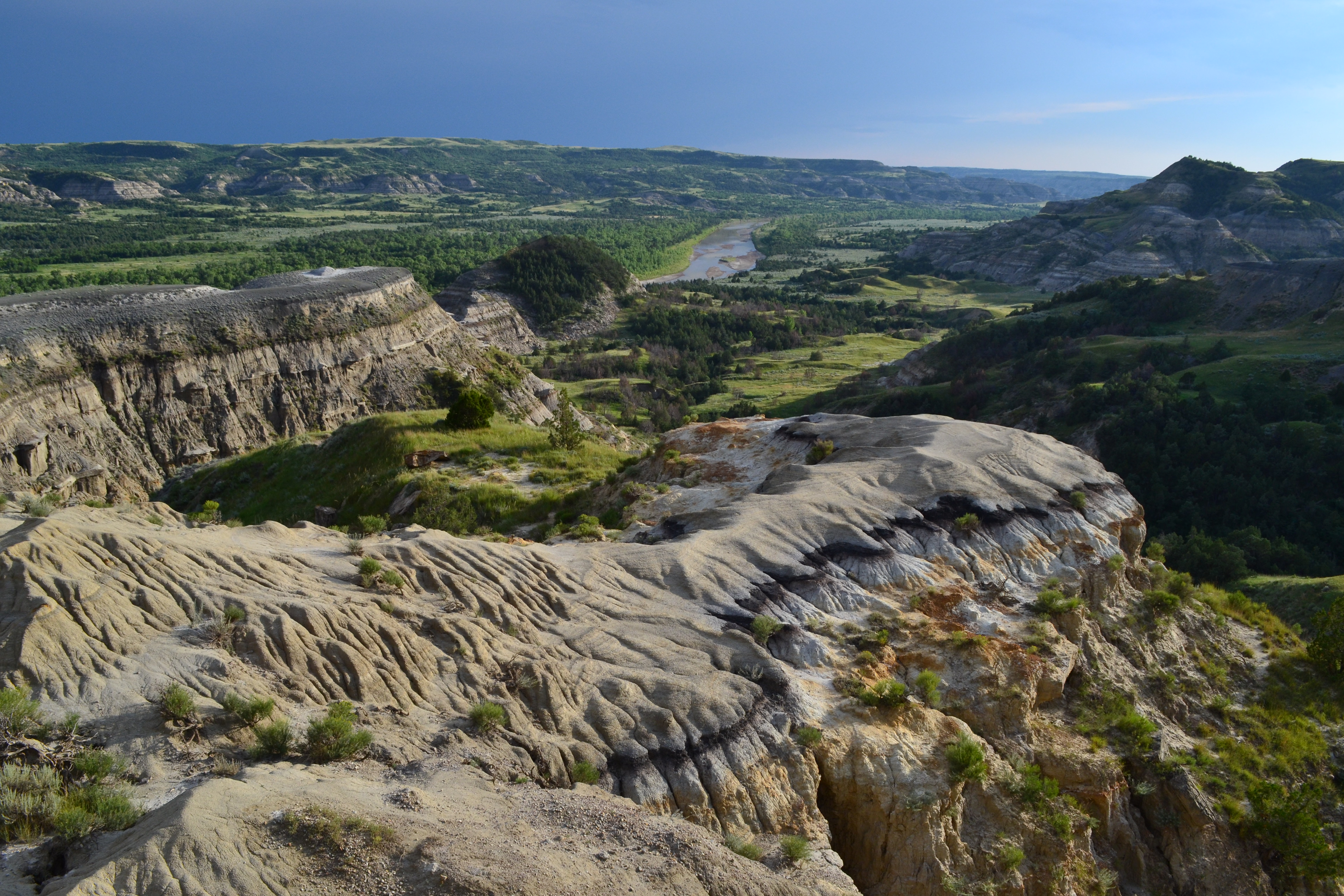
The national parks in North Dakota amount to one capital-N National Park and a handful of National Park Service historic sites, but that undersells the state badly. Theodore Roosevelt National Park is split into three units spread across 70 miles, and treating it as one stop is the mistake most visitors make. Here is how the pieces fit together.
Theodore Roosevelt National Park: three units, three trips
The South Unit, at Medora just off Interstate 94, is the one nearly everyone visits. It has the scenic loop drive, the Painted Canyon overlook, and the highest odds of seeing bison and wild horses. North Dakota is the only state with a free-roaming wild horse herd inside a national park, and the South Unit is where you will find them.
The North Unit sits about 70 miles north near Watford City, off Highway 85. It gets a fraction of the traffic, has more dramatic river-canyon topography along the Little Missouri, and its 14-mile scenic drive ends at the Oxbow Overlook. Longhorn steers graze here as a nod to the historic cattle drives. If you have one afternoon and dislike crowds, choose this unit.
The Elkhorn Ranch Unit is the third and smallest, reachable only by gravel roads between the other two. Roosevelt's ranch buildings are gone; what remains are foundation stones and the view he described. It is a pilgrimage site rather than a scenic one. Call ahead about road conditions, since gravel access turns impassable after rain.
How much time do you need?
Two full days covers both main units without rushing. One day works if you stay in Medora and do the South Unit only. Driving between the South and North units takes roughly 90 minutes each way, so trying to see both in a single day means about three hours in the car.
Which historic sites are worth stopping for?
Knife River Indian Villages National Historic Site near Stanton preserves the earthlodge village sites of the Hidatsa and Mandan peoples, occupied for centuries before Lewis and Clark wintered nearby. The visible depressions where lodges stood are still clearly readable in the prairie. Sakakawea lived here.
Fort Union Trading Post National Historic Site, on the Montana line, is a full reconstruction of the most important fur-trading post on the Upper Missouri. Both sites are free and add roughly half a day each.
When should you go?
June through September is the reliable window. Summer highs run in the 80s and 90s F with dramatic afternoon light on the buttes. September brings cottonwood color along the Little Missouri and cooler hiking. Winter closes portions of the scenic drives and North Dakota cold is not a casual proposition. Check current-year road status and any fee changes before you go.
What pairs well with a North Dakota trip?
Most itineraries link Theodore Roosevelt with the Black Hills to the south. Badlands National Park in South Dakota is about five hours away and makes an obvious comparison stop, as does Wind Cave. Going west, Glacier National Park is a long but classic drive across Montana.
FAQ
How many national parks are in North Dakota?
One capital-N National Park, Theodore Roosevelt National Park, in three units. Several other NPS sites and trails also cross the state.
Which unit should I visit if I only have time for one?
South Unit for wildlife, wild horses, and easy interstate access. North Unit for better scenery and far fewer people.
Can you see wild horses?
Yes, in the South Unit. They are most often spotted along the scenic loop in early morning and evening.
Is there an entrance fee?
Theodore Roosevelt charges a standard entrance fee; the historic sites are free. Rates are reviewed annually, so check the current-year rules, and see our America the Beautiful pass guide if you are visiting several parks.
Where do I plan the rest?
Browse everything in North Dakota, or start from our park directory and state index.