
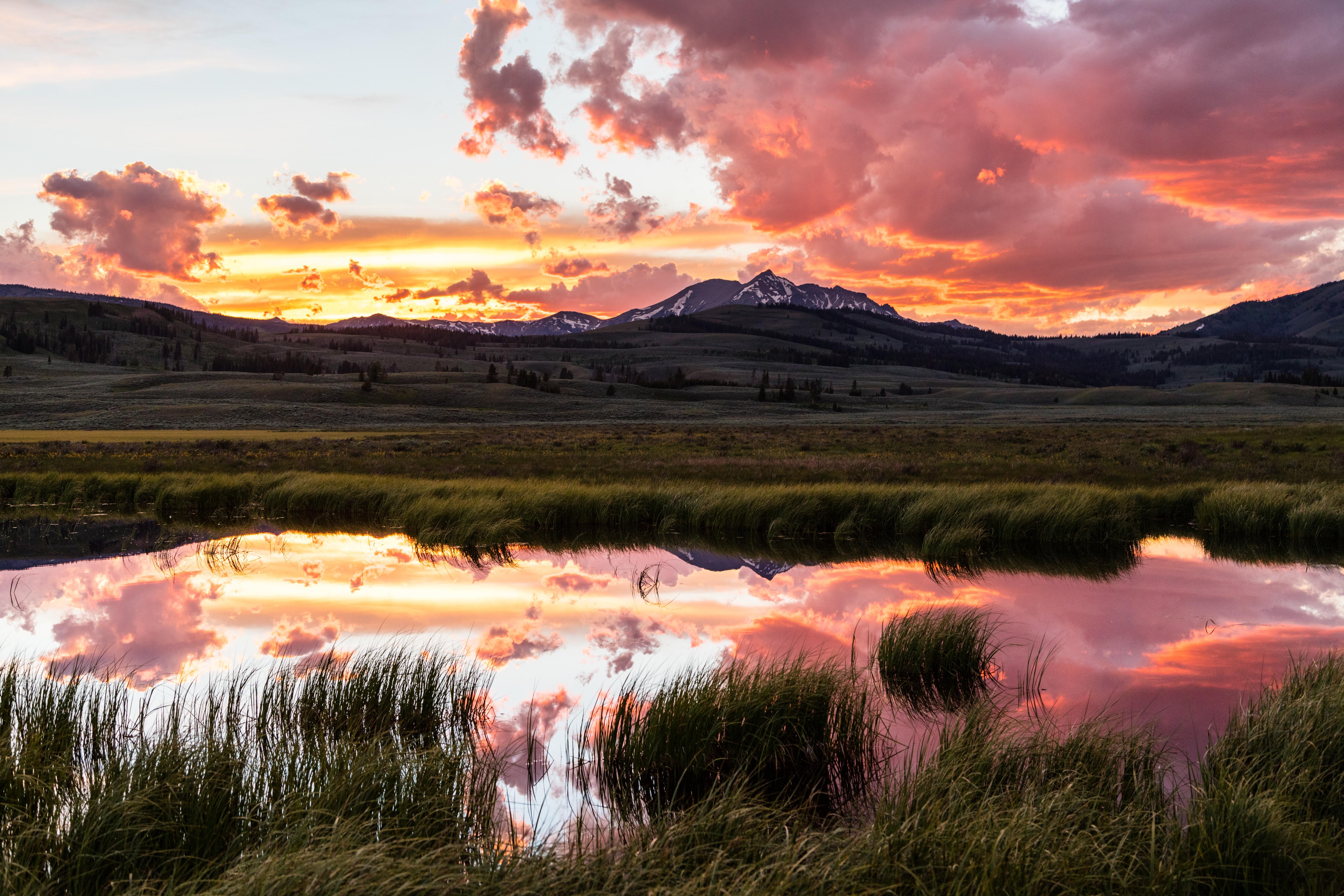
National parks in Idaho are famously scarce: the state's only national park acreage is the wild, roadless southwest corner of Yellowstone, though Idaho also holds the otherworldly Craters of the Moon and lies within easy reach of Grand Teton across the border. If you are basing a trip in Idaho and want true national-park scenery, this guide explains what is actually inside the state, what counts as nearby, and how to plan around each highlight.
Does Idaho have a national park?
Technically, a sliver of Yellowstone National Park reaches into Idaho along the remote Bechler region, often called Cascade Corner and known for waterfalls and backcountry hot springs. No paved park road enters from the Idaho side, so most visitors reach Yellowstone's geysers and canyons through the Wyoming and Montana entrances. Still, that corner makes Idaho one of the three states Yellowstone spans. Explore more national parks in Idaho and neighboring national parks in Montana.
What about Craters of the Moon?
Idaho's most distinctive federal land is Craters of the Moon National Monument and Preserve, a vast ocean of black lava flows, cinder cones, and lava tubes in the south-central part of the state. Managed by the National Park Service, it feels genuinely lunar and is far less crowded than the marquee parks. Read our Craters of the Moon guide before you go, and plan for hot, exposed summer days on the black rock.
Is Grand Teton close to Idaho?
Yes. Grand Teton National Park sits just over the eastern border in Wyoming, roughly an hour or two from the Idaho towns of Driggs and Victor via Teton Pass. The jagged Teton skyline, Jenny Lake, and abundant wildlife make it an easy add-on to any Idaho trip, and many travelers combine it with Yellowstone in a single loop through the region's national parks in Wyoming.
What else is worth seeing in Idaho?
Beyond the big parks, Idaho rewards curious travelers with several other Park Service and public lands worth a detour. Nez Perce National Historical Park tells the story of the Nimiipuu people across sites scattered through the north. City of Rocks National Reserve draws climbers to its granite spires near the Utah border, while the Sawtooth and Salmon-Challis wilderness areas offer alpine lakes, jagged peaks, and some of the darkest night skies in the Lower 48. Adding one or two of these turns a park loop into a fuller Idaho adventure without much extra driving.
When is the best time to visit national parks in Idaho?
Summer through early fall, roughly June through September, is the prime window. High-country snow lingers late, Craters of the Moon bakes under intense summer sun, and mountain passes like Teton Pass are far easier when clear of ice. Fall brings golden aspens and elk bugling near the Tetons. Always check the current-year rules for road openings, fees, and any timed-entry or reservation requirements before your trip.
How should you plan an Idaho park trip?
Because Idaho's park highlights are spread out, plan around a loop rather than a single hub. A classic route links Craters of the Moon, the Teton valley towns, Grand Teton, and Yellowstone over four to seven days. Fuel up in larger towns, carry plenty of water for the lava country, and book lodging early in summer, when rooms near the Tetons and Yellowstone fill up months ahead of time.
FAQ
Is there a full national park inside Idaho?
Only the remote southwest corner of Yellowstone lies within Idaho, and it has no paved park road. Idaho's flagship Park Service site is Craters of the Moon National Monument and Preserve.
Can you enter Yellowstone from Idaho?
There is no developed vehicle entrance on the Idaho side. Most visitors reach Yellowstone's main attractions through the West Yellowstone, Montana, or Wyoming entrances instead.
What is the best national park near Idaho?
Grand Teton, just across the Wyoming border near Driggs and Victor, is the closest classic national park and pairs beautifully with a Yellowstone loop. Check the current-year rules before visiting.