
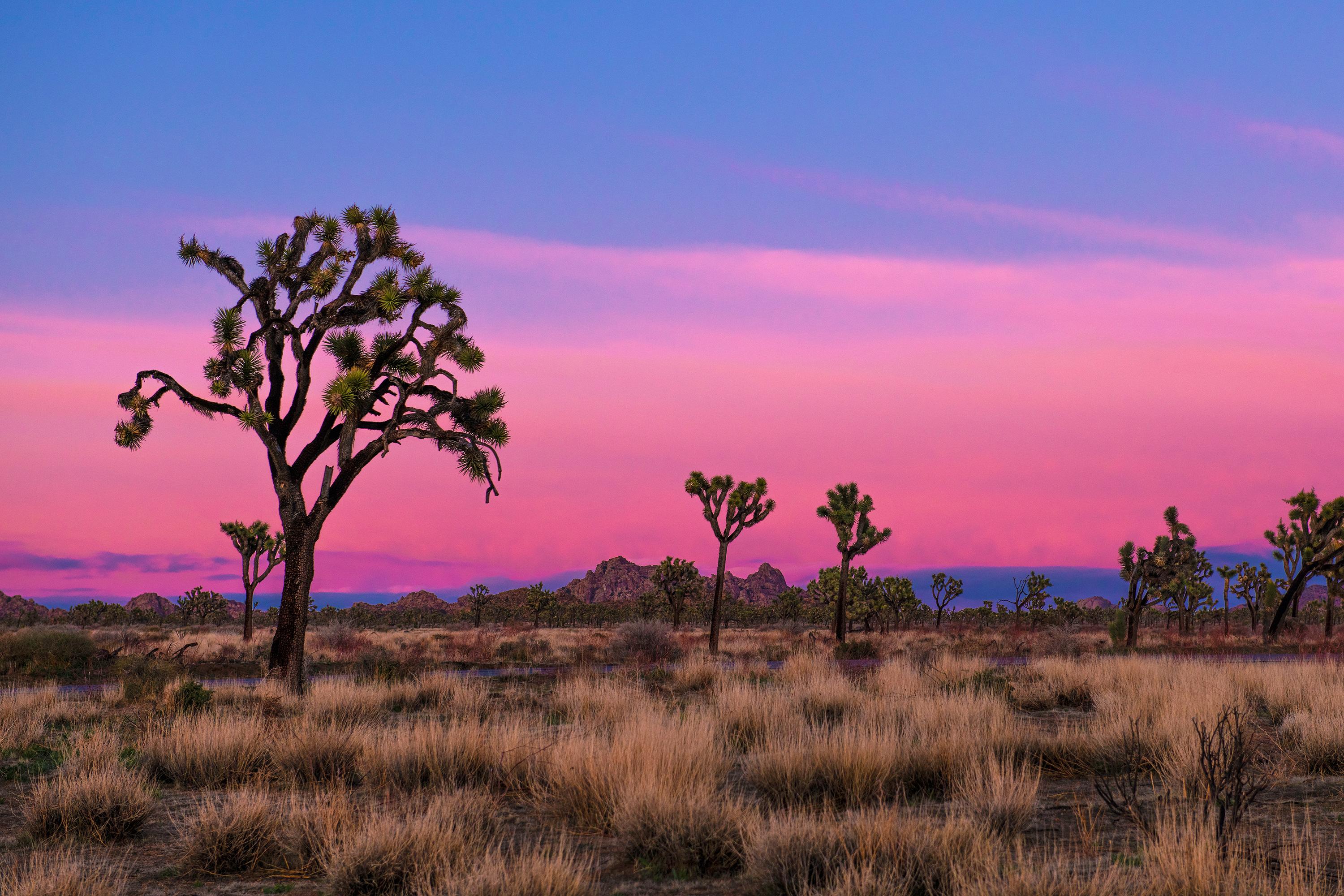
Joshua Tree vs Saguaro pits two of the Southwest's most photogenic desert parks against each other, each defined by a signature plant. Joshua Tree National Park in Southern California is famous for its twisting namesake yuccas and giant boulder piles, while Saguaro National Park near Tucson protects forests of the towering saguaro cactus, the classic symbol of the American West. This guide compares their scenery, hikes, wildlife, seasons, and access so you can pick the right desert escape for your trip.
What is the main difference between Joshua Tree and Saguaro?
The defining difference is the plant life. Joshua Tree sits where the Mojave and Colorado deserts meet, so it showcases spiky Joshua trees, cholla gardens, and surreal granite boulders beloved by rock climbers. Saguaro is pure Sonoran Desert, where thousands of giant saguaro cacti stand like sentinels beneath desert mountains. One park is about otherworldly rocks and yuccas; the other is about the iconic cactus. See Joshua Tree National Park and Saguaro National Park.
Which park has better hiking?
Both offer excellent desert hiking. Joshua Tree ranges from short nature loops like Hidden Valley to longer treks up Ryan Mountain, plus world-class bouldering and rock climbing. Saguaro, split into two districts flanking Tucson, climbs from cactus forest into the pine-clad Rincon Mountains, offering everything from easy loops to strenuous summit hikes. Joshua Tree edges ahead for climbers, while Saguaro wins for elevation variety and long backcountry routes.
Which park is easier to reach?
Joshua Tree is about two to three hours east of Los Angeles and close to Palm Springs, making it an easy weekend from Southern California. Saguaro flanks Tucson, so it is minutes from a major city and its airport. Both are very accessible, but Saguaro is the more convenient day trip if you are already in Arizona. Our Arizona national parks guide and California national parks guide show how they fit larger trips.
Which park is better for wildlife and scenery?
Saguaro's Sonoran Desert is one of the greenest deserts on Earth, rich with cactus wrens, javelinas, coyotes, and spring wildflowers. Joshua Tree counters with dramatic geology, desert bighorn sheep, and some of the darkest night skies in Southern California. For sheer stargazing and rock scenery, Joshua Tree stands out; for lush desert life and blooms, Saguaro shines brightest.
When should you visit each park?
Both parks are best from fall through spring, when temperatures are pleasant; summer heat in either can be extreme and even dangerous. Spring brings wildflowers and blooming cactus to both, making March and April especially rewarding. Winter is mild and quiet, ideal for hiking. Avoid midday summer visits and always carry more water than you expect to need.
Can you visit both Joshua Tree and Saguaro in one trip?
Yes, on a Southwest road trip. The two parks are roughly six hours apart by car, linked by Interstate 10 across the desert. Many travelers pair them with Phoenix, Palm Springs, or other parks along the way. If you have several days, seeing both offers a fascinating contrast between the Mojave and Sonoran deserts.
FAQ
Is Joshua Tree or Saguaro better for a first visit?
Choose Joshua Tree for surreal rocks, yuccas, and climbing; choose Saguaro for classic giant cacti and easy access from Tucson. Both are excellent, so pick based on the scenery you prefer.
Which park is hotter?
Both get very hot in summer, but low-elevation areas of Saguaro and Joshua Tree's Colorado Desert side can be especially brutal. Visit in the cooler months and check the current-year rules for heat advisories.
Do these parks require reservations?
Entry usually does not require timed reservations, but this can change seasonally. Confirm the current-year rules for each park before you visit.