
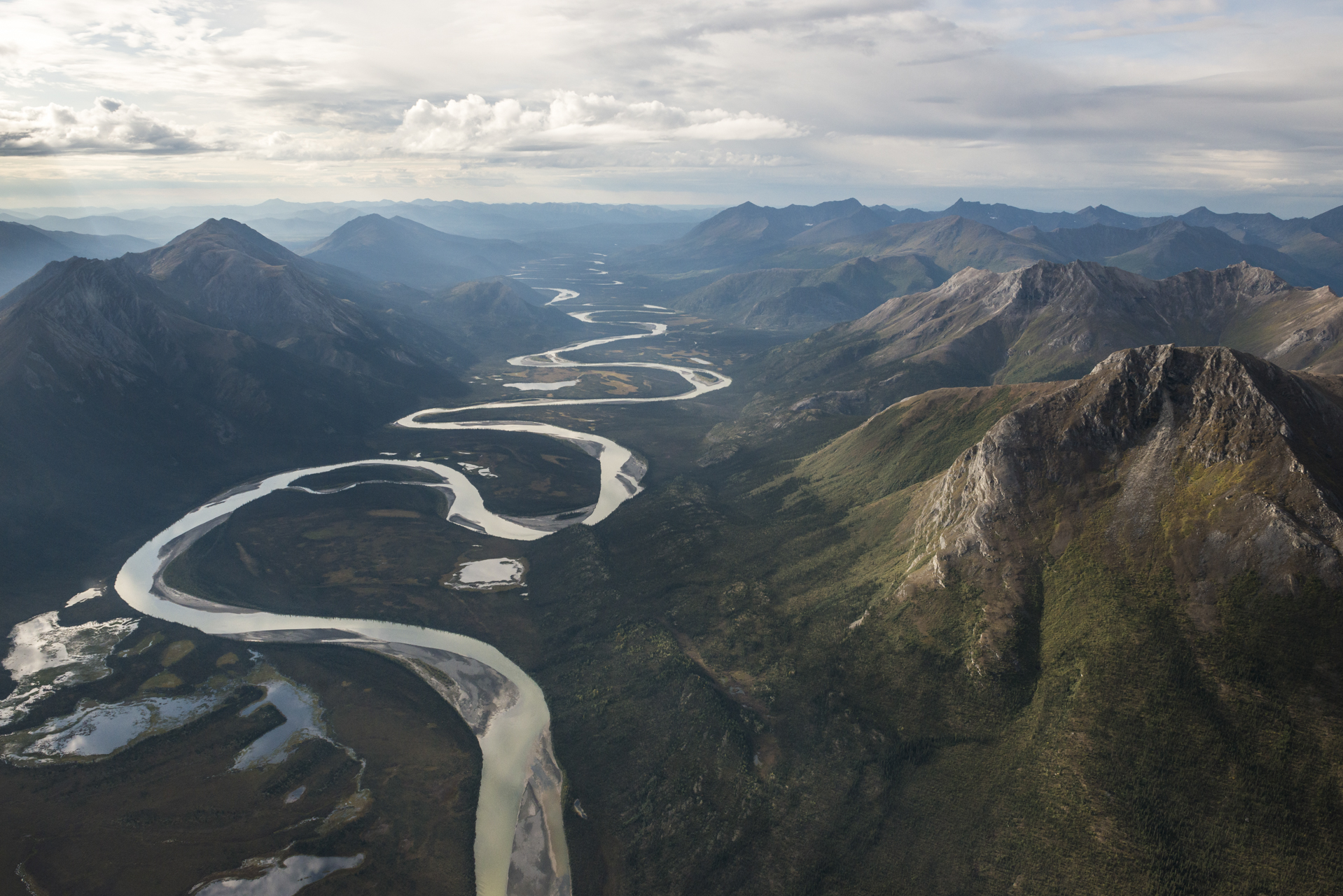
Visiting Gates of the Arctic National Park means chartering a bush plane, because this is the only U.S. national park with no roads, no maintained trails, no campgrounds and no services inside its boundary. Almost every trip starts with a scheduled flight from Fairbanks to the tiny gateway of Bettles, then an air taxi that drops you on a gravel bar or tundra lake. The one exception is walking in from the Dalton Highway on the park’s eastern edge. Everything below assumes you are comfortable being genuinely self-sufficient for several days.
Where exactly is Gates of the Arctic?
The park sits entirely north of the Arctic Circle, draped across the central Brooks Range in northern Alaska. At roughly 8.4 million acres of park and preserve it is the second-largest unit in the National Park System, larger than Belgium, and it shares a boundary with Noatak National Preserve to the west. The name comes from Bob Marshall, who in the 1930s described two peaks flanking the North Fork Koyukuk River — Frigid Crags and Boreal Mountain — as a gateway into the arctic interior. You can read the park overview on our Gates of the Arctic park page.
How do you actually get there?
There are three realistic routes in. The most common is a commercial flight from Fairbanks to Bettles, where the ranger station and the main air taxi operators are based; from there a floatplane or wheeled plane flies you into the park and picks you up on a pre-arranged date. The second is Coldfoot, on the Dalton Highway, which also has air taxi service and the Arctic Interagency Visitor Center. The third is a scheduled flight to Anaktuvuk Pass, a Nunamiut Inupiat village that lies inside the park boundary and is the only community within it — treat it as a living town, not an attraction.
You can also walk in. From roughly mile 235–280 of the Dalton Highway the park boundary lies a few miles west, but reaching it means fording the Middle Fork Koyukuk and pushing through tussock tundra and willow thickets. Hikers routinely find that three miles of tussocks takes longer than ten miles of trail elsewhere. It is the only no-charter option, and it is not the easy option.
Do you need a permit or pay a fee?
There is no entrance fee and, as of writing, no backcountry permit or quota system for general travel — but rules on group size, commercial guiding and river use do change, so check the current-year rules with the park before you commit to dates. What is expected of every visitor is a backcountry orientation at Bettles, Coldfoot or Anaktuvuk Pass, and the use of a bear-resistant food container. Ranger stations typically loan containers at no cost. Large sections of the park are surrounded by or interspersed with Native corporation land, so confirm your landing site and route are on public land before you fly.
When is the best time to go?
The practical window is mid-June through mid-August. June brings near-continuous daylight and high water on the rivers; July is warmest and also peak mosquito season, which visitors consistently rate as the hardest part of the trip; by late August the tundra turns red and gold and the bugs thin out, but weather windows tighten and air taxis get grounded more often. Snow is possible in any month. Build two or three buffer days into your itinerary, because a fogged-in pickup is normal rather than exceptional.
What is there to do once you are inside?
Backpacking and river travel are the whole menu. Six Wild and Scenic Rivers run through the park — the Alatna, John, Kobuk, Noatak, North Fork Koyukuk and Tinayguk — and packrafting or canoeing one of them is the classic multi-day trip. Hikers head for the Arrigetch Peaks, a cluster of granite spires above the Alatna, or ridge-walk the open country where travel is far faster than in the valley brush. Wildlife includes caribou from the Western Arctic and Central Arctic herds, grizzly and black bears, Dall sheep, wolves and moose.
How do you plan safely with no trails?
Navigate with map, compass and GPS, and assume no cell service anywhere. Carry a satellite messenger or personal locator beacon; a self-rescue is often impossible. Plan conservative daily distances — five to eight miles a day is a solid pace for loaded packs off-trail — and identify bail-out gravel bars your pilot could reach. Practice river crossings before the trip, since unbridged fords are the most common serious hazard. If this is your first Alaska backcountry trip, a guided outfitter is a reasonable way in.
If Gates of the Arctic feels like a step too far this year, the other remote Alaska parks make good stepping stones: Kobuk Valley for its Great Kobuk Sand Dunes, Katmai for the Brooks Falls bears, Lake Clark for float-plane accessible coastline, and Denali for road-accessible tundra. You can compare all of them on our national parks directory.
FAQ
How much does a trip to Gates of the Arctic cost?
The dominant cost is the air taxi charter, which is priced per flight hour and split across your group, on top of the Fairbanks–Bettles airfare. Most independent parties end up spending well into four figures per person before food and gear. Rates shift year to year, so request current-year quotes from two or three operators.
Can you visit Gates of the Arctic as a day trip?
Yes, in a limited way. Some Bettles and Coldfoot operators offer flightseeing trips with a short tundra landing, which lets you set foot in the park in a single day. It is by far the cheapest way to see it, though it gives you almost no time on the ground.
Is there anywhere to stay in the park?
There are no lodges, cabins or established campgrounds inside the park — camping is dispersed and entirely on your own. Lodging exists in Bettles, Coldfoot and Anaktuvuk Pass, and most visitors spend a night in Bettles before and after their flight.
How many people visit each year?
Gates of the Arctic is consistently one of the two or three least-visited national parks, with annual recreation visits typically in the low tens of thousands and far fewer people actually travelling in the backcountry. Solitude is effectively guaranteed.
Do I need a guide?
No, but experience matters more here than in almost any other park. If you have not done unsupported off-trail travel in bear country before, book a permitted guide service for your first trip.