
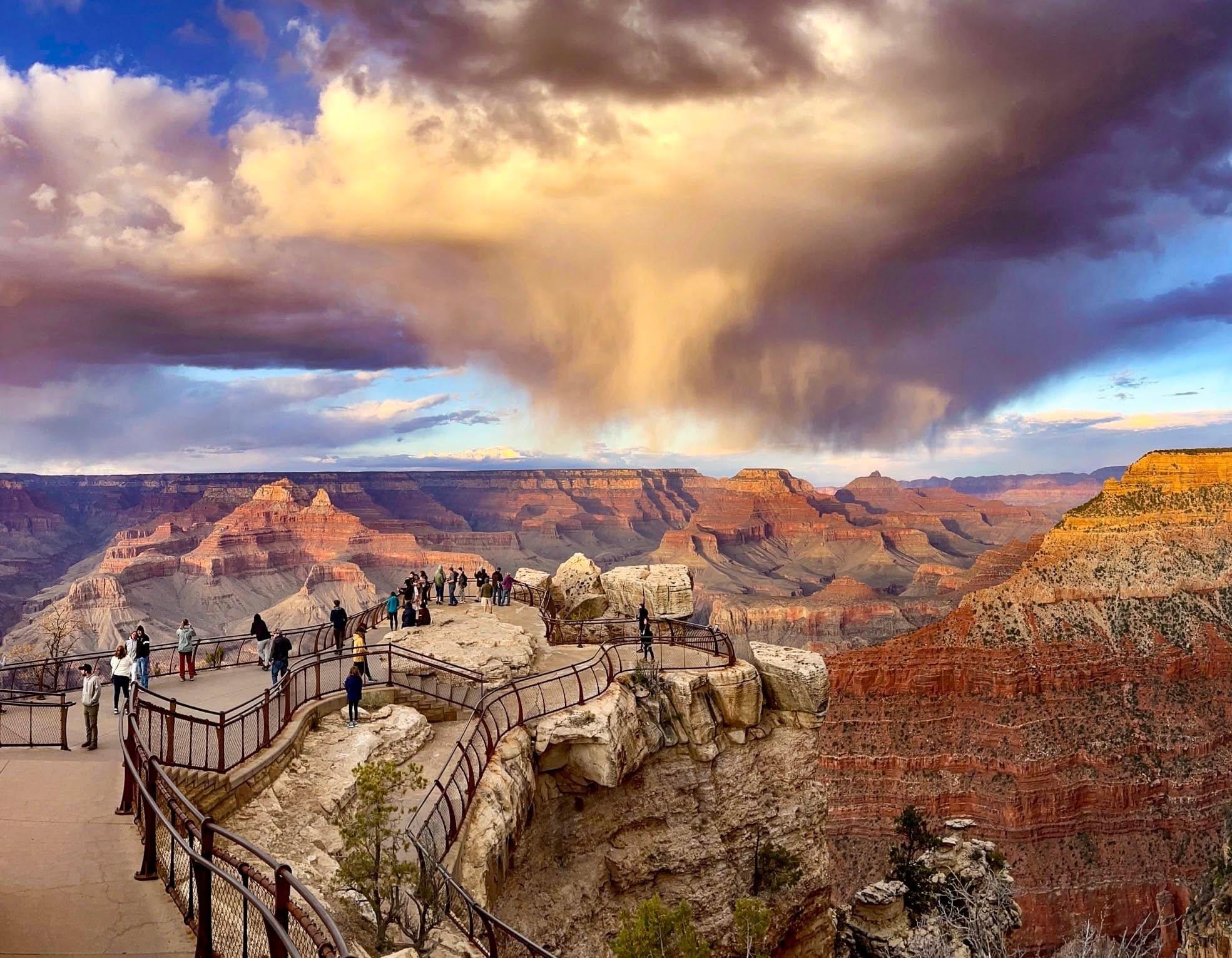
The Grand Canyon rim-to-rim hike crosses the entire canyon from one rim to the other in roughly 21 to 24 miles, and it is one of the most rewarding and demanding treks in the U.S. national park system. Most hikers descend the North Kaibab Trail from the North Rim and climb out on the Bright Angel or South Kaibab Trail to the South Rim, dropping and gaining more than a mile of elevation along the way. This guide covers distances, permits, direction, water, transport between the rims, and how to prepare safely.
How long is the rim-to-rim hike?
North Kaibab to Bright Angel is about 23.5 miles; North Kaibab to South Kaibab is about 21 miles. Fit hikers doing it in a single day typically need 10 to 14 hours. Elevation change is the real challenge: you descend roughly 5,700 feet from the North Rim to the Colorado River, then climb 4,400 to 4,800 feet back to the South Rim. The National Park Service strongly discourages hiking from rim to river and back in one day; rim-to-rim is a serious undertaking even for experienced hikers. See our best hikes in Grand Canyon National Park for shorter alternatives.
Do you need a permit for the rim-to-rim hike?
You do not need a permit to hike rim-to-rim as a day hike. You do need a backcountry permit if you camp below the rim, for example at Bright Angel, Cottonwood, or Havasupai Gardens campgrounds. Permits are competitive and are issued through an advance lottery plus limited walk-in requests. Staying at Phantom Ranch instead of camping requires a separate lottery-based reservation. Because rules and fees change, check the current-year backcountry permit and lottery details on the official park page before you plan.
Which direction should you hike?
Most hikers go north to south. The North Rim sits about 1,000 feet higher, so starting there means a longer initial descent and a shorter final climb out. Going south to north is popular with those staying on the North Rim afterward. Whichever way you choose, you will finish with a long, exposed ascent, so plan your slowest miles for the coolest part of the day. Compare the two rims in our North Rim vs South Rim guide.
When is the best time to hike rim-to-rim?
Late spring (May) and early fall (September to mid-October) offer the best balance of open facilities and manageable temperatures. The North Rim and its facilities typically close for winter around mid-October and reopen in mid-May, so the true rim-to-rim window is narrow. Avoid mid-summer: inner-canyon temperatures routinely exceed 100°F and cause the majority of heat emergencies. Learn more about the park at Grand Canyon National Park.
How do you get between the two rims?
The rims are only about 10 miles apart across the canyon but roughly 210 miles and 4.5 hours apart by car. A seasonal Trans-Canyon Shuttle runs between the North and South Rims and must be booked in advance. Many hikers arrange a car shuttle, hire a private service, or hike rim-to-rim-to-rim to return to their starting car. Plan your return transportation before you set out. For more Arizona trip ideas, see national parks in Arizona and browse all national parks.
How do you prepare and stay safe?
Train with long, steep hikes carrying a loaded pack. Carry and drink plenty of water, refill at seasonal water stations along the North Kaibab and Bright Angel corridors (confirm which are running before you go), and balance water with electrolytes and salty food. Start before dawn, turn around if you fall behind schedule, and never treat this as a casual day hike. Tell someone your itinerary and expected finish time.
FAQ
Is the Grand Canyon rim-to-rim hike doable in one day?
Yes, for well-trained hikers in cooler months, but it is long and strenuous. The Park Service recommends splitting it across two days with a night below the rim if you are unsure of your fitness.
Do I need a permit for a single-day rim-to-rim hike?
No permit is required for a day hike. You only need a backcountry permit if you camp below the rim, or a separate reservation to stay at Phantom Ranch.
Which trail should I use to climb out to the South Rim?
Bright Angel is longer but has more shade and seasonal water; South Kaibab is shorter and steeper with no water and little shade. Choose based on the weather and your energy.
How hot does it get in the canyon?
Inner-canyon summer temperatures often top 100°F, far hotter than the rims. That is why late spring and early fall are the safest windows for a rim-to-rim crossing.