
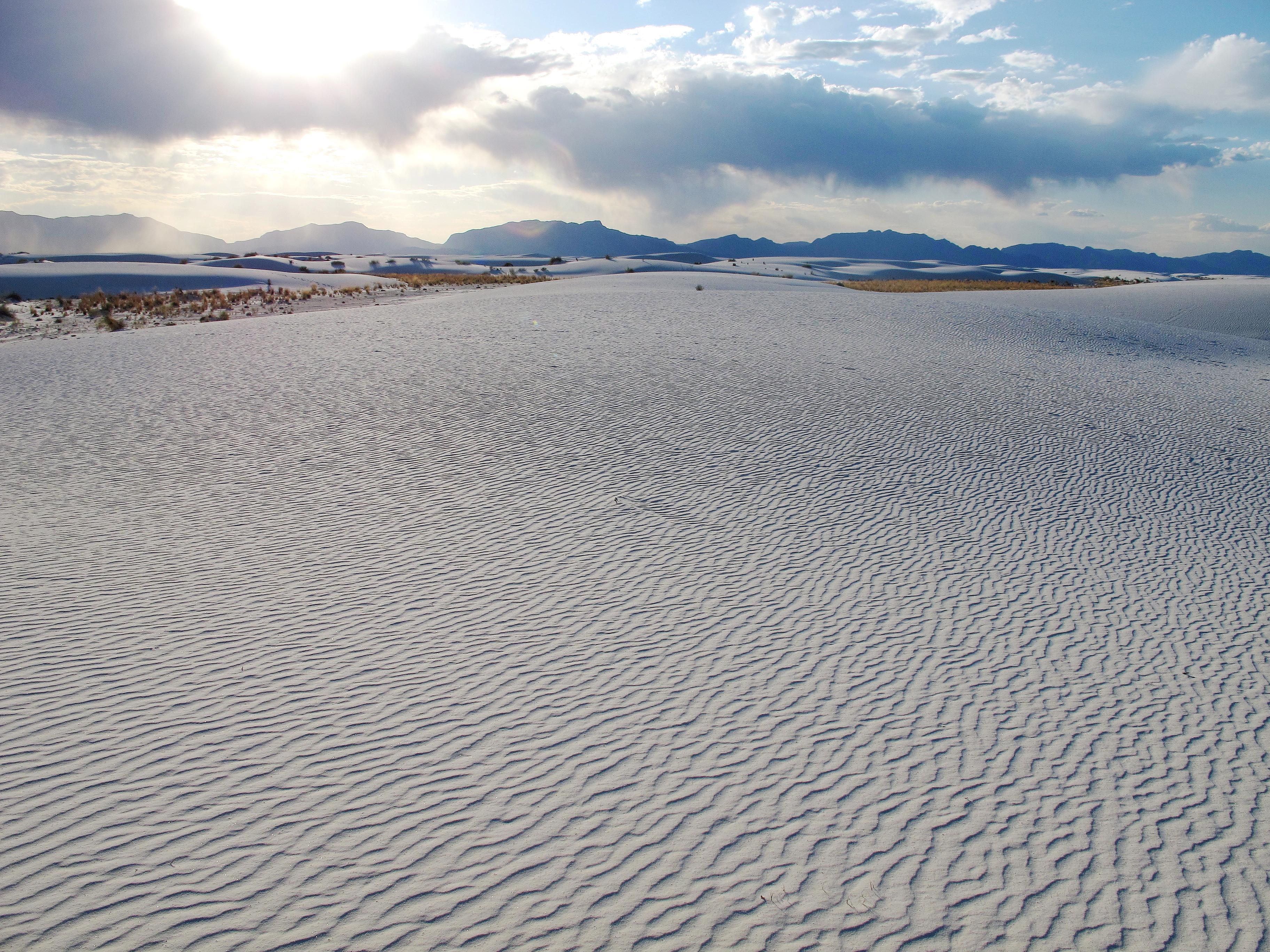
The best time to visit White Sands National Park is October through April, when daytime highs sit in the comfortable 60s and 70s°F and the gypsum dunes stay walkable all afternoon. But this park has a second variable most seasonal guides skip: it sits inside an active military range, and the roads close for missile testing on dates that have nothing to do with weather. Timing a White Sands trip well means checking both.
What is the weather like season by season?
Fall (October–November) is the strongest window overall. Summer monsoon humidity has broken, skies are clear, highs run roughly 70–80°F, and the crowds thin after Labor Day. Sunset comes early enough that you can photograph golden hour and still be out before the gate closes.
Winter (December–February) brings the sharpest light of the year and the emptiest dunes. Highs land in the 50s–60s°F but nights drop below freezing, and the wind off the Tularosa Basin makes it feel considerably colder. Occasional dustings of actual snow on white gypsum are a genuinely strange sight worth planning around.
Spring (March–May) has warm, pleasant temperatures and the worst wind of the year. March and April routinely deliver sustained 30 mph winds that lift gypsum into the air, cut visibility, and make photography miserable. Spring break also brings the year's heaviest crowds.
Summer (June–September) is the hardest season. Highs exceed 95°F, and the dunes offer zero shade and no water beyond the visitor center. July through September adds monsoon thunderstorms, which build fast in the afternoon and bring lightning onto completely exposed terrain.
Why do the missile range closures matter?
White Sands National Park is surrounded by White Sands Missile Range. When testing is scheduled, US Highway 70 and the park itself close for up to three hours at a time, typically in the morning. These closures are announced in advance but are not on a fixed weekly schedule, and they are the single most common reason a carefully planned visit falls apart.
Check the park's official closure listings a few days before you drive out and again the morning of. Closure schedules and entrance procedures change, so confirm the current-year rules rather than relying on a date you read months earlier.
What is the best time of day to be on the dunes?
The last 90 minutes before sunset. Low-angle light turns the gypsum from flat white to gold and pink, the ripple patterns in the sand gain dimension, and the surface temperature drops to something you actually want to walk barefoot on. The park extends its gate hours seasonally to accommodate sunset visitors, and rangers run sunset strolls on many evenings.
Early morning is the quieter alternative and gives you undisturbed sand — overnight wind erases the previous day's footprints. Midday between May and September is the one window to avoid entirely.
When is the best time for sledding?
Any cool, dry day works, but the sand packs best when it has not rained recently — damp gypsum grips the sled and kills your speed. Fall and winter give you both the dry conditions and the temperatures to enjoy repeated climbs back up the dune. Plastic saucer sleds are sold at the visitor center and can usually be resold on your way out; wooden and metal sleds do not work on gypsum.
When are the full moon nights and special events?
The park runs full moon night programs during the warmer months, when the dunes under moonlight are bright enough to walk without a headlamp. These fill quickly and require advance tickets. Lake Lucero tours, which visit the source of the gypsum itself, run only on selected dates from November through March — if that is your priority, your travel window is winter, not fall.
How long should I plan to stay?
Half a day covers the eight-mile Dunes Drive, the Interdune Boardwalk, and a walk on the Alkali Flat Trail. A full day makes sense only if you are pairing sunrise and sunset. Most visitors fold White Sands into a longer southern New Mexico loop with Carlsbad Caverns National Park about three hours east and Guadalupe Mountains National Park just over the Texas line. See the full New Mexico national parks guide and the Texas guide, or browse every park in our parks directory.
FAQ
What is the single best month to visit White Sands?
October. Monsoon season has ended, the spring winds have not started, daytime highs are in the 70s°F, and crowd levels drop after the summer holidays.
Is White Sands worth visiting in summer?
Only at sunrise or sunset. Between roughly 10 a.m. and 5 p.m. from June through September, the combination of 95°F-plus heat, no shade, and no water on the dunes makes a daytime visit genuinely risky.
How often does the park close for missile testing?
Closures happen periodically throughout the year and typically last up to three hours. There is no fixed schedule, so check the park's posted closure dates before and on the day of your visit.
Does it snow at White Sands National Park?
Occasionally. Light snow falls a few times most winters and usually melts within hours, but white snow over white gypsum is one of the more distinctive sights in the Southwest.
What is the best time of day for photography?
Sunset and the blue hour immediately after. The dunes reflect color strongly, so the sky's pinks and oranges spread across the sand. Sunrise works similarly with fewer people and cleaner, wind-smoothed ripples.