
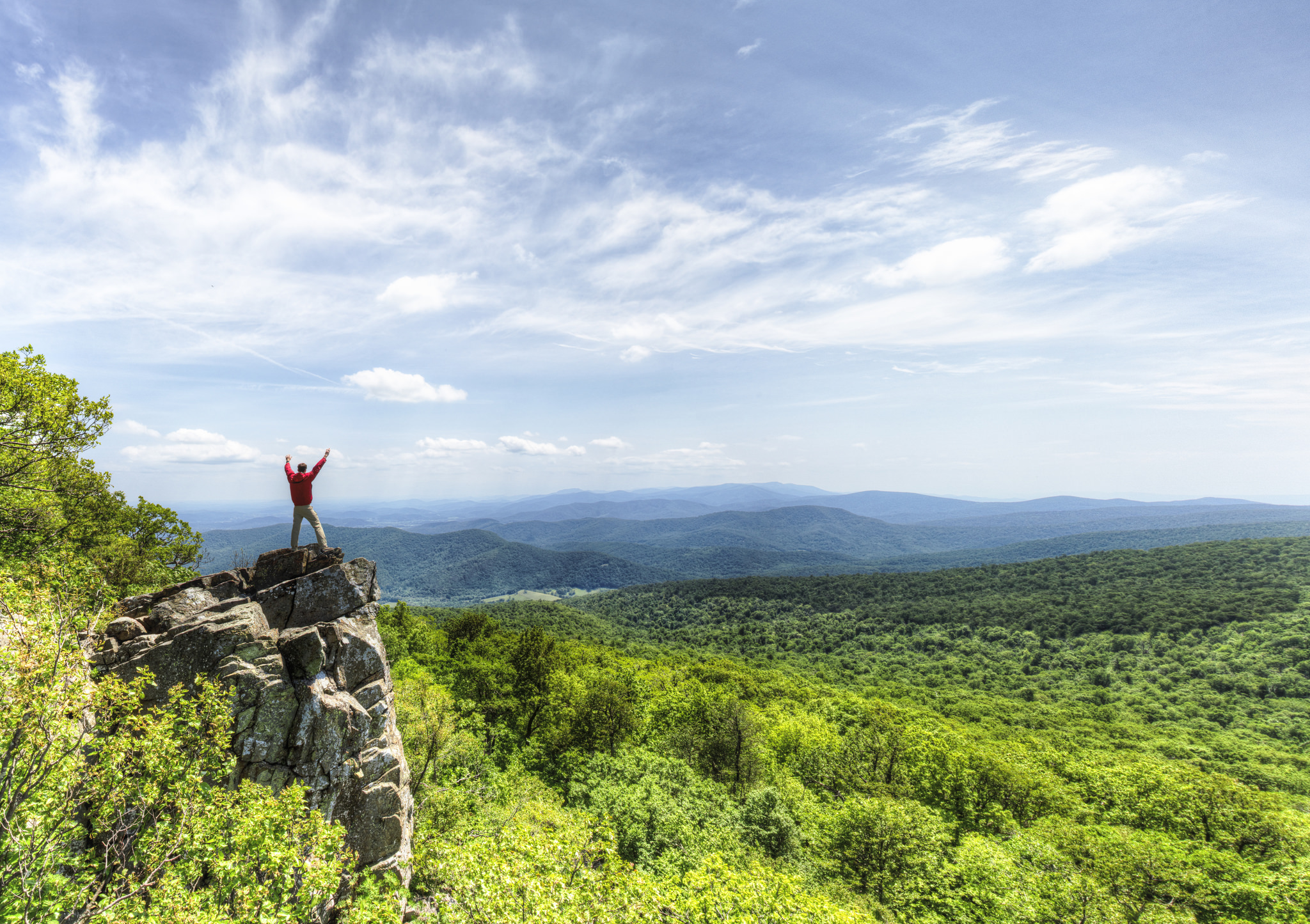
The best time to visit Shenandoah National Park is mid-September through late October, when Skyline Drive's overlooks fill with fall color, the humidity finally breaks, and bears fatten up on acorns in plain view of the road. Late April through early June is the strong runner-up: waterfalls run at their loudest, wildflowers cover the hollows, and the park is far quieter than it will be in October.
What is the best month to visit Shenandoah National Park?
October is the headline month. Daytime highs on the ridge sit in the 50s and 60s Fahrenheit, the air is clear enough to see the Piedmont from Hawksbill and Stony Man, and the hardwood forest that covers roughly 95 percent of the park turns over all at once. The trade-off is traffic: weekends in mid-October are the busiest days of the year on Skyline Drive, and entrance stations at Front Royal and Thornton Gap can back up for a mile or more by 10 a.m.
If you want the same scenery without the queue, May is the smarter pick. Dark Hollow Falls, Rose River Falls, and South River Falls are all running hard from snowmelt and spring rain, the mountain laurel starts blooming toward the end of the month, and you can hike Old Rag on a Saturday without feeling like you are in a line.
When is peak fall foliage on Skyline Drive?
Shenandoah's color runs top-down. The highest elevations near Big Meadows and Skyland, around 3,500 feet, usually turn first in early October, while the hollows and the park's lower northern and southern ends peak a week or two later. Mid-October is the safest single bet for the central district, but the exact window shifts with summer rainfall and the timing of the first cold nights, so check the park's current-year foliage updates before locking in a date.
A practical trick: drive Skyline Drive south to north in the morning. The sun sits behind you, the east-facing overlooks light up, and you beat the wave of day-trippers arriving from the Washington DC suburbs after breakfast.
What is Shenandoah like in spring and summer?
Spring arrives late on the ridge. Expect bare trees into mid-April even when the Shenandoah Valley below is already green, then a fast green-up through early May. This is the best stretch of the year for waterfalls and for spotting wildlife against an open forest.
Summer is warm, humid, and hazy. Afternoon thunderstorms are common, and long views often wash out by midday. Summer still works well if your plan is early-morning hikes and evenings at Big Meadows, and it is the most reliable season for the park's lodges, campgrounds, and waysides to be fully open. Compare it with the higher, cooler ridgelines of Great Smoky Mountains National Park if you are choosing between the two Appalachian parks.
Is Shenandoah worth visiting in winter?
Yes, if you are flexible. Winter delivers the emptiest overlooks and the longest sightlines of the year, since the leafless canopy opens views that are hidden in July. Lodging, dining, and most facilities close for the season, so plan on a day trip or a stay outside the park in Luray or Front Royal.
The catch is access. Sections of Skyline Drive close whenever snow or ice makes them unsafe, sometimes for several days at a time, and closures can happen with little notice. Always check the park's road status the morning you travel rather than the night before.
When does Skyline Drive close?
Shenandoah is open year-round, but Skyline Drive is not always drivable. Beyond winter weather closures, the park restricts the road at night during the November and January deer-management periods, and short segments close for maintenance. There is no timed-entry reservation system, though Old Rag requires a separate day-use ticket during its busy season. Treat all permit, fee, and ticket details as current-year rules and confirm them before you go.
When should you go to avoid crowds?
Weekdays, always. Tuesday through Thursday in early May or the first week of November give you fall-adjacent or spring-adjacent conditions with a fraction of the traffic. Within a day, the park is quietest before 9 a.m. and after 4 p.m. — which also happens to be when the light is best from the overlooks. For more Virginia itineraries, see our Virginia national parks guide, and for a road-trip pairing, the Blue Ridge Parkway picks up where Skyline Drive ends at Rockfish Gap.
FAQ
What is the best month to see fall colors in Shenandoah?
Mid-October is the most reliable window for peak color in the park's central district around Big Meadows and Skyland. Higher elevations turn in early October and the lower hollows follow into late October, so a mid-month visit usually catches color somewhere along the drive no matter how the season runs.
Is Skyline Drive open year-round?
The road is open year-round in principle, but it closes temporarily during snow and ice and is restricted at night during the park's deer-management periods in November and January. Check the current road status the morning you plan to drive.
What is the closest national park to Washington DC?
Shenandoah National Park is the closest full national park to Washington DC — the Front Royal entrance is about 70 miles from the city, roughly a 90-minute drive without traffic. That proximity is exactly why October weekends here are so busy.
Do you need a ticket to hike Old Rag?
Old Rag requires a day-use ticket in addition to the park entrance fee during its peak season, and the tickets are limited each day. Book ahead and confirm the current-year dates and quota before you drive out.
How long does it take to drive Skyline Drive end to end?
Skyline Drive runs 105 miles with a 35 mph speed limit, so non-stop it takes about three hours. Realistically, budget a full day if you want to stop at overlooks and add a short hike, or split it across the Front Royal, Thornton Gap, Swift Run Gap, and Rockfish Gap entrances. Browse more park guides on our national parks directory.