
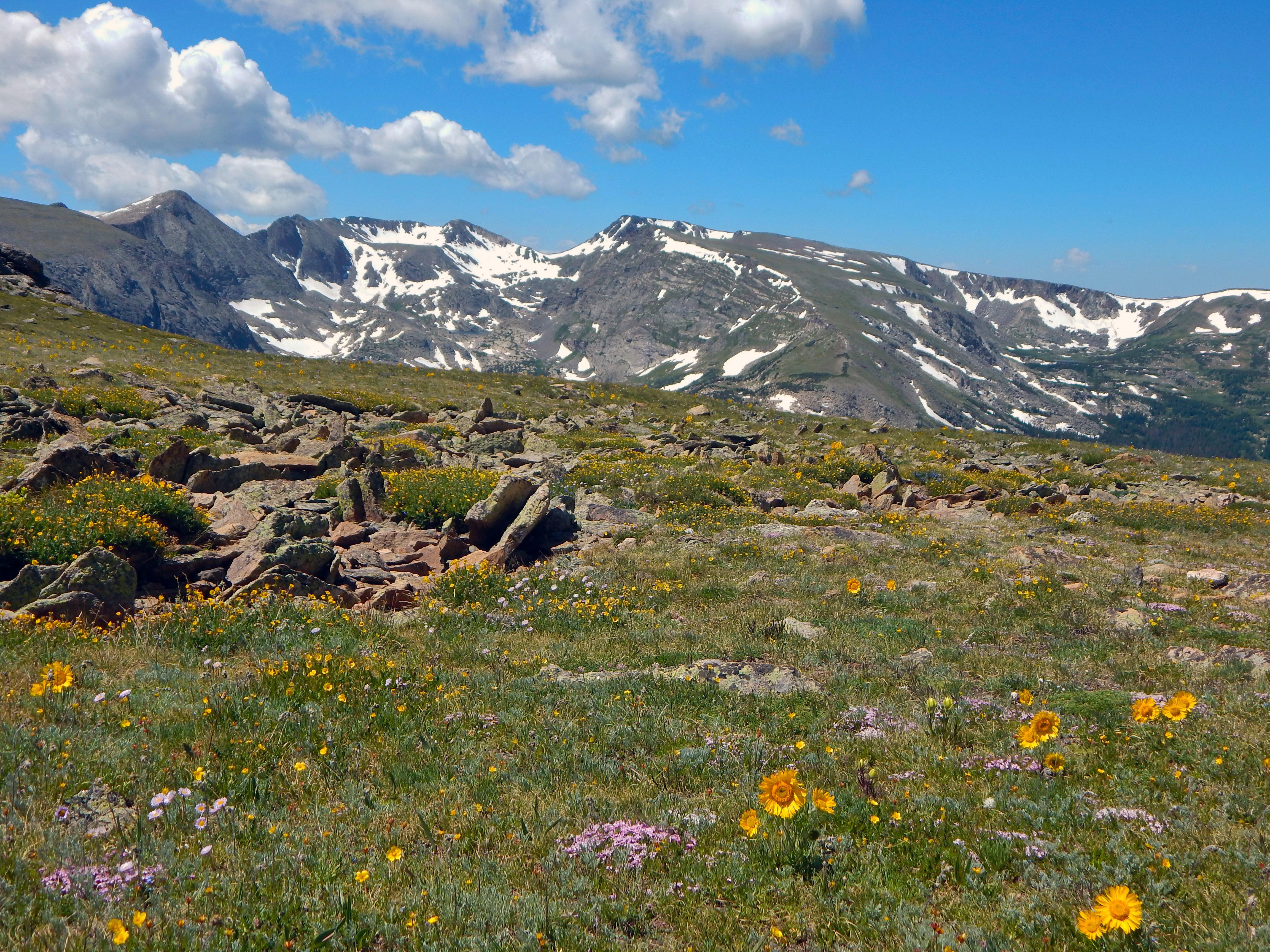
The best time to visit Rocky Mountain National Park is mid-September through early October, when Trail Ridge Road is still open, the aspens turn gold, the elk rut is in full voice, and the timed-entry system is winding down. July and August deliver the most reliable high-country access but bring the year's worst crowds and near-daily afternoon thunderstorms above treeline.
This park spans roughly 7,500 feet to 14,259 feet at the summit of Longs Peak, so "season" means something different depending on elevation. A trail at Lumpy Ridge can be dry and pleasant in May while Bear Lake is still under snow. Below is how to match your dates to what you actually want to do.
When does Trail Ridge Road open and close?
Trail Ridge Road is the highest continuous paved road in the United States, cresting above 12,000 feet, and it is the reason many people come. It typically opens around Memorial Day weekend after the plow crews break through, and it typically closes for the season in mid-October. Both dates move with the weather — an early storm can shut it in September, and a heavy winter can delay the spring opening into June.
If driving the alpine tundra is your priority, target late June through early October and check the current-year road status the morning you go, since the road also closes temporarily during storms.
Do you need a timed entry permit for Rocky Mountain?
Rocky Mountain has used a timed-entry reservation system during its busy months, generally from late spring through mid-October, with two permit types: one covering general park access and a second that adds the Bear Lake Road corridor. The Bear Lake permits are the scarce ones. Reservations release in advance blocks plus a next-day batch, and the early-morning Bear Lake slots go first.
Treat the exact season dates, hours, and permit tiers as something to verify against the current-year rules before booking lodging, because the park has adjusted this system repeatedly. A timed-entry permit is separate from your entrance fee — an America the Beautiful pass covers entry but does not substitute for the reservation.
What is each season like?
Spring (April-May): A low-elevation season. Lumpy Ridge, Deer Mountain and the Moraine Park meadows melt out first; anything above about 9,500 feet is still winter. Trail Ridge Road is closed. Crowds are light and elk calves appear in late May.
Summer (June-August): Everything opens. Wildflowers peak in the subalpine in July. The pattern that catches visitors out is the afternoon thunderstorm cycle — build your day so you are below treeline by noon, because lightning above the tundra is the park's most genuine hazard. Parking lots at Bear Lake and Glacier Gorge fill before 6 a.m. on summer weekends.
Fall (September-October): The best window. Aspen gold peaks roughly mid to late September, concentrated around Bierstadt Lake, the Kawuneeche Valley and the lower stretches of Trail Ridge Road. The elk rut overlaps exactly, with bugling audible at dawn and dusk in Moraine Park and Horseshoe Park. Nights drop below freezing.
Winter (November-March): Bear Lake Road stays open year-round to Bear Lake, so the park remains very usable for snowshoeing and winter hiking. The east side is windy and often surprisingly dry and bare; the west side near Grand Lake holds deeper, more consistent snow. Timed entry is generally not in effect, and the park feels close to empty.
When is the best time to see elk in Rocky Mountain?
September through mid-October, at dawn and dusk, in the open meadows of Moraine Park, Horseshoe Park and the Kawuneeche Valley. The rut is the park's signature wildlife event and the bugling carries a long way in cold morning air. Stay well back — rangers actively enforce distance during the rut, and bull elk are genuinely dangerous in this season.
How does altitude affect when you should visit?
If you are flying in from sea level, build in an acclimatization day regardless of season. Estes Park sits near 7,500 feet and the trailheads run higher still. Summer visitors underestimate this most often, because the effort of a July hike at 11,000 feet feels nothing like the same mileage at home. Arriving from Denver gives you a natural mile-high stopover.
FAQ
What is the least crowded time to visit Rocky Mountain National Park?
November through April is quietest by far. Within the warm season, mid-week days in early June and the last week of September are noticeably calmer than July and August.
Is Trail Ridge Road open in winter?
No. Trail Ridge Road closes to through traffic for the season, typically in mid-October, and reopens around late May. Lower sections from each side remain accessible to a point in winter.
When do the aspens change color in Rocky Mountain National Park?
Usually mid to late September, with the timing shifting slightly by elevation — higher stands turn first. Peak rarely lasts more than about ten days.
Can you visit Rocky Mountain National Park without a reservation?
Outside the timed-entry season, yes. During the season, entering before or after the permitted hours is the common workaround, which in practice means arriving very early. Confirm the current-year window before relying on this.
What should I pack for a fall trip?
Layers for a 40-degree temperature swing in a single day, traction for early snow at elevation, and a wind shell. Fall storms at 12,000 feet arrive fast. Our guide to the best hikes in Rocky Mountain notes which trails hold snow longest, and the wider Colorado parks guide covers nearby alternatives if the road is closed.