
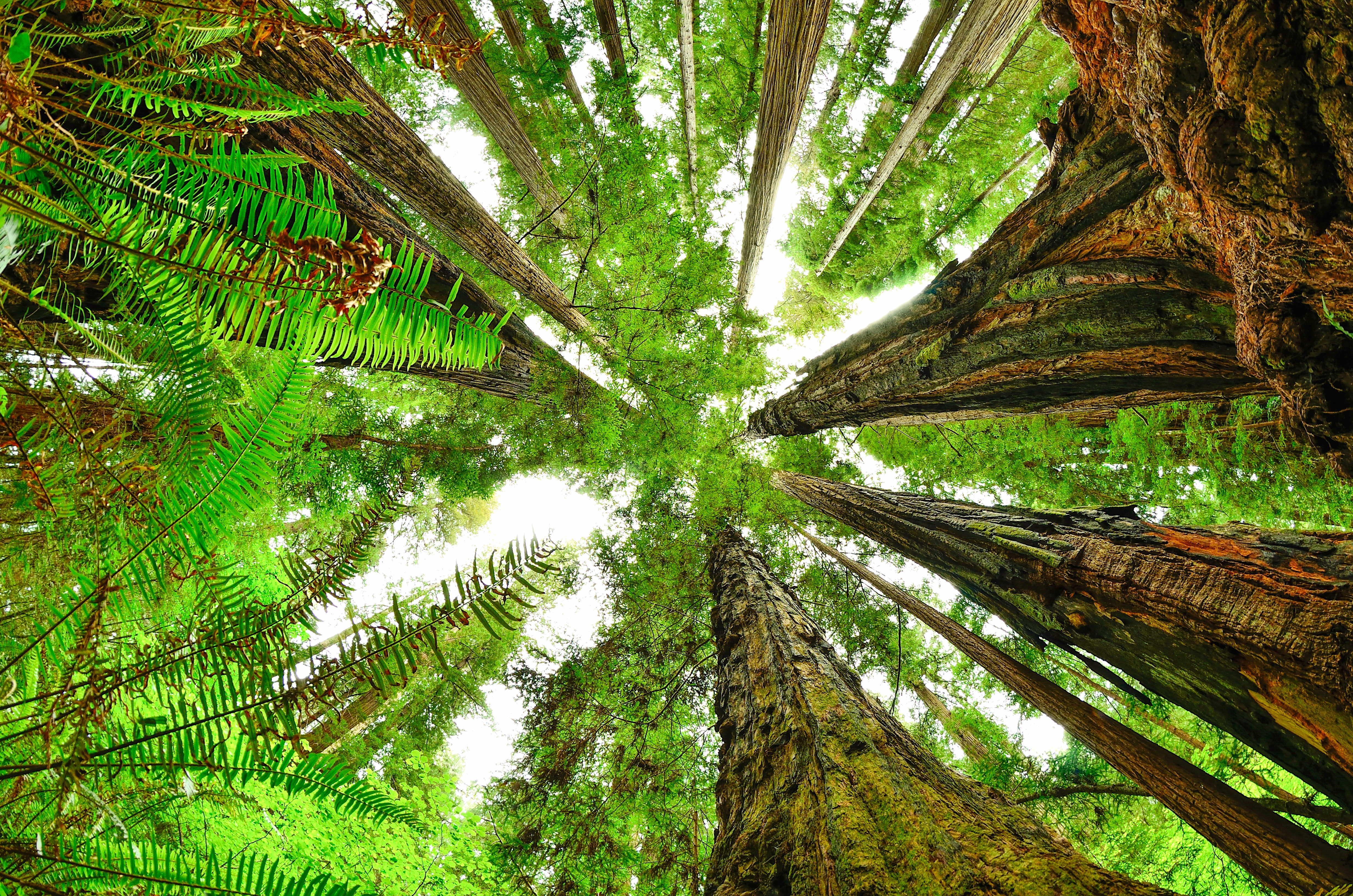
The best time to visit Redwood National Park is September and October, when the summer fog belt finally breaks up, the Roosevelt elk enter their rut, and the summer crowds have gone home. Late May and June come second, for the rhododendron bloom. Winter is the wettest, quietest and — for photographers who like mist in the canopy — quietly excellent.
The park is unusual in that its worst-sounding season is not really bad and its best-sounding season is not really best. Summer here means fog, not sun. Understanding that inversion is the whole trick to timing a visit.
When is the best time to visit Redwood National Park?
Redwood National and State Parks sit on the far northern California coast, where the climate is mild and damp all year. Temperatures rarely leave the 40s-to-60s Fahrenheit range in any season, so you are choosing between fog, rain and clarity rather than between hot and cold.
September–October: the clearest skies of the year, warm afternoons, the bull elk rut in full voice, and thinning crowds. The strongest all-round window.
Late May–June: wild rhododendrons bloom pink through the understory along Prairie Creek and the Damnation Creek Trail. Fog is building but not yet constant.
July–August: peak visitation and peak fog. Atmospheric in the groves, disappointing on the coastal overlooks.
November–March: heavy rain, mud, occasional road washouts, and near-total solitude. Gray whales migrate offshore.
Why is summer foggy at Redwood?
The coast redwood belt exists because of summer fog. Cold upwelling ocean water meets warm inland air and generates a marine layer that blankets the coast for much of June, July and August, delivering moisture to trees during the rainless months. It is the reason the forest is there at all.
For visitors, this means summer mornings are often gray and cool, with the fog burning back toward the coast by afternoon — sometimes. Inland groves along Bald Hills Road clear sooner than the coastal ones. If you have flexibility, plan coastal viewpoints for afternoon and groves for morning, when the light shafts through the mist are at their best.
What makes fall the strongest season?
September and October bring the year's most reliable clear weather, before the winter rains arrive. Skies open up, the coastline is actually visible, and daytime temperatures are comfortable for long hikes.
The bigger draw is the Roosevelt elk rut. Through September and into October, bulls bugle and spar in the meadows at Elk Meadow and Prairie Creek — one of the most accessible large-mammal spectacles in the state. Keep well back; rutting bulls are dangerous and the required viewing distances are enforced.
What about spring and the rhododendron bloom?
Late May into June is the other standout window. Wild rhododendrons flower through the redwood understory, most reliably along the Damnation Creek Trail and the Prairie Creek corridor. Elk calves appear around the same time, which makes cows unusually defensive.
Spring is also when winter storm damage gets assessed and repaired, so some trails and unpaved roads may still be closed. Check current conditions before committing to a specific route.
Is winter worth it?
The area receives roughly 60 to 80 inches of rain a year, most of it between November and March. Trails turn muddy, the unpaved roads to Tall Trees Grove and Fern Canyon can close, and daylight is short.
What you get in exchange is an empty forest, dramatic surf, mushrooms and moss at their most vivid, and gray whales passing offshore — southbound around December, northbound in March and April. Bring genuinely waterproof gear rather than a light shell.
Which permits and fees should you plan around?
There is no entrance fee for the national park itself, but the three state parks jointly managed within it — Jedediah Smith, Del Norte Coast and Prairie Creek — charge day-use fees at developed areas.
Two specific access points need advance planning. Tall Trees Grove requires a free vehicle permit with a limited daily quota. Fern Canyon requires a permit during the busy months. Both systems have changed in recent years, so check the current-year rules and quotas before you build a day around either.
How does Redwood fit into a wider California trip?
Redwood sits far from the state's other headline parks — expect a long drive from anywhere. It pairs naturally north into Oregon toward Crater Lake, or inland toward Lassen Volcanic. Travelers wanting giant trees closer to central California usually head to Sequoia and Kings Canyon instead, which protects the bulkier giant sequoias rather than the taller coast redwoods. See the full California park lineup or browse every state guide to plan the route.
FAQ
What is the single best month to visit Redwood National Park?
September. It combines the clearest weather of the year with the start of the elk rut and noticeably fewer visitors than July or August.
Is Redwood National Park crowded?
Far less than California's Sierra parks. Summer weekends fill the popular groves and the Fern Canyon access road, but the park absorbs visitors easily and midweek visits in shoulder season can feel close to private.
How many days do you need at Redwood?
Two full days covers the highlights across the park's north-to-south spread. Three lets you add a coastal day and a slower grove walk without driving the whole length of the park twice.
Do you need a reservation to visit Redwood National Park?
Not for general entry. Tall Trees Grove and Fern Canyon require permits with limited daily availability, and campgrounds book up in summer. Check the current-year permit rules before your trip.
What is the difference between redwoods and sequoias?
Coast redwoods are the tallest trees on earth and grow only in this narrow fog belt. Giant sequoias are shorter but far more massive, and grow inland on the western Sierra Nevada slope. Different trees, different parks, several hundred miles apart.
When can you see whales from the park?
Gray whales pass offshore on their southbound migration around late November through December and northbound from roughly March into April. Klamath River Overlook is the classic vantage point.