
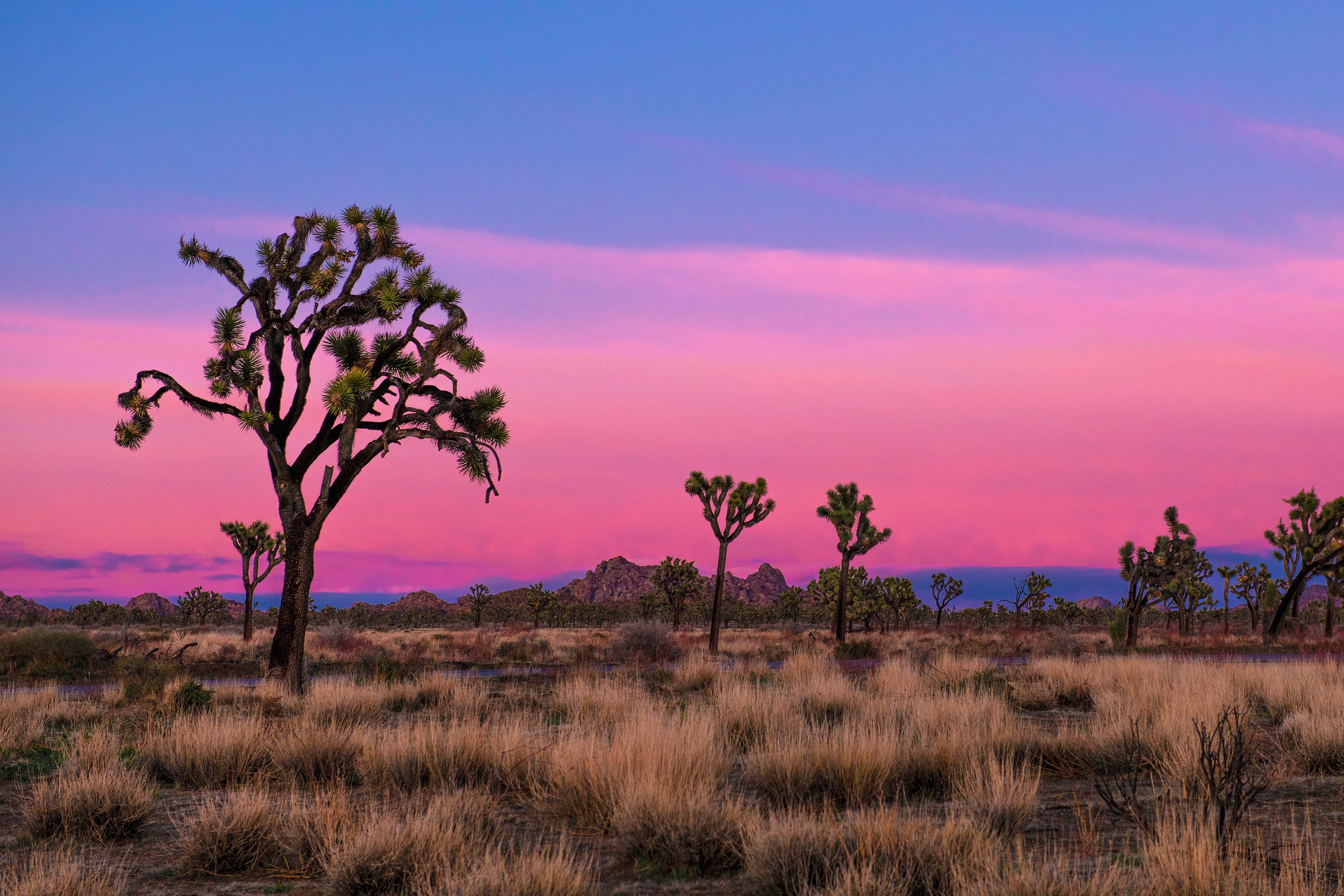
The best time to visit Joshua Tree National Park is October through April, with March and November as the two standout months — warm days, cold-but-tolerable nights, and none of the heat that makes summer hiking here a genuine safety problem rather than just an inconvenience. Unlike parks where the off-season is merely less pleasant, Joshua Tree's summer is the one time of year the park itself will tell you to stop hiking after mid-morning.
Why is summer in Joshua Tree different from other parks' off-seasons?
June through September regularly runs 100°F or higher at the park's lower elevations, and the desert offers almost no shade and no reliable water anywhere inside the boundary. There are no water sources on the trails. Heat illness is the park's most common serious incident, and rangers advise against hiking after mid-morning in summer. If summer is your only window, treat it as a sunrise-and-sunset park: hike before 9 a.m., spend midday out of the park, and return in the evening. Carry at least a gallon of water per person per day.
How does elevation change the temperature?
Joshua Tree spans two deserts and roughly 4,000 feet of elevation, and this is the single most useful planning fact most visitors miss. The high Mojave section — Hidden Valley, Jumbo Rocks, Keys View, around 4,000 feet — runs about 10 to 15°F cooler than the low Colorado Desert section around Cottonwood Spring and the Cholla Cactus Garden. In winter that means the high country can see snow dusting the boulders while Cottonwood is pleasantly mild. In shoulder season, it means you can chase comfortable temperatures by moving up or down within the same day.
When do the wildflowers bloom?
Joshua Tree's bloom is real but genuinely unreliable, and it is worth setting expectations. Flowers typically appear at the lowest elevations first, in February and March, and work upward into April and even May at the highest sections. A strong display requires well-timed autumn and winter rain — some years produce a spectacular showing, and other years produce almost nothing. The Joshua trees themselves bloom in spring too, but not every tree flowers every year. Check current bloom reports close to your trip rather than booking months ahead on the assumption of a good year.
What is each season actually like?
Fall (October–November): Arguably the best window overall. Daytime highs in the 70s and 80s, thin crowds compared to spring, and long clear nights. Fewer people know about it than March.
Winter (December–February): Highs in the 60s, nights near or below freezing, and occasional snow on the high boulders. Excellent for hiking and rock climbing; genuinely cold for camping, and most campgrounds have no water.
Spring (March–April): The busiest season by a wide margin. Ideal temperatures, possible wildflowers, and heavy crowding — the west entrance near the town of Joshua Tree can back up significantly, and spring-break weekends fill campgrounds well in advance. Enter early or use the south entrance off I-10.
Summer (May–September): Hot and quiet. Best for stargazing and early-morning photography only.
When should climbers and stargazers go?
The two groups want opposite things. Rock climbers favor October through April, when the monzogranite is cool enough to hold friction — summer rock is unusable by midday. Stargazers do best in summer, when the Milky Way core is high and nights are warm enough to sit out comfortably; Joshua Tree is a designated International Dark Sky Park, and moonless nights are the ones to target regardless of season. Winter offers crisper air but bitterly cold nights.
For more on the region's desert parks, see our guides to Joshua Tree National Park, Death Valley National Park, and Saguaro National Park, or browse everything in California. You can also see the full list of national parks by state.
FAQ
What is the worst month to visit Joshua Tree?
July, followed closely by August. Highs frequently exceed 100°F, hiking is unsafe for most of the day, and there is no water in the park.
How many days do you need in Joshua Tree?
Two days covers the highlights comfortably — one for the Hidden Valley and Keys View area, one for the Cholla Cactus Garden, Cottonwood, and a sunset viewpoint. A single long day is workable if you start early. Climbers and photographers should plan on three or more.
Does Joshua Tree require a reservation to enter?
Joshua Tree does not currently use a park-wide timed-entry reservation, but campgrounds are reservation-based in the busy season and fill months out for spring weekends. Confirm the current-year entry, camping, and fee rules before you travel.
Is Joshua Tree crowded in winter?
Far less than spring. December and January are among the quietest months with genuinely good hiking weather, though nights get cold and holiday weekends are an exception.
When is the Milky Way visible over Joshua Tree?
The bright galactic core is best from roughly May through September, highest around midnight in early summer. Aim for a new moon and give your eyes 20 minutes to adjust.