
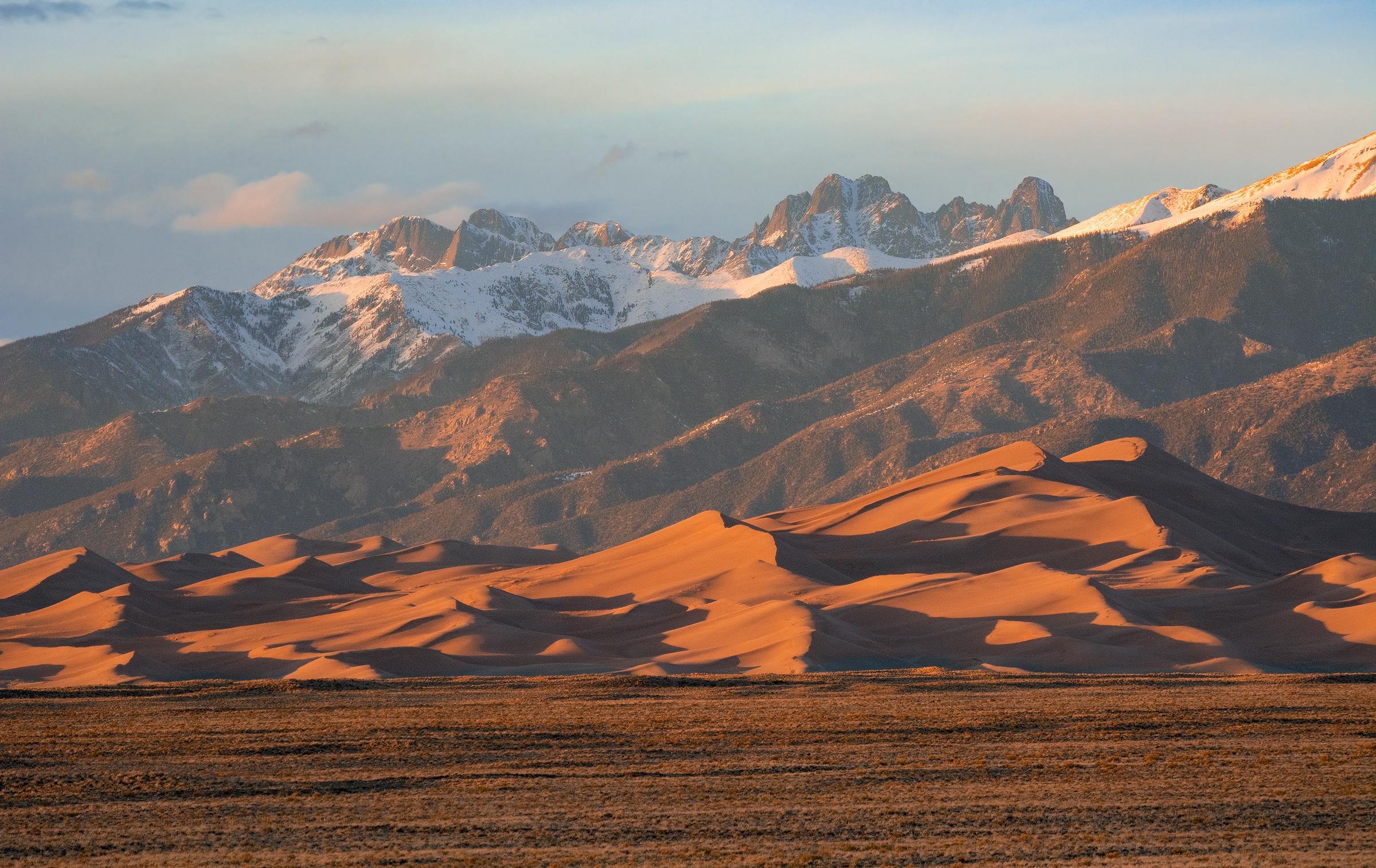
The best time to visit Great Sand Dunes National Park is late May through early June, when snowmelt has Medano Creek running at the base of the dunes and the sand has not yet turned into a furnace. September is the close runner-up: stable weather, cool sand all day, thin crowds, and aspen turning gold in the Sangre de Cristo Mountains right behind the dunefield. The park is open year-round, but which month you pick changes the experience more here than at almost any other park.
When does Medano Creek actually flow?
Medano Creek is the reason this park has a narrow peak season. It is fed entirely by snowmelt from the Sangre de Cristos, so it typically runs from April into early July and peaks in late May and early June. At peak it produces surge flow, where underwater sand dams build up and collapse every 20 seconds or so, sending small waves down a wide, shallow beach at 8,200 feet of elevation. By mid-July the creek is usually a damp streak, and by August it is often dry sand. Snowpack drives all of this, so check the current-year conditions before you build a trip around it.
How hot does the sand get in summer?
Air temperatures in June and July sit in the 80s Fahrenheit, which sounds fine. The problem is the sand itself: on a clear summer afternoon the dune surface can climb past 150 degrees. That is hot enough to burn bare feet and to injure a dog. If you visit between June and August, climb before 10 a.m. or after 4 p.m., wear closed shoes, and carry more water than you think you need. The dunes sit high enough that the sun is punishing and the air is dry.
Is summer or fall better for hiking the dunes?
Fall wins. From early September through mid-October the afternoon thunderstorms that build almost daily in July and August largely stop, the sand stays walkable all day, and the crowds that fill the Dunes Parking Area in June are gone. Lightning is a real hazard on an open dunefield with no cover and no shelter, so if you do come in midsummer, treat early afternoon as a hard turnaround time. For a longer Colorado trip, pair the dunes with Black Canyon of the Gunnison or Mesa Verde, both within a half day of driving.
What are winter and spring like?
Winter is the quiet secret. The park stays open, the dunes often wear a dusting of snow, and you can have the whole dunefield to yourself on a weekday. The catch is sledding: wet or frozen sand does not slide, so plan to hike rather than ride. The Medano Pass Primitive Road closes to through traffic. Spring, specifically March and April, is the windiest stretch of the year, with gusts that can top 40 mph and blowing sand that stings. That wind is exactly what built the tallest dunes in North America, roughly 750 feet from base to crest, but it is unpleasant to hike in.
When is the stargazing best?
Great Sand Dunes is a certified International Dark Sky Park, and the dunefield is open 24 hours. Aim for a new moon between June and September, when the Milky Way core is high and overnight temperatures are tolerable. Walk out onto the first ridge, sit down, and let your eyes adjust for 20 minutes. Winter skies are even clearer but brutally cold at this elevation.
What should you know before booking?
Sand sleds and sandboards are not rented inside the park, and ordinary snow sleds do not work on sand, so pick up gear at the store just outside the entrance or in Alamosa. Entrance is charged per vehicle and is covered by the America the Beautiful pass. There is no timed-entry reservation system here, unlike several busier Colorado parks, but always confirm the current-year rules and fees before you drive out. Browse more national parks or see what else is worth a stop in Colorado, including Rocky Mountain National Park. Full details for this park live on the Great Sand Dunes park page.
FAQ
What is the single best month to visit Great Sand Dunes National Park?
June, if you want Medano Creek. The first two weeks usually catch the tail of peak flow while the creek is still wide enough to wade and float. If you care more about hiking and photography than water, choose September instead.
How many days do you need at Great Sand Dunes?
One full day covers the main dunefield, a creek walk, and a sunset climb. Add a second day if you want to hike Mosca Pass or Zapata Falls, drive the Medano Pass Primitive Road with a high-clearance 4x4, or spend a night out for stargazing.
Can you visit Great Sand Dunes in winter?
Yes. The park and the main road stay open year-round and winter brings the lowest visitation of the year. Expect cold, wind, and sand that is too damp for sledding, and check road status before you go.
Is Medano Creek always flowing?
No. It is seasonal and snowmelt-dependent. In a low-snow year the creek can be thin by mid-May and gone by late June, so verify current conditions rather than assuming a fixed schedule.
Is Great Sand Dunes worth visiting with kids?
It is one of the most kid-friendly parks in the system in late spring, because the shallow creek and sledding hills need no technical skill. Just go early or late to avoid hot sand.