
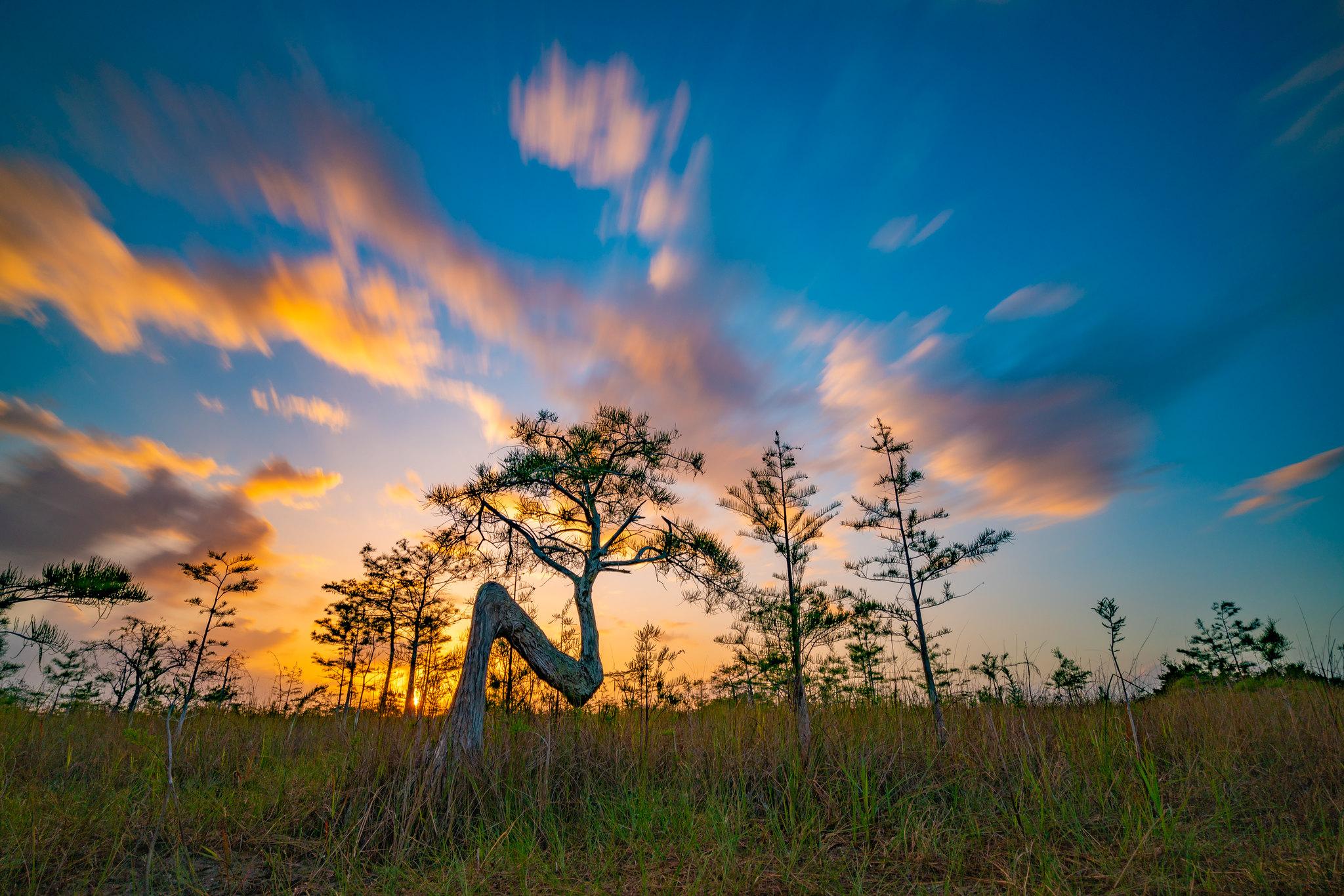
The best time to visit Everglades National Park is December through April — the dry season. This is the one park where timing is not really about temperature at all. It is about water: how much of it is on the ground, where the animals go when it recedes, and how many mosquitoes it produces when it returns.
Get that one variable right and the Everglades becomes one of the great wildlife-viewing destinations in North America. Get it wrong and you may spend a humid afternoon looking at an empty sawgrass prairie through a cloud of insects.
Why Does the Dry Season Make Such a Difference?
The Everglades is a slow-moving freshwater river, not a swamp, and its year splits cleanly into a wet season (roughly May through November) and a dry season (roughly December through April). As the water table drops through winter, fish and other aquatic life get squeezed into shrinking gator holes and remnant sloughs. Wading birds, alligators, and otters follow them.
The result is concentration. In January, a single pond along the Anhinga Trail can hold dozens of alligators, great blue herons, anhingas, and roseate spoonbills within a few feet of the boardwalk. In August, those same animals are dispersed across hundreds of square miles of flooded marsh and you may see almost nothing.
What Is the Single Best Month?
February. Water levels are near their annual low, wading-bird nesting is underway, daytime highs sit around 77°F with low humidity, and mosquito pressure is at its minimum. January runs a very close second and is slightly quieter.
March and early April are still excellent for wildlife but bring rising heat and spring-break traffic through Homestead and Flamingo. If you want the best of both — strong wildlife and thinner crowds — target the first two weeks of December or the last two weeks of April.
How Bad Are the Mosquitoes in Summer?
Bad enough that the National Park Service publishes a mosquito advisory and that the Flamingo area operates on reduced services through much of the summer. From June through October, mosquito density in the coastal and mangrove zones can make outdoor activity genuinely unpleasant, and repellent alone is often not sufficient — long sleeves and a head net are standard advice.
Summer also overlaps hurricane season, which runs June 1 through November 30 and peaks in September. Road and campground closures from storms are a real planning risk in those months.
Is There Any Reason to Visit in the Wet Season?
Yes, for two specific things. Landscape photographers get towering afternoon thunderheads and dramatic light that the flat dry-season sky never delivers. And the park is close to empty — you can have Shark Valley or Pa-hay-okee Overlook to yourself.
Backcountry paddlers also find higher water opens routes that go dry in winter, though the trade-off in heat, insects, and afternoon lightning is steep. For most first-time visitors the dry season is the correct answer without much debate.
Does the Best Time Change by Entrance?
Slightly. The Everglades has three separate entrances that do not connect by road. The Homestead entrance (Ernest F. Coe, Royal Palm, and the 38-mile drive to Flamingo) is the most weather-sensitive and the best dry-season wildlife corridor. Shark Valley, off the Tamiami Trail, holds alligators along its tram loop year-round and is the most forgiving in shoulder months. Gulf Coast at Everglades City is the paddling gateway to the Ten Thousand Islands and is best from December through March, when winds are calmer.
Budget at least two days if you want more than one entrance. Many visitors pair the park with Biscayne National Park just east of Homestead, or add the ferry trip to Dry Tortugas National Park from Key West. Our full Everglades National Park guide has entrance-by-entrance detail, and the Florida national parks overview covers the rest of the state.
What Should You Book Ahead?
Flamingo campground and the Flamingo lodging units fill months in advance for January through March, and the Shark Valley tram and Gulf Coast boat tours sell out on winter weekends. Backcountry camping in the Wilderness Waterway requires a permit. Fees, permit windows, and tram operators have all changed in recent years, so check the current-year rules on the park’s official site before you commit to dates.
FAQ
What is the best month to visit Everglades National Park?
February. Water levels are at their annual low so wildlife is highly concentrated, highs average around 77°F with low humidity, and mosquito activity is at its minimum for the year.
What is the worst time to visit the Everglades?
June through September. Heat and humidity peak, mosquitoes in the mangrove and coastal zones become severe, wildlife disperses across flooded marsh, and hurricane season brings closure risk.
When can you see the most alligators in the Everglades?
January through March. As the dry season draws down water levels, alligators gather in gator holes and remnant ponds. The Anhinga Trail near Royal Palm is the most reliable place to see them at close range.
Do I need a reservation to visit Everglades National Park?
Park entry does not require a timed reservation, but campgrounds, lodging at Flamingo, tram tours at Shark Valley, and backcountry permits do — and they book out for the winter season. Check the current-year rules and reserve early.
How many days do you need in the Everglades?
Two days covers the Homestead entrance plus Shark Valley comfortably. One day is workable if you pick a single entrance. Three days lets you add Gulf Coast and a half-day paddle in the Ten Thousand Islands.
Is the Everglades open year-round?
Yes, all three entrances stay open year-round, though summer brings reduced services at Flamingo, seasonal closures of some tours, and occasional storm-related shutdowns during hurricane season.