
The best time to visit Death Valley National Park is November through March, when valley-floor highs sit in the comfortable 60s and 70s Fahrenheit instead of the punishing 115°F–120°F+ of midsummer. That is the short answer, and it holds for the overwhelming majority of visitors. But Death Valley spans more vertical relief than almost any park in the country — from Badwater Basin at 282 feet below sea level to Telescope Peak at 11,043 feet — so the honest answer depends as much on where in the park you are standing as on the month.
Why is winter the best season in Death Valley?
From late November through February the valley floor becomes one of the most pleasant places in the country to be outdoors. Daytime highs typically land in the mid-60s to mid-70s, nights drop into the 40s, and the low humidity that makes summer lethal instead makes winter crisp and clear. Everything that is unwise in July — the Badwater salt flat walk, Golden Canyon, Mosaic Canyon, the Mesquite Flat dunes at midday — is straightforward.
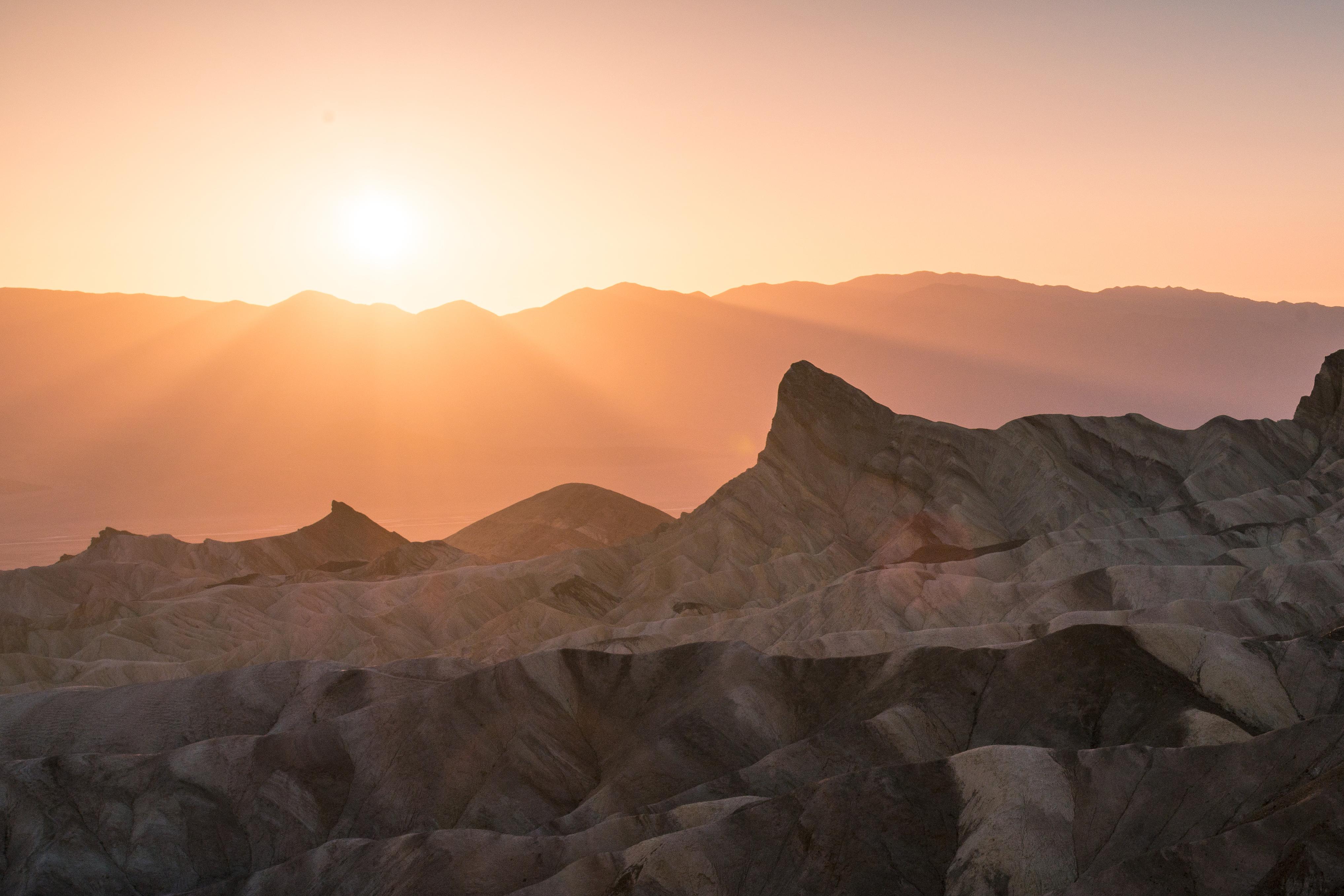
Winter is also the quietest light. The sun stays low, so Zabriskie Point and Dante's View hold good colour for far longer than they do in summer, and the long nights suit a park that carries Gold Tier International Dark Sky Park status.
The trade-off is that higher country closes down. Telescope Peak and the road to Mahogany Flat can hold snow and ice from roughly November into spring, and the Racetrack Playa road may be rough or unmaintained. If your trip is built around high-elevation hiking, winter is the wrong choice.
Is spring worth it for the wildflowers?
Sometimes, and it is a genuine gamble. Low-elevation blooms usually run from mid-February into early April, moving upslope as the season warms, with alluvial fans along Badwater Road and the Jubilee Pass area among the more dependable spots. What produces a real display is well-spaced autumn and early-winter rain; a dry autumn means a thin year no matter how warm the spring is.
The rare, wall-to-wall "superbloom" that makes national news happens only every several years and cannot be predicted more than a few weeks out. Check the park's wildflower updates in January and February rather than booking a year ahead on hope.
Spring is also the busiest stretch of the year. March and early April bring spring break traffic, and Furnace Creek lodging and campsites fill well in advance. By late April the heat has usually returned in earnest.
How bad is summer, really?
Bad enough to change how you plan the day rather than something to simply push through. June through August routinely produce highs above 115°F, with 120°F+ readings common in July, and Furnace Creek holds the record for the highest reliably measured air temperature on Earth. Ground surface temperatures run far hotter still, which is why the park closes some low-elevation trails in summer and warns against hiking after 10am.
Summer visits are not impossible, but they should be car-based and short: viewpoints, the scenic drives, Dante's View at 5,475 feet where it is roughly 20°F cooler, and time at higher elevations. Carry far more water than feels necessary, keep the fuel tank full, and do not rely on mobile coverage. Late summer also brings monsoon thunderstorms; the flash flooding in August 2022 closed the entire park and damaged roads for months, so check road status before driving in.
What about autumn?
October and early November are the underrated window. The heat has broken but the winter crowds have not arrived, the light is already low and warm, and most park facilities are open on full schedules. Highs in October often sit in the 90s early in the month and fall into the 80s by the end — hot for hiking at midday, fine for early mornings. If you want winter's conditions with fewer people, aim for the first half of November.
Which month should you actually pick?
For a first visit with hiking as the priority, choose late November, December or early February. For wildflowers, target mid-March and accept the crowds. For photography and stargazing, December and January give the longest nights and cleanest air. For high-country hiking on Telescope Peak, you are looking at late spring through early autumn instead. Avoid mid-June through August unless you are comfortable planning around extreme heat.
Death Valley pairs naturally with Joshua Tree, which shares the same cool-season logic and sits a few hours south, and it slots easily into a wider California national parks route. A small eastern slice of the park lies in Nevada, and Las Vegas is the closest major airport at roughly two hours away. Park hours, fees and current road conditions are worth confirming on the Death Valley park page and against the current-year rules before you commit to dates.
FAQ
What is the best month to visit Death Valley National Park?
December and February are the strongest all-round months: valley-floor highs in the 60s and 70s, cool nights, open trails and moderate crowds. November is close behind and slightly warmer.
Is Death Valley too hot to visit in summer?
It is safe to visit by car, but hiking at low elevation in June through August is genuinely dangerous. Highs regularly exceed 115°F, the park closes some trails, and rangers advise finishing any walking before mid-morning. Stick to viewpoints and higher elevations.
When do wildflowers bloom in Death Valley?
Low-elevation blooms typically start mid-February and run into early April, moving to higher elevations later. Volume depends on autumn and winter rainfall, and major superblooms occur only once every several years.
Does it snow in Death Valley?
Not meaningfully on the valley floor, but the Panamint Range above roughly 5,000 feet gets regular winter snow. Telescope Peak and the upper Wildrose road can be snow-covered from November into spring.
How many days do you need in Death Valley?
Two full days covers the headline stops — Badwater Basin, Artists Drive, Zabriskie Point, Dante's View and the Mesquite Flat dunes. Three or four lets you add Ubehebe Crater, Titus Canyon and a longer canyon hike without rushing.