
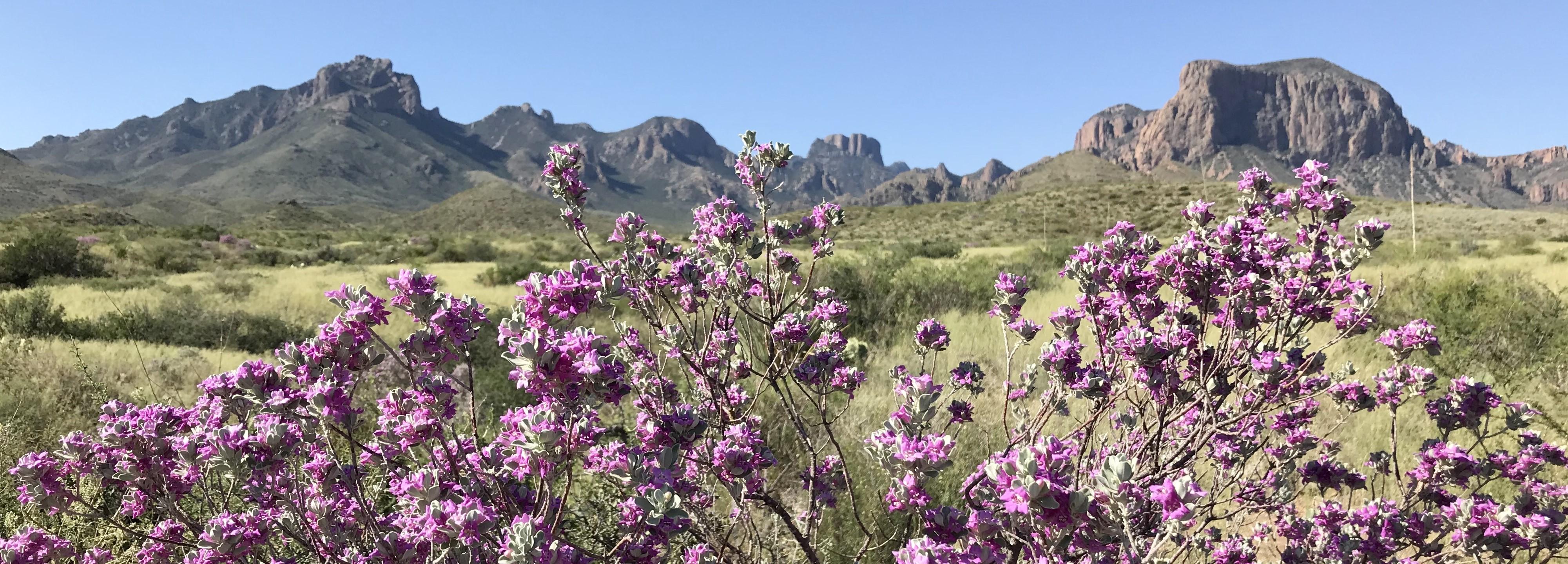
The best time to visit Big Bend National Park is November through April, when Chihuahuan Desert highs settle into the 60s and 70s and hiking becomes safe rather than survivable. Big Bend inverts the national park calendar: its peak season is winter, its low season is summer, and the months most Americans take vacation are the months this park is at its most punishing. Understanding that inversion is most of the planning battle.
Why is Big Bend's peak season the opposite of most parks?
Geography. Big Bend sits in far West Texas along the Rio Grande, and its desert floor around Rio Grande Village drops to roughly 1,800 feet. June through August routinely delivers highs above 100°F down there, with readings in the 110s not unusual. Heat-related rescues cluster in these months.
The park's saving grace is vertical relief. The Chisos Basin sits near 5,400 feet and runs 10–20°F cooler than the river corridor on the same day. That means even in summer there is a habitable zone — but it is small, its lodge and campground fill early, and the desert trails below remain off-limits in practice.
When is the best weather for hiking Big Bend?
Late February through April is the strongest window overall. Daytime highs sit in the 70s and low 80s, nights are cool but not freezing, and the desert is at its greenest after winter moisture. This is when the South Rim, Emory Peak and the Window Trail are all comfortably doable in a single trip.
November and early December are the quiet counterpart: nearly identical daytime temperatures, dramatically fewer people, and crisp air that makes the Chisos skyline unusually sharp. The trade-off is short daylight and overnight lows that can dip below freezing at Basin elevation.
What is Big Bend like in spring break and how bad are the crowds?
Big Bend's crowding pattern is unusually spiky. The park is remote enough that it never sees Yosemite-scale traffic, but the two weeks around Texas spring break in March, plus Thanksgiving and the winter holidays, overwhelm a park with very limited lodging. The Chisos Mountains Lodge and the Basin campground are the bottleneck, and both book out far in advance for those dates.
If your dates are flexible, shifting one or two weeks either side of mid-March buys you nearly the same weather with a fraction of the competition for a bed. Reservation windows and fee structures change; check the current-year rules before building an itinerary around a specific campsite.
When should you float the Rio Grande?
River season is driven by flow, not comfort. Santa Elena Canyon and the lower canyons depend on releases and rainfall, and levels are typically most reliable in late summer and fall after monsoon rain upstream, though this varies sharply year to year. Spring floats are often possible but can run thin.
Note that river trips require permits, and the international boundary means specific rules apply on the Mexican bank. Confirm current-year permit requirements and flow conditions with the park before committing.
Is summer ever worth it at Big Bend?
Only with a narrow plan. If you confine yourself to the Chisos Basin, hike at dawn, and treat the desert floor as scenic-drive territory only, a July visit can work. Two things genuinely favor summer: the monsoon transforms the desert with bloom and dramatic storm light in late July and August, and the park is at its emptiest.
Big Bend is also an International Dark Sky Park with some of the least light-polluted skies in the continental United States. Summer nights put the Milky Way core directly overhead — a real argument for enduring the heat, if you plan around it.
FAQ
What is the best month to visit Big Bend National Park?
March is the best single month for weather and desert bloom, though it is also the busiest. November offers nearly identical daytime temperatures with far smaller crowds, making it the best month for most visitors.
Is Big Bend too hot in summer?
For desert-elevation hiking, yes. Highs at Rio Grande Village routinely exceed 100°F from June through August. The Chisos Basin stays roughly 10–20°F cooler and remains usable, but summer visits require dawn starts and serious water planning.
How many days do you need at Big Bend?
Three days is the practical minimum. The park spans over 800,000 acres and driving between the Chisos Basin, Santa Elena Canyon and Rio Grande Village eats hours. Three days lets you pair one long Chisos hike with the Ross Maxwell Scenic Drive and the river corridor.
Do you need a reservation to enter Big Bend?
Big Bend has not used a timed-entry entrance reservation. Entrance fees apply, and lodging, campsites and backcountry permits do require advance booking. Check the current-year rules, as these systems change.
Can you combine Big Bend with other parks?
Yes, though distances are long. Guadalupe Mountains is roughly a five-hour drive north, and Carlsbad Caverns sits just beyond it across the New Mexico line, making a three-park loop feasible over about a week.
Explore more destinations in our national parks directory, or plan regionally with our state-by-state guides.