
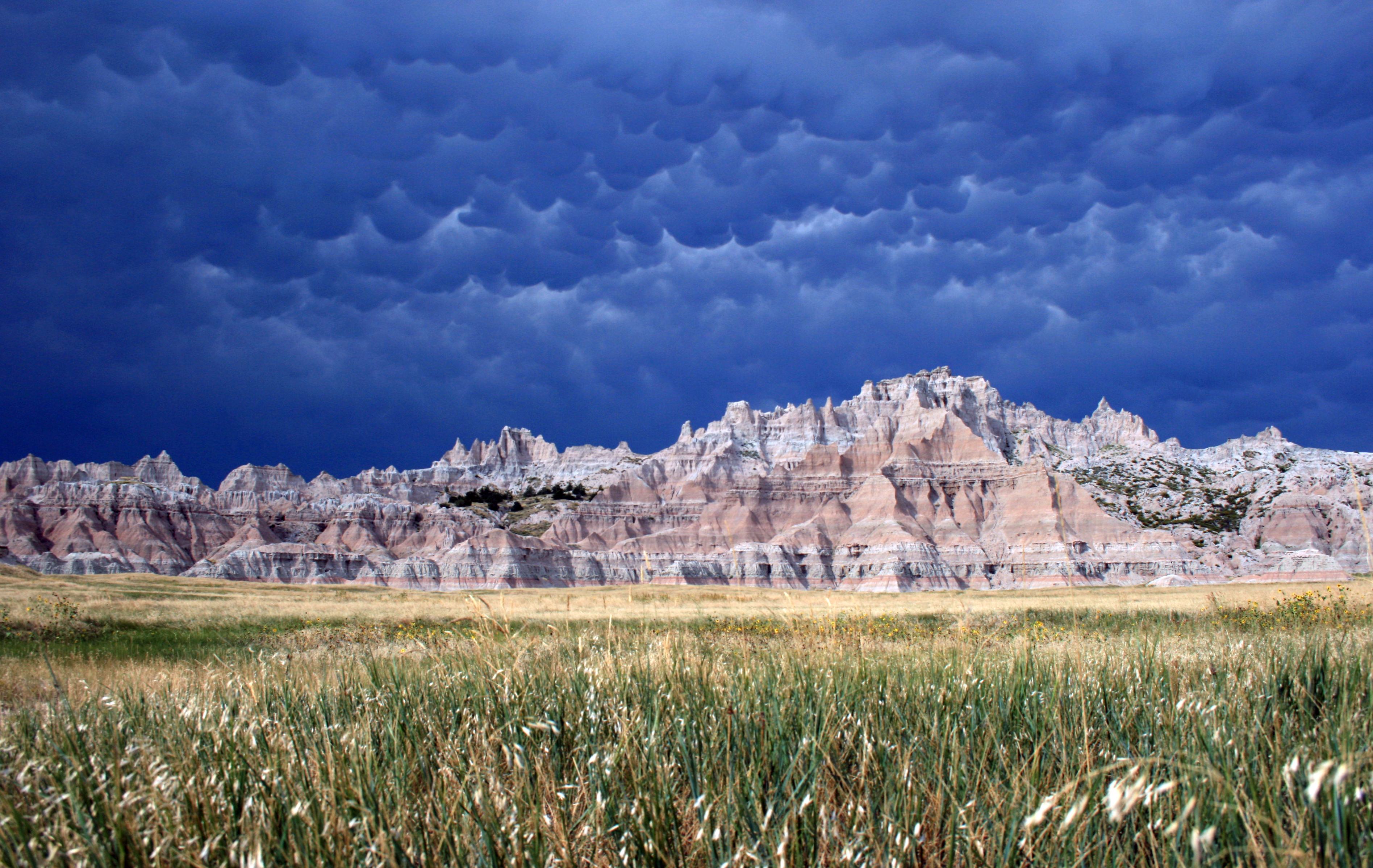
The best time to visit Badlands National Park is late May through mid-June, or the first three weeks of September — two narrow windows when daytime highs sit in the comfortable 70s–80s°F, wildlife is moving, and the summer bus traffic on the Badlands Loop Road has either not arrived yet or has already gone home. July and August are the park's busiest months and also its most punishing, with afternoon temperatures that routinely clear 95°F on shadeless prairie.
Why is Badlands so different from other parks month to month?
Badlands sits on open South Dakota prairie at roughly 2,500–3,300 feet, with almost no tree cover and no water to moderate temperatures. That produces one of the widest seasonal swings in the National Park System: winter lows below 0°F, summer highs above 100°F, and shoulder seasons that flip between the two inside a single week. Unlike a mountain park such as Rocky Mountain National Park, elevation gives you nowhere to escape the heat here. Your comfort depends almost entirely on the calendar.
Is spring the best season to visit Badlands?
Late spring is the single strongest window. From mid-May the prairie greens up, wildflowers appear along the Castle Trail and Medicine Root Loop, and bison calves — the orange "red dogs" — are visible in the Sage Creek Wilderness area. Bighorn sheep lambs also appear near Pinnacles Overlook. Early spring, by contrast, is a gamble: April blizzards are common on the northern plains and can close I-90 outright.
What is summer actually like in the Badlands?
Hot, crowded and, on many afternoons, stormy. Badlands averages its heaviest rainfall in May and June, but July delivers the most dramatic thunderstorms — which are worth planning around rather than avoiding entirely. Badlands mud is notoriously slick bentonite clay, and trails such as Notch Trail and Saddle Pass become genuinely hazardous within minutes of rain. If you do come in summer, hike before 9 a.m., carry more water than feels reasonable (there is none on the trails), and use the middle of the day for the Ben Reifel Visitor Center or the Minuteman Missile site next door.
Why do many repeat visitors prefer September?
September is the quiet favorite. Crowds drop sharply after Labor Day, highs settle into the 70s and 80s, and the bison rut in the Sage Creek unit is winding down but still active. It also delivers the park's best photography conditions: low sun angles rake across the eroded Badlands Wall morning and evening, and clearer autumn air improves the long views south toward the Pine Ridge Reservation. October is still pleasant but light gets short and the first hard freeze usually arrives late in the month.
Is winter worth it?
For a specific kind of traveler, yes. Badlands never fully closes — the Ben Reifel Visitor Center stays open year-round and the Badlands Loop Road is plowed — but the Sage Creek Rim Road is unmaintained and often impassable, and services in nearby Wall and Interior shrink to almost nothing. What you get in exchange is near-total solitude and snow-dusted formations that very few people photograph. Check current-year road status before committing.
How does the timing compare with nearby parks?
Most people pair Badlands with Wind Cave National Park and the wider Black Hills, about two hours west. Wind Cave's cave tours run year-round at a constant 54°F, so it is a reliable hot-afternoon or bad-weather backup. If you are building a longer western loop, the same late-May and September windows also work well for Theodore Roosevelt National Park in North Dakota. Browse everything in the region on our South Dakota national parks guide, or compare seasons across the system on the full parks directory.
FAQ
What is the best month to visit Badlands National Park?
September is the best all-round month: mild temperatures, thin crowds, active wildlife and excellent light. Late May and early June are a close second and add wildflowers and bison calves.
What is the worst time to visit Badlands National Park?
Mid-July through mid-August combines peak heat, peak crowds and afternoon thunderstorms. Deep winter is not "bad" but is only worth it if solitude matters more to you than comfort.
How many days do you need in Badlands National Park?
One full day covers the Badlands Loop Road overlooks and two or three short trails. Two days lets you add the Sage Creek Rim Road for bison and a sunrise or sunset session at Pinnacles or Big Badlands Overlook.
Do you need a reservation to enter Badlands National Park?
No timed-entry reservation is required. An entrance fee applies, and campground reservations for Cedar Pass are recommended in summer — check the current-year rules before you travel.
When can you see baby bison in the Badlands?
Bison calves are typically born from April into June and are most visible in the Sage Creek Wilderness area through late spring and early summer.
Is it hot in the Badlands in September?
Early September can still reach the high 80s°F, but average highs drop through the month into the low 70s by late September, with cool nights.