
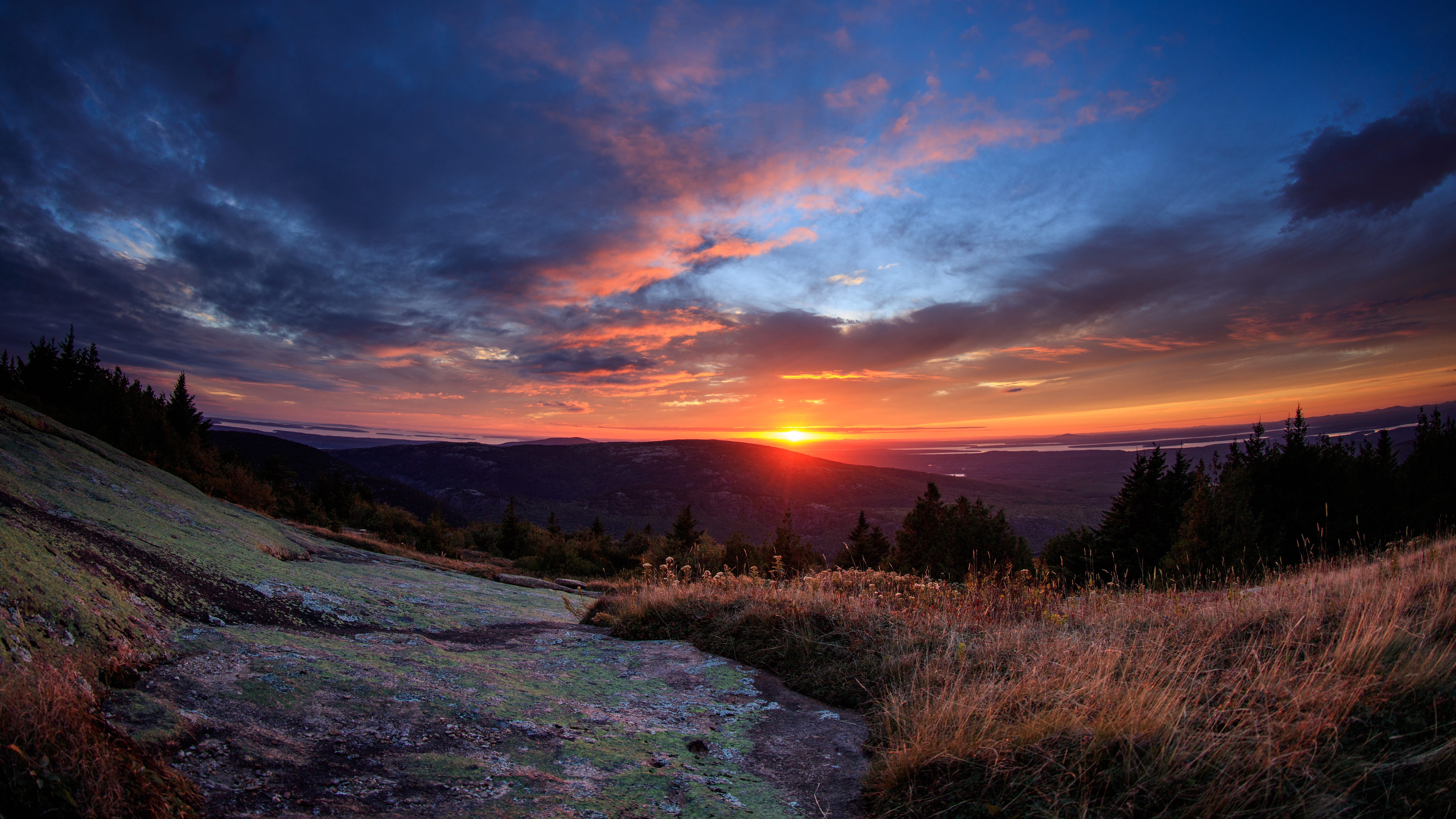
The best national parks for fall foliage transform each autumn into a blaze of red, orange, and gold, making them some of the most rewarding places to travel in September and October. From New England's coast to the Blue Ridge and the Colorado Rockies, these parks put on a color show worth planning a trip around. Here are the top parks for leaf-peeping and how to time your visit for peak color.
Acadia National Park, Maine
Acadia is the crown jewel of New England fall color, where maples and birches ignite against granite coastline and the Atlantic. Drive the Park Loop Road, climb Cadillac Mountain for sunrise, and paddle the ponds beneath fiery hillsides. A visit to Acadia National Park in early to mid-October usually catches peak color, and the crisp sea air makes hiking especially pleasant. Base yourself in Bar Harbor for easy access in Maine.
Shenandoah National Park, Virginia
Shenandoah's Skyline Drive is one of the most accessible foliage experiences in the country, with more than 70 overlooks framing the color-splashed valley below. A trip to Shenandoah National Park in mid- to late October rewards you with rolling ridges of oak, hickory, and maple. Because it sits close to Washington, D.C., in Virginia, it draws weekend crowds, so arrive early for the best overlooks and parking.
Great Smoky Mountains National Park
The Smokies offer one of the longest foliage seasons anywhere, thanks to a huge range of elevations. Color begins high on the peaks in early October and descends into the valleys through early November. Exploring Great Smoky Mountains National Park during this window means layered ridgelines glowing in every shade, plus the chance to spot elk in Cataloochee. Scenic drives like Newfound Gap Road showcase the transition beautifully.
Rocky Mountain National Park, Colorado
For a western twist, Rocky Mountain delivers golden aspens that shimmer against evergreen forests and snow-dusted peaks. Late September is prime aspen season, when Trail Ridge Road and the Bear Lake area glow yellow. A visit to Rocky Mountain National Park pairs fall color with elk bugling during the rut, a quintessential autumn soundtrack in the high country.
When is peak fall foliage?
Timing varies by latitude and elevation. New England and the northern Rockies peak first, from late September into early October, while the southern Appalachians peak from mid-October into early November. Elevation matters too, with higher slopes turning first. Because weather shifts the timing each year, check the current-year rules and local foliage forecasts before you lock in dates.
Tips for a foliage road trip
Go midweek to dodge weekend crowds, and start early for the best light and parking at popular overlooks. Book lodging months ahead, since fall is peak season near these parks. Pack layers for chilly mornings, and build flexibility into your itinerary so you can chase peak color if it arrives early or late. A camera and a thermos of coffee never hurt.
FAQ
Which national park has the best fall foliage?
Acadia and the Great Smoky Mountains are frequent favorites, but the best park depends on your region and timing. New England peaks earliest, while the southern Appalachians hold color into November.
When should I plan a foliage trip?
Aim for late September in the northern Rockies and New England, and mid- to late October farther south. Check current-year foliage forecasts, since peak timing shifts with the weather.
Do I need reservations to see fall color?
Some parks use timed-entry or parking systems in peak season. Check the current-year rules for each park before your visit to avoid surprises.How to photograph fall color in the parks
The soft light of early morning and late afternoon makes autumn leaves glow, so plan your key stops around golden hour rather than harsh midday sun. Overcast days can actually deepen reds and oranges by cutting glare, so do not let clouds keep you inside. Look for water, whether a still pond, a river, or a coastal inlet, to double the color with reflections. A polarizing filter cuts haze and saturates the scene, and including a trail, a peak, or wildlife adds scale and story to your foliage photos.