
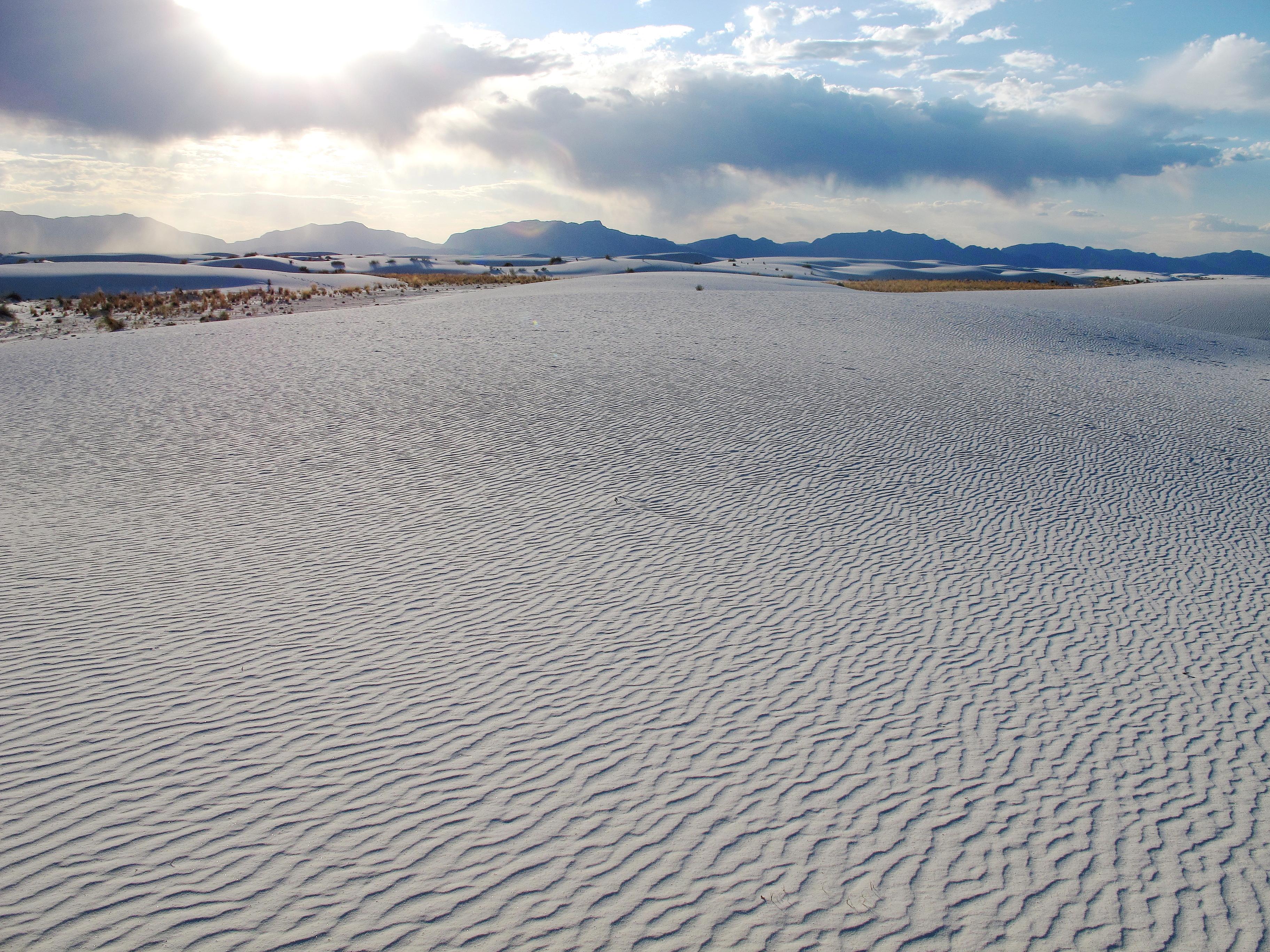
The best hikes in White Sands National Park cross the world's largest field of white gypsum sand, and they range from a quarter-mile accessible boardwalk to a strenuous five-mile loop over open dunes with no shade. Because the dunes shift and footprints vanish, every trail here is marked with colored posts rather than a worn path, and route-finding is part of the experience. This New Mexico park sits in the Tularosa Basin, where the glittering white sand can feel like snow underfoot even on a 90-degree day. Here is how to choose the right trail for your group and the conditions.
What is the easiest trail at White Sands?
The Interdune Boardwalk is the easiest option: a flat, roughly 0.4-mile elevated boardwalk that is wheelchair accessible and lined with signs explaining how plants and animals survive in the gypsum. For a slightly longer, still-gentle walk, the Playa Trail (about 0.5 mile) leads to a low spot where rainwater occasionally pools. Both are ideal for families, first-time visitors, and anyone who wants the scenery without climbing loose sand.
What is the best moderate hike?
The Dune Life Nature Trail is a one-mile loop that climbs up and over vegetated dunes, following blue trail markers past yucca and the tracks of nocturnal animals like the kit fox. It gives you a genuine dune-walking experience—soft footing, short climbs, and big views—without committing to the park's most demanding route. Kids often enjoy spotting the cartoon "Katy the Kit Fox" signs along the way.
What is the hardest hike in White Sands?
The Alkali Flat Trail is the park's signature challenge: a roughly five-mile loop marked by red posts that crosses the heart of the dune field to the dry lakebed of ancient Lake Otero. There is no shade, no water, and the trail markers can be hard to follow in wind, so hikers should carry at least one gallon of water per person, start early, and turn back in the heat of the day. Always check the current-year conditions, because the park closes for a few hours during nearby missile-range tests.
How does White Sands compare to nearby parks?
White Sands pairs naturally with New Mexico's underground parks. Combine it with a caving trip to Carlsbad Caverns National Park or the rugged peaks of Guadalupe Mountains National Park just across the border. Read the full White Sands National Park guide, plan a wider New Mexico route, or browse our complete national parks directory.
What should you bring for hiking White Sands?
Preparation matters more here than on a typical trail because there is no shade, no drinking water past the visitor center, and few landmarks once you are deep in the dunes. Pack at least one gallon of water per person for the Alkali Flat Trail, plus sun protection, sturdy closed-toe shoes, and a downloaded map or GPS track since cell service is unreliable. Sunglasses are essential—the white gypsum reflects sunlight intensely—and a windbreaker helps when afternoon gusts kick up stinging sand. Tell someone your planned route and return time before you set out.
FAQ
Do you need a permit to hike at White Sands?
Day hiking on the marked trails does not require a permit, but there is an entrance fee to the park. Backcountry camping availability changes from year to year, so check the current-year rules before planning an overnight.
Can you sled on the dunes?
Yes—sledding down the gypsum dunes with a waxed plastic saucer is one of the most popular things to do at White Sands. Saucers and wax are sold at the visitor center gift shop, and the best sledding hills are along Dunes Drive past the picnic area.
When is the best time to hike White Sands?
Fall, winter, and early spring bring cooler temperatures ideal for the longer trails. In summer, hike early or late to avoid dangerous midday heat, and always confirm the park is open, since it briefly closes for missile-range testing.