
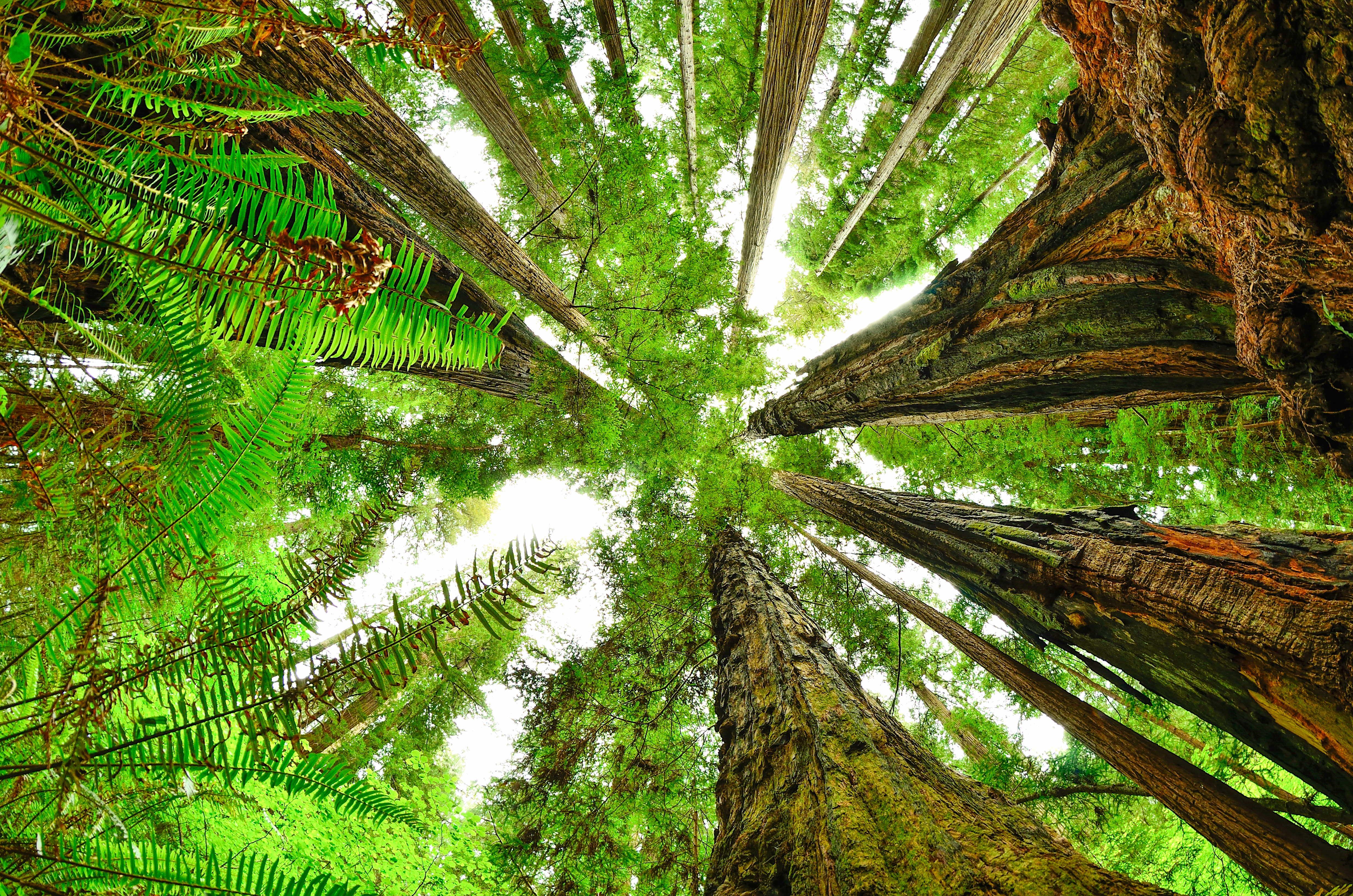
The best hikes in Redwood National Park range from easy old-growth loops to challenging riverside treks beneath the tallest trees on Earth. Whether you have two hours or two days, this guide covers the standout trails, their length and difficulty, and the permits and logistics you need to plan a smooth visit to Redwood National and State Parks in northern California.
What are the best easy hikes in Redwood National Park?
For a gentle introduction to the giants, the Lady Bird Johnson Grove Trail is hard to beat. This 1.4-mile loop stays mostly flat as it winds through mature coast redwoods and misty understory, and it is one of the easiest trails to reach off Highway 101. Trillium Falls Trail near Elk Meadow adds a modest 2.5-mile loop with a small waterfall and frequent Roosevelt elk sightings in the surrounding prairie. Both work well for families and anyone easing in after a long drive.
Which trails lead to the tallest trees?
The Tall Trees Grove Trail is the marquee hike, descending roughly 800 feet over about 4 miles round trip to a grove of record-height redwoods along Redwood Creek. Access requires a free permit and a gate code, and the number of daily vehicles is capped—check the current-year rules before you go. The payoff is a quieter, less-crowded grove than the roadside stops. Farther north in Jedediah Smith Redwoods, the Boy Scout Tree Trail runs about 5.5 miles round trip through dense, fern-carpeted forest to a hidden double-trunked giant and a small waterfall.
Is Fern Canyon worth hiking?
Yes—Fern Canyon in Prairie Creek Redwoods is one of the most photographed spots in the park, with 50-foot walls draped in several species of ferns. The loop is short, under a mile, but involves creek crossings that can mean wet feet; the access road and a seasonal permit are typically required from roughly May through September, so check the current-year rules. Pair it with nearby Gold Bluffs Beach for a classic coast-and-canyon day.
What is the best long hike for experienced hikers?
The James Irvine–Miners Ridge loop, roughly 11 miles, links the fern-lined canyon with a ridge of towering old growth and a stretch of wild Pacific coastline. It is the best full-day hike for strong hikers who want variety in a single outing. Carry layers: coastal fog keeps temperatures cool even in summer, and trail sections stay damp year-round.
When is the best time to hike Redwood National Park?
Late spring through early fall offers the driest trails and full access to seasonal roads and permits, though summer brings morning fog that usually burns off by midday. Winter hiking is rewarding and uncrowded but wetter, and some unpaved access roads close. Whenever you visit, the forest floor is often muddy, so waterproof footwear pays off. Planning a wider trip? Compare Redwood with the granite of Yosemite National Park, the volcanic landscape of Lassen Volcanic National Park, or the deep-blue caldera of Crater Lake National Park across the Oregon border. You can also browse every park on our national parks hub or map a route through California.
FAQ
Do you need a permit to hike in Redwood National Park?
Most trails are free to hike, but Tall Trees Grove and Fern Canyon access typically require free timed permits during peak season. Check the current-year rules on the park website before your trip.
How long does it take to hike the Tall Trees Grove Trail?
Plan on about 2 to 3 hours for the roughly 4-mile round trip, since the return climb of about 800 feet is steady. Bring water and start early to secure parking.
Are dogs allowed on Redwood National Park trails?
Dogs are generally not permitted on most forest trails to protect wildlife, though they are allowed in some developed areas and on certain beaches. Confirm current pet rules before visiting.
Is Redwood National Park free to enter?
There is no entrance fee for the national park itself, but the adjoining state parks may charge a day-use fee at some areas such as Gold Bluffs Beach. Check the current-year fees when planning.