
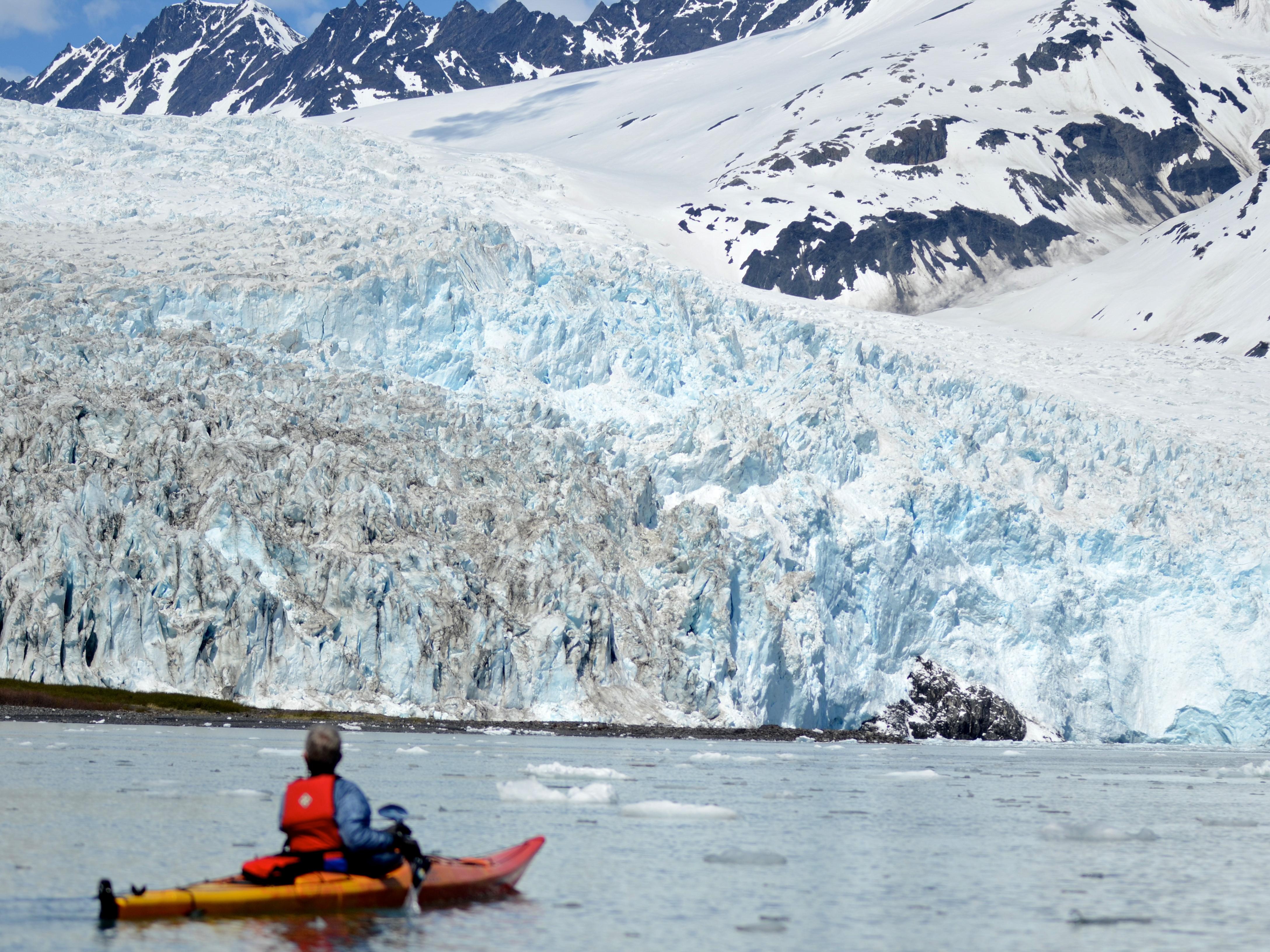
The best hikes in Kenai Fjords National Park center on the Exit Glacier area near Seward, the park's only road-accessible corner and home to everything from ten-minute glacier-view strolls to the strenuous, unforgettable Harding Icefield Trail. Most of this Alaska park is a wilderness of tidewater glaciers and fjords reached only by boat or kayak, so understanding what you can hike on foot, and how demanding each route is, helps you plan a day that matches your fitness and time.
What are the best hikes in the Exit Glacier area?
The Exit Glacier area holds all of Kenai Fjords' maintained trails, and they fan out from the nature center at the end of Exit Glacier Road. The Glacier View Loop is an easy, mostly flat mile that delivers the first clear look at the ice. From it, the Edge of the Glacier Trail adds a short, steeper spur to the closest permitted viewpoint of Exit Glacier's toe. Interpretive signs along the outwash plain mark where the glacier stood in past decades, making these short walks a vivid lesson in glacial recession. All of these are doable in an hour or two and suit families and casual walkers.
Is the Harding Icefield Trail worth it?
For strong hikers, the Harding Icefield Trail is the finest day hike in the park and one of the best in Alaska. It climbs roughly 8.2 miles round trip and gains about 3,000 feet, switchbacking up through cottonwood and alder, then heather meadows, before breaking out above tree line onto a rocky rim overlooking the vast Harding Icefield, a 700-square-mile sheet of ice feeding dozens of glaciers. Plan on six to eight hours, expect snow on the upper trail well into summer, and turn around if weather closes in. The payoff is a horizon of ice and nunataks that few trails anywhere can match.
Are there hikes beyond Exit Glacier?
Beyond Exit Glacier, Kenai Fjords has no developed trail system, and the coastal fjords are reached by tour boat, water taxi, or kayak. Some visitors arrange a drop-off to explore public-use cabin areas or beaches, but there are no maintained routes, and off-trail travel here means dense brush, bears, and tidal hazards. For most hikers, the road-accessible Exit Glacier trails plus a boat tour of the fjords make the best combination. Check current-year road, shuttle, and boat-tour operating status before you go, since the Exit Glacier road can close seasonally.
What should you know before hiking Kenai Fjords?
Weather here is cool, wet, and changeable, so waterproof layers and sturdy footwear matter even in July. Black and brown bears use the Exit Glacier valley; carry bear spray, make noise, and never hike with food in open packs. The Harding Icefield Trail can hold snow and ice into midsummer, when trekking poles and traction help. Cell service is unreliable, so tell someone your plan. You can explore the full Kenai Fjords National Park guide and check current-year fees and closures before your trip.
How does Kenai Fjords compare to other Alaska parks?
Kenai Fjords is the most accessible glacier-hiking park in Alaska, an easy add-on to a Seward or Anchorage trip, but it has fewer trail miles than road-served parks inland. Hikers who want a broader trail network often pair it with Denali National Park and Preserve, while those chasing remote glaciers head to Wrangell-St. Elias National Park and Preserve. Compare them all on our Alaska national parks guide or browse every park in our national parks directory.
FAQ
How long does the Harding Icefield Trail take?
Most hikers need six to eight hours round trip for the Harding Icefield Trail, including breaks at the top. Start early, carry plenty of water and food, and budget extra time if snow lingers on the upper switchbacks.
Do you need a permit to hike in Kenai Fjords?
Day hiking on the Exit Glacier trails does not require a permit, and Kenai Fjords has no entrance fee. Overnight and public-use cabin stays have their own reservations, so check the current-year rules before planning an overnight trip.
When is the best time to hike Kenai Fjords?
Late June through early September offers the most reliable trail conditions, with the Harding Icefield Trail usually clearing of snow by mid-July. Expect rain any month and colder, snowier conditions on the shoulders of the season.
Can you hike to Exit Glacier?
Yes. Short, well-marked trails from the nature center lead to close views of Exit Glacier's edge, though the Park Service adjusts the nearest viewpoint as the ice retreats. Follow posted signs and stay off the glacier itself without a guide.