
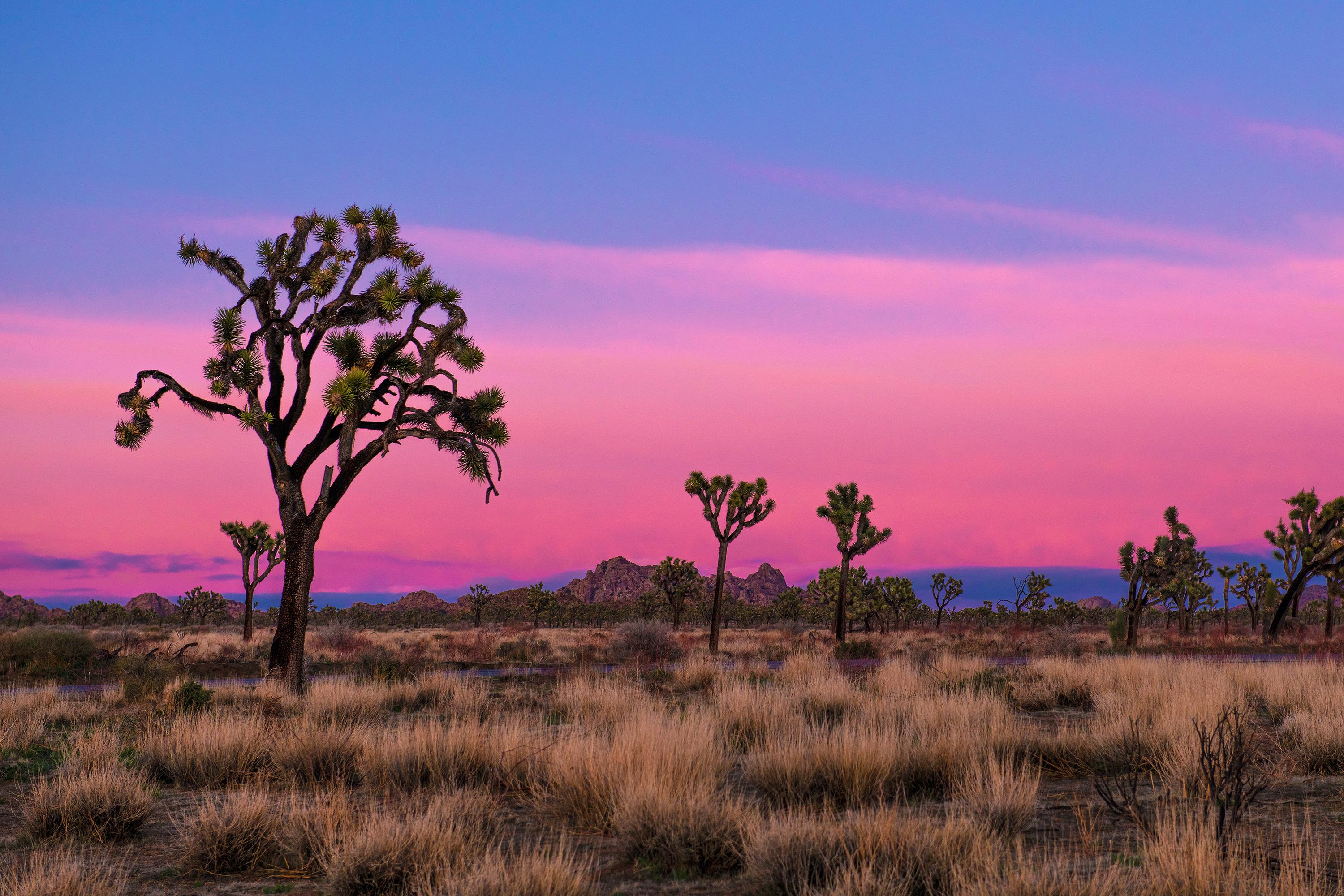
The best hikes in Joshua Tree wander among surreal boulder piles, twisted namesake trees, and stark desert vistas where two deserts meet. Joshua Tree National Park in Southern California is a hiker's playground, with short interpretive loops, quiet desert trails, and rugged summit climbs, plus some of the darkest night skies in the region. This guide covers the top trails, the best seasons, stargazing, and safety tips.
What are the best easy hikes in Joshua Tree?
Several short loops showcase the park's magic with little effort. The Hidden Valley trail circles a boulder-ringed basin once used by cattle rustlers, while Barker Dam loops past a historic water tank and Native American petroglyphs. The Cholla Cactus Garden boardwalk glows at sunrise and sunset, and the Skull Rock trail passes whimsical eroded formations right off the road. These accessible walks in Joshua Tree National Park are perfect for families and first-time visitors.
What are the best longer and summit hikes?
For bigger views and more solitude, several trails climb above the desert floor. Ryan Mountain is the park's classic summit hike, a steep but rewarding climb to panoramic views of the surrounding valleys and boulder fields. The Lost Horse Mine trail leads to a well-preserved historic gold mine, and the Boy Scout Trail offers a longer desert traverse through the scenic Wonderland of Rocks. Carry plenty of water and start early, since shade is scarce and the desert heats quickly.
What makes Joshua Tree special for rocks and stargazing?
Joshua Tree is world-renowned for its monzogranite boulder piles, which draw rock climbers and scramblers from around the globe. Even non-climbers can enjoy clambering among the formations in areas like Hidden Valley and Jumbo Rocks. After dark, the park's remote location and dry air create exceptional stargazing, and it is designated an International Dark Sky Park. Bring a red flashlight, let your eyes adjust, and plan around a new moon for the best views of the Milky Way.
When should you hike, and how do you handle the heat?
Fall, winter, and spring offer the most comfortable hiking, while summer can be dangerously hot, often well above 100 degrees. Hike early or late, carry far more water than you think you need, and avoid strenuous trails during midday heat. There is no water in the backcountry, so come prepared. Check current-year road and condition updates before you go, and consider extending your trip to explore more of California's desert and mountain parks on a wider loop.
How do you stay safe on Joshua Tree trails?
Desert hiking demands respect. Stay on marked trails, carry a map since routes can be faint and cell service is spotty, and tell someone your plans. Watch for loose rock when scrambling, and never climb formations beyond your ability. Protect the fragile desert environment by staying on durable surfaces. With sensible preparation and an early start, Joshua Tree offers unforgettable hiking, otherworldly scenery, and some of the best stargazing in the Southwest.
Which Joshua Tree hike should you choose?
For quick, iconic stops, walk Hidden Valley, Barker Dam, and the Cholla Cactus Garden. For a summit challenge, climb Ryan Mountain. For history and solitude, hike to the Lost Horse Mine. Match the trail to the season and your tolerance for heat, and stay for the stars after sunset.
FAQ
What is the best short hike in Joshua Tree?
Hidden Valley and Barker Dam are the top short hikes, each a roughly one-mile loop through classic scenery. The Cholla Cactus Garden is the best very short walk, especially at sunrise or sunset.
When is the best time to visit Joshua Tree?
Fall through spring offers the most comfortable temperatures and the best hiking. Summer is very hot and best avoided for strenuous trails, though early mornings can still work for short walks.
Is Joshua Tree good for stargazing?
Yes. Joshua Tree is an International Dark Sky Park with excellent night skies. Plan around a new moon, bring a red flashlight, and let your eyes adjust for the best views of the stars.